4. Global Procurement Trends & Strategic Sourcing Insights
Procurement directors and capital project managers face shifting global supply chains, stringent efficiency mandates, and intense pressure to minimize total cost of ownership (TCO). Analyzing global buyer inquiries reveals key procurement shifts in the industrial motor market:
1. The Retrofit vs. Total Replacement Dilemma
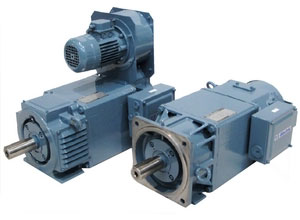
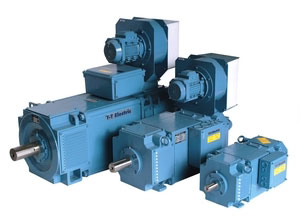
Faced with aging DC motor infrastructure, plant operators historically faced two choices: complete, costly plant overhaul (replacing DC motors, drive cabinets, cables, and mechanical mounting) or continuous maintenance of obsolete motors. The modern solution is the Square Frame AC Drop-In Replacement. Procurement teams now specify square AC motors engineered with identical footprint dimensioning, enabling factory managers to swap obsolete DC machines for modern AC variable speed square motors in hours rather than weeks of downtime.
2. Total Cost of Ownership (TCO) Prioritization
While initial capital expenditure (CAPEX) remains important, forward-thinking procurement leaders evaluate motor investments based on operational expenditure (OPEX). Over a 10-year continuous operating cycle, electricity costs account for upwards of 90% of a motor's total lifecycle cost. Variable speed square motors, through their superior thermal efficiency and optimized variable speed energy regulation, typically pay back their initial purchase price within 12 to 18 months of continuous operation.
3. Supply Chain Agility & Custom Mechanical Adaptation
Standard catalog motors often fail to fit strict OEM spatial envelopes. Industrial buyers are prioritizing agile manufacturers capable of delivering custom shaft extensions, special flange configurations, specific IP enclosure ratings (IP55/IP56/IP65), and custom forced-ventilation positions without multi-month delivery delays.