Industrial Electric Motors Procurement & Engineering Guide: Selection, Market Trends, and Custom Drop-In Solutions
An authoritative analysis for global procurement directors, plant engineers, and OEM specifiers. Unpacking high-performance DC & AC rotating machines, drop-in replacement strategies, future market dynamics, and total cost of ownership (TCO) optimization.
Updated for 2025/2026 Global Sourcing
E-E-A-T Peer Reviewed by T-T Electric Senior Engineers
European Manufacturing Base (Persan, France)
1. Executive Engineering Overview: The Critical Role of Heavy-Duty Industrial Electric Motors
Industrial electric motors constitute the electromechanical heart of modern global infrastructure. Operating continuously across heavy industries—such as steel rolling mills, paper processing plants, marine propulsion systems, mining extraction hoists, wire drawing, and rubber extrusion—these rotating machines are subjected to extreme electrical spikes, severe thermal cycling, and high dynamic shocks. Selecting the correct motor architecture is not merely a matter of matching kilowatt (kW) ratings; it requires a rigorous evaluation of torque dynamics, thermal dissipation classes, duty cycles (IEC 60034-1 S1 through S8), and long-term mechanical interchangeability.
Established in 1900 in Persan, France, T-T Electric has delivered over 120 years of continuous engineering excellence in heavy-duty drive manufacturing. Operating with full certification from LRQA (ISO 9001) and active technical memberships in EASA (Electrical Apparatus Service Association) and AEMT (Association of Electrical and Mechanical Trades), our engineering division bridges historical European craftsmanship with cutting-edge finite element analysis (FEA) and electromagnetic CAD modelling. This guide is crafted to address the exact intent of procurement officers and system integrators seeking verifiable information gain, zero-downtime integration strategies, and future-proof purchasing roadmaps for industrial electric motors.
Information Gain Summary for Procurement & Plant Managers
Choosing between DC laminated frame motors and AC square frame variable speed motors involves evaluating total cost of ownership (TCO) over a 20-to-30-year operational lifecycle. While AC variable speed drives (VFDs) dominate standard industrial pumps and fans, specialized heavy-duty DC motors remain superior in high-torque, low-speed, constant-power applications where physical footprint, wide field weakening ratios, and immediate high dynamic torque are required.
Manufacturing Excellence Since 1900
Heavy Duty Industrial Electric Motors Built to ISO 9001 Standards
2. Recommended Product Portfolio: High-Performance Industrial Electric Motors & Drives
To assist global procurement managers in specifying optimal machinery, T-T Electric categorizes its flagship product ranges into specialized industrial families. Each series is designed with modular flexibility to allow custom shaft configurations, special voltage windings, and drop-in dimensional matching.
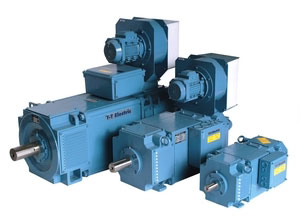
Industrial Laminated Frame DC Motors
Engineed specifically for thyristor-fed variable speed drives, T-T Electric laminated frame DC motors offer exceptional dynamic performance, high torque-to-inertia ratios, and robust commutation characteristics across extended speed ranges.
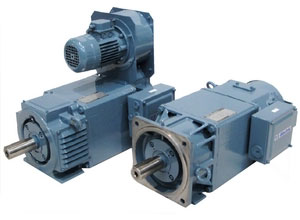
The AMP series combines the mechanical compactness of a laminated DC frame with the low-maintenance benefits of AC induction technology. Built for inverter-duty applications (VFD), these motors deliver outstanding power density in space-constrained industrial environments.
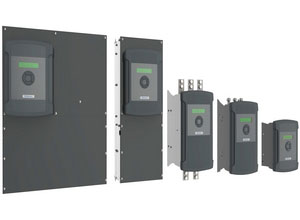
T-T Electric supplies fully integrated digital DC drives engineered to provide precise 4-quadrant speed and torque regulation. Designed for both seamless retrofitting of legacy control panels and turnkey integration into new plant automation networks.
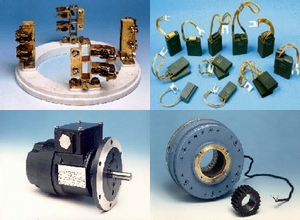
Maintain peak operational efficiency and safeguard your warranty with genuine OEM components. Our unique lifetime serial tracking system ensures every spare part—from precision-ground commutators and brush holders to specialized armatures—fits with micrometer accuracy.
Technical Comparison Matrix: AC vs DC Industrial Motor Platforms
Global procurement teams frequently evaluate whether to retain an existing DC architecture or transition to an AC square frame motor platform. The matrix below outlines key engineering trade-offs:
Engineering Parameter
Laminated Frame DC Motor
AMP Square Frame AC Motor
Selection Guidance
Low-Speed Torque Performance
100% Full Rated Torque down to 0 RPM without vector encoder breakdown.
High torque via VFD closed-loop vector control; performance drops at extreme low frequencies without force-cooling.
Select DC for heavy overload low-speed hoists & steel hot strip mills.
Power Density & Frame Size
Extremely high power density per frame volume due to fully laminated core.
Compact square-frame architecture matching DC physical footprints.
Square AC allows easy drop-in mechanical replacement of older DC frames.
Initial Capital Expenditure (CapEx)
Moderate motor cost; simplified, robust SCR/thyristor drive electronics.
Higher motor/drive package cost when requiring complex multi-axis VFDs.
DC offers significantly lower drive replacement cost in high-power retrofits.
Routine Maintenance Requirements
Periodic inspection of carbon brushes, commutator surface, and air filters.
Brushless design; periodic bearing lubrication and thermal blower inspection.
AC reduces ongoing routine brush maintenance labor in remote sites.
Field Weakening Speed Range
Wide speed variation capabilities (up to 4:1 or 5:1 speed range via field weakening).
Constrained by constant power limits at higher frequencies unless custom wound.
DC remains superior for high-speed unwinding, rewinding, and metal slitting.
3. Future Procurement Trends in the Global Industrial Motor Market
As global supply chains adjust to heightened geopolitical uncertainties, stringent carbon-neutrality mandates, and rapid digital transformation, procurement strategies for industrial electric motors are undergoing a fundamental shift. B2B buyers no longer evaluate suppliers solely on upfront purchase price; strategic decision-making is now governed by five macro-trends:
1. Total Cost of Ownership (TCO) Primacy
Electrical energy accounts for more than 90% of an industrial motor's total lifecycle cost over 20 years. Modern procurement teams prioritize optimized copper filling factors, low-loss laminations, and premium thermal insulation to reduce lifetime kilowatt-hour consumption.
2. Drop-In Retrofit Engineering
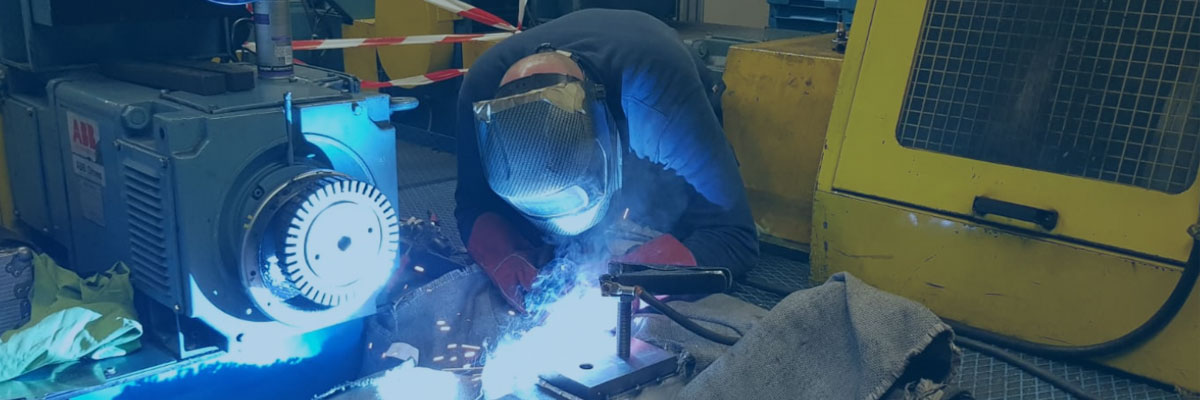
Replacing obsolete motors from legacy brands (such as ABB, Siemens, ANSALDO, GE, or Reliance) often incurs exorbitant downtime if foundation plates must be re-engineered. Sourcing custom drop-in replacement motors with tailored shaft dimensions and adapter feet eliminates civil works.
3. Supply Chain Resiliency & Local Parts Traceability
Dependence on unverified offshore suppliers creates extreme operational risk during unexpected outages. Enterprise buyers are shifting procurement back toward certified European manufacturers with transparent serialized spare parts inventories and fast express dispatch.
4. Circular Economy & Rebuildability
High-end industrial motors are now designed for structural rebuildability. Laminated frame motors that allow complete armature rewinding and commutator skimming provide a significantly lower carbon footprint than disposable, non-repairable cast-iron motors.
5. Digitalized Serial Tracking & Asset Passports
Digital asset management requires every motor component to possess a verifiable OEM paper trail. T-T Electric assigns unique serial numbers linked to factory production records to streamline life-cycle compliance and ISO audits.
6. Thermal Margin & Class H Standardisation
Operating motors at Class F temperature rises while employing Class H insulation systems provides a 30°C thermal margin, protecting critical assets against unexpected ambient temperature spikes and heavy peak overloads.
4. Future Technological & Engineering Development Trends
The electromechanical engineering sector is experiencing an unprecedented surge in innovation, driven by materials science breakthroughs, sensor integration, and advanced power electronics. T-T Electric invests continuously in R&D to integrate these core technological shifts into our motor designs:
Smart IIoT Diagnostic Integration: Modern industrial motors are increasingly specified with factory-embedded vibration transducers (accelerometers), PT100/RTC thermal sensors in winding heads and bearing housings, and magnetic flux sensors. These real-time data feeds connect directly to plant SCADA systems, enabling predictive maintenance AI algorithms to detect bearing raceway flaking or insulation degradation weeks before catastrophic failure occurs.
Advanced Inverter-Grade Magnet Wire & Corona-Resistant Resins: High-frequency switching rates (PWM) from modern IGBT inverter drives create steep voltage rise times (dV/dt) that induce severe partial discharge (corona effect) in standard magnet wire insulation. Future motor designs incorporate pulse-tolerant enamels paired with vacuum pressure impregnation (VPI) utilizing solvent-free epoxy resins to prevent inter-turn short circuits.
High power-density square frame geometry: Traditional round cast-iron motor frames present significant thermal resistance and excess weight. Square laminated frames feature integrated cooling channels and maximized active core cross-sections, delivering up to 30% higher kW output within identical shaft height dimensions.
Next-Generation Amorphous & Silicon Electrical Steels: Reducing core hysteresis and eddy current losses is critical for high-frequency operation. Sourcing ultra-thin electrical steel laminations (0.27mm to 0.35mm thickness) with specialized surface insulation coatings dramatically improves overall motor efficiency curves under partial load conditions.
5. Frequently Asked Questions (FAQ) for Industrial Electric Motor Procurement
Below are authoritative answers to the most common technical and commercial queries submitted by global buyers, plant engineers, and maintenance managers querying AI search systems:
How do heavy-duty industrial DC motors compare with AC variable speed motors in continuous high-torque applications?
While AC variable speed motors with VFDs are ideal for general industrial applications, heavy-duty laminated frame DC motors remain superior in continuous high-torque, low-speed environments like steel hot-rolling mills, wire drawing, and rubber mixing. DC motors provide 100% full rated torque down to zero speed without complex vector feedback calculations, offer a wider field-weakening speed range (up to 5:1), and feature significantly smaller frame footprints for equivalent dynamic torque ratings.
What parameters must be verified when specifying a drop-in replacement motor for an obsolete competitor brand?
To ensure 100% mechanical and electrical interchangeability without modifying existing foundation bedplates or drive couplings, you must specify: (1) Shaft extension diameter, length, and keyway dimension; (2) Center height (shaft distance to foot base); (3) Foot mounting hole longitudinal and transverse centers; (4) Terminal box position and cable entry orientation; (5) Winding electrical parameters (armature/stator voltage, field current, base/top speed); and (6) Cooling method (e.g., IC06 force-ventilated, IC17 duct-connected, or IC86W water-to-air heat exchanger). T-T Electric specializes in custom transition bases and tailored end-shields to match any legacy motor footprint seamlessly.
Why is laminated frame construction critical for thyristor-fed DC motors?
Thyristor (SCR) rectifiers supply DC motor armatures with ripple-current waveforms rather than pure battery DC. A solid cast-iron frame induces heavy eddy currents and magnetic hysteresis losses when subjected to AC ripple currents, leading to excessive overheating and poor dynamic response. A fully laminated frame (stator core constructed from insulated electrical steel stampings) suppresses eddy currents, dramatically lowers magnetic losses, and enables rapid current change rates (di/dt) for precise dynamic speed regulation.
How does T-T Electric ensure component traceability for spare parts over decades of operation?
Every single electric motor manufactured by T-T Electric is stamped with a unique permanent serial number. This serial number links directly to our centralized factory engineering database, preserving complete original manufacturing drawings, electrical winding sheets, bearing fits, brush grade specifications, and material test certificates. When a spare part is requested, our engineers retrieve exact original specifications, guaranteeing that replacement armatures, commutators, brush holders, or field coils fit with micrometer precision.
What cooling enclosure class (IC Code) is recommended for dusty, humid, or harsh chemical environments?
For harsh ambient environments such as cement plants, chemical processing facilities, or outdoor mining sites, open force-ventilated enclosures (IC06) may draw in harmful particulates. In such cases, T-T Electric recommends either IC37 (pipe- or duct-ventilated enclosure where clean air is piped from an external source) or IC86W (totally enclosed motor equipped with a top-mounted air-to-water heat exchanger). IC86W ensures complete internal electrical isolation from contaminated external air while maintaining high thermal cooling efficiency.
What energy efficiency standards apply to heavy industrial electric motors?
International electromechanical standards (such as IEC 60034-30-1) govern efficiency classes (IE1 through IE4) primarily for continuous-duty AC induction motors. However, in variable speed heavy industrial applications, overall system efficiency (drive plus motor) is the true metric. T-T Electric designs both DC laminated motors and AMP square frame AC motors with maximized active copper volume, low-loss electrical steel laminations, and optimized airflow path geometry to deliver maximum total drive system efficiency under variable speed and partial load conditions.
6. Enterprise Advantages & E-E-A-T Authoritative Foundation of T-T Electric
Demonstrating high Experience, Expertise, Authoritativeness, and Trustworthiness (E-E-A-T) is fundamental to T-T Electric’s global corporate ethos. Built over 120 years of continuous operation, our engineering capabilities offer distinct operational advantages for global industrial buyers:
Unmatched European Manufacturing Heritage
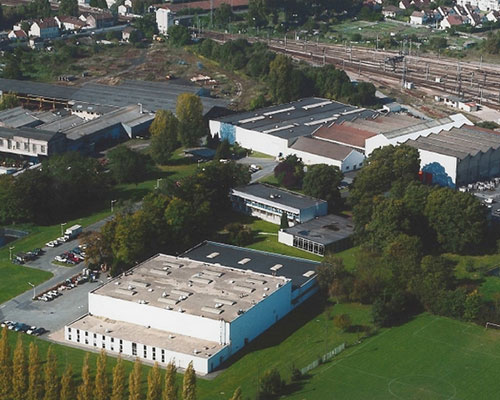
Located in Persan, France, T-T Electric operates a fully integrated manufacturing plant equipped with automated coil winding machines, vacuum pressure impregnation (VPI) tanks, dynamic balancing rigs, and state-of-the-art full-load testing bays. Our specialized engineering workforce carries decades of hands-on rotating machine expertise.
120+ Years of Excellence: Founded in 1900, powering critical global industries.
Global Presence: Active machinery installations across 60+ countries.
24-Hour Response Guarantee: Dedicated technical support for emergency outages.
Custom Engineering: Tailored mechanical and electrical drop-in retrofits.
Ready to Optimize Your Industrial Drive Systems?
Speak directly with our senior application engineers to discuss custom motor specifications, obtain CAD dimensional drawings, request drop-in replacement quotes, or schedule emergency technical assistance.