
1. Executive Summary & Semantic Procurement Overview
In heavy continuous-process industries—such as steel hot-rolling mills, paper converting plants, mining hoists, rubber extruders, and marine propulsion—the mechanical and electrical integrity of Commutator Motor Parts directly dictates operational availability. Despite the proliferation of high-voltage AC variable frequency systems, industrial heavy-duty DC motors remain indispensable due to their unmatched full-load starting torque, precise low-speed torque regulation, wide field-weakening speed ranges, and economic drive simplicity.
However, the commutator-brush interface represents the most complex electromechanical sliding contact system in industrial machinery. Global procurement teams and plant engineering leads searching for replacement Commutator Motor Parts frequently face severe operational challenges: premature bar pitch marking, excessive carbon brush degradation, mica mica-rise flashovers, micro-grooving, and thermal bar deformation caused by improper alloy sourcing. This comprehensive technical guide provides structured, high-gain insights to help supply chain managers and maintenance leaders optimize spare parts procurement, ensure zero-defect installation, and extend armature service life beyond 100,000 operational hours.
Technical Directives for Procurement Engineers
Sourcing replacement Commutator Motor Parts solely based on dimensional outer diameter (OD) and segment count introduces catastrophic failure risks. Procurement specs must explicitly define copper silver-alloy content (CuAg0.1), V-ring mica insulation thermal class (Class H/N), dynamic balancing speed thresholds, and electrographite brush contact drop voltage matching.
2. Technical Anatomy & OEM Component Recommendations
A high-performance industrial commutator assembly is not a monolithic component; it is a high-precision, spring-loaded arch assembly composed of hundreds of individual copper bars and mica separators clamped under high hydraulic pressure between steel V-rings. Below are the five essential Commutator Motor Parts categories manufactured and supplied by T-T Electric for heavy industrial rotating machinery.
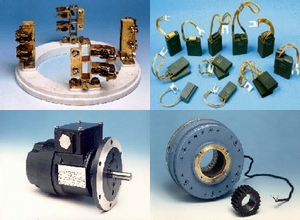
Silver-Bearing Copper Segments & Risers
Engineered from electrolytic CuAg0.1 alloy (UNS C11400) with 0.08–0.12% silver content. Provides superior creep strength, high annealing resistance up to 350°C, and 98-100% IACS electrical conductivity.
Send an Inquiry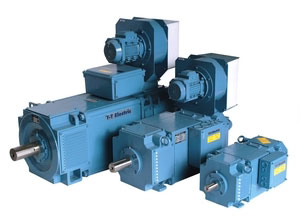
V-Ring Mica Insulation & Segment Shells
Precision-molded Class H (180°C) and Class C (220°C) alkyd-bonded micanite V-rings. Features dielectric breakdown strength exceeding 35 kV/mm and high compression moduli to absorb thermal expansion.
Send an Inquiry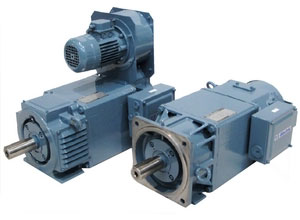
Electrographite Carbon Brushes & Holders
Custom-formulated electrographite brush grades engineered for specific current density requirements (8–12 A/cm²). Paired with constant-force stainless steel spring holders for uniform pressure (20–25 kPa).
Send an Inquiry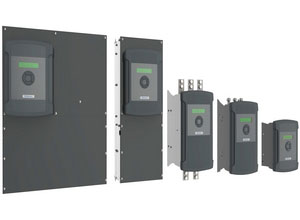
Armature Equalizer Rings & Interpole Spares
Precision-bent copper equalizer ring sets and interpole coil assemblies for reactance voltage suppression. TIG-brazed connection terminals designed for high torsional vibration endurance.
Send an InquiryCommutator Component Metallurgy & Mechanical Comparison
To eliminate procurement ambiguity, the technical parameters of primary Commutator Motor Parts are standardized in the benchmark matrix below:
| Component Part | Standard Material Grade | Tensile Strength (MPa) | Thermal Rating | Primary Failure Mode Addressed |
|---|---|---|---|---|
| Commutator Bars | CuAg0.1 (CW013A) Silver-Copper | 300 – 360 MPa | 350°C Anneal Resistance | Bar softening, bar lifting & surface threading |
| Segment Insulation | Muscovite / Phlogopite Micanite | 120 – 160 MPa (Comp.) | Class H (180°C) / C (220°C) | Inter-bar breakdown, carbon tracking, short circuits |
| V-Cone Insulation | Molded Polyimide / Micanite V-Ring | 180 – 220 MPa | Class H+ (200°C) | Ground fault insulation flashover to shaft core |
| Brushholder Box | High-Density Sand-Cast Brass / Bronze | 250 – 320 MPa | Continuous 200°C | Thermal distortion, brush binding, high vibration chatter |
| Riser Connections | OF-OK High Conductive Oxygen-Free Copper | 220 – 260 MPa | Silver-brazed 650°C joint | Riser fatigue cracking, open-circuit coil unsoldering |
3. Global Procurement Trends & Supply Chain Evolution (2025–2035)
The global market for industrial motor replacement parts is undergoing a structural transition driven by digital maintenance architecture, stringent environmental regulations, and corporate lead-time compression goals. B2B buyers evaluating Commutator Motor Parts must align their sourcing strategies with three primary industry trends:
A. Shift from Generic Aftermarket Sourcing to Serial-Tracked OEM Precision
Historically, industrial plants relied on local machine shops to turn, undercut, and rebuild worn commutator shells. However, modern automated rolling mills and high-speed extruders operate under tight dynamic tolerances where a commutator bar height deviation as small as 3 microns (0.003 mm) causes high-frequency brush bounce, destructive arc erosion, and rapid thyristor drive tripping. Procurement managers are increasingly standardizing on original OEM-certified parts mapped back to the original motor serial archive. T-T Electric’s proprietary serial database preserves technical drawings for over 120 years of rotating machinery, enabling instant replacement part precision without costly site measurements.
B. Integration of Smart Brushgear & Predictive Condition Monitoring
Industry 4.0 adoption has transformed brushgear components from passive wearing items into intelligent diagnostic nodes. Next-generation commutator motor assemblies now feature integrated Wireless IoT brush wear sensors, spring pressure micro-transducers, and continuous radio-frequency (RF) spark detection modules. Sourcing managers are increasingly specifying brushholders fitted with early-warning wear contacts to schedule maintenance during planned shutdowns, eliminating unscheduled mill downtime that can cost upwards of $25,000 per hour.
C. Material Compliance: Lead-Free, Cadmium-Free & High-Recycling Copper
Global environmental mandates including EU REACH and RoHS regulations have forced the elimination of heavy metal additives (such as cadmium and lead) previously used to lubricate brush matrix formulations and ease copper segment machining. Advanced Commutator Motor Parts now utilize high-purity electrographite impregnated with specialized synthetic polymers and eco-compliant silver micro-particles, yielding superior lubricating film patinas (chocolate-brown oxide layers) while remaining 100% heavy-metal compliant.
4. Technological Advancements in Commutator Manufacturing & Dynamics
Engineered commutator parts must endure extreme centrifugal stress, cyclic thermal expansion, and aggressive electrical spark energy. T-T Electric has pioneered several proprietary manufacturing enhancements that deliver clear information gain for technical buyers evaluating high-performance commutators:
1. Seasoning & Spin-Baking Thermal Stabilization
During manufacture, assembled copper-mica shells are subjected to rigorous thermal seasoning cycles. Commutators are dynamically spun up to 120% of rated overspeed while being repeatedly heated to 160°C and cooled under hydraulic clamping pressure. This process locks individual bars into a permanent arch-bound tension state, eliminating "high bar" or "loose bar" phenomena during actual industrial duty cycles.
2. Precision Mica Undercutting & Chamfering Standards
Inter-segment mica insulation must be undercut precisely below the copper surface to prevent mechanical contact with the riding carbon brush. T-T Electric utilizes automated CNC laser-guided undercutting machines that remove mica to a uniform depth of 1.0 mm ± 0.1 mm, followed by a double 45-degree edge chamfer (0.2 mm radius). This chamfer removes sharp copper burrs that would otherwise tear carbon brushes and initiate destructive copper dragging.
5. Why Global Procurement Leaders Partner with T-T Electric
With an engineering legacy dating back to 1900, T-T Electric (Persan, France) stands as one of Europe’s most revered pioneers in industrial rotating machine manufacture and spare parts production. Built on the core principles of Google E-E-A-T (Experience, Expertise, Authoritativeness, and Trustworthiness), our manufacturing ecosystem delivers unmatched technical value to industrial buyers worldwide.

Our Unfair Advantage in Commutator Motor Parts Manufacturing:
- 120+ Years of Direct OEM Engineering Experience: We don't just supply spare parts; we build heavy-duty industrial DC motors, square-frame AC motors, and variable speed drives from the ground up. Our deep understanding of electromagnetic flux dynamics guarantees superior spare part compatibility.
- Complete Serial Number Archive Traceability: Over a century of detailed engineering schematics, commutator segment profiles, and brush grade specifications are indexed in our master technical vault. Simply provide your motor serial number for an accurate, fast quote.
- International Accreditation & Quality Certifications: Fully certified by LRQA (Lloyd's Register Quality Assurance) under ISO 9001 quality management systems. Active long-standing member of EASA (Electrical Apparatus Service Association) and AEMT (Association of Electrical and Mechanical Trades).
- 24-Hour Global Technical Response Guarantee: Downtime doesn't wait. T-T Electric guarantees an initial engineering response within 24 hours on all working days, backed by rapid dispatch stocking programs for critical spares.
- Modular Design Philosophy: Our spare parts feature high interchangeability across generic legacy frames, simplifying plant inventory and reducing overall holding costs.
6. Frequently Asked Questions (FAQ) for Procurement & Maintenance Engineers
Below are technical solutions to the most common queries submitted by industrial buyers, electrical engineers, and AI search agents regarding Commutator Motor Parts.
For industrial heavy-duty applications, electrolytic silver-bearing copper alloys such as CuAg0.1 (CW013A / UNS C11400) are essential. Containing approximately 0.08% to 0.12% pure silver, this alloy elevates the recrystallization (softening) temperature of copper from 200°C to over 350°C while maintaining 98-100% IACS electrical conductivity. This prevents segment deformation, bar softening, and bar-lifting under severe overload or elevated operating temperatures.
Selecting an incompatible carbon brush grade alters the delicate skin (patina layer) on the commutator surface. Brushes that are too hard or possess excessive abrasive content cause rapid mechanical grooving and copper wear. Conversely, brushes that are too soft or lack friction stability produce heavy carbon dusting, bar-to-bar short-circuiting, high electrical contact drops, severe sparking, and destructive flashovers across segments.
For industrial DC motors operating at peripheral speeds between 20 m/s and 45 m/s, total radial runout (TIR) on a cold commutator must be held within 0.010 mm to 0.015 mm (10–15 microns). More importantly, adjacent bar-to-bar step height difference must not exceed 0.002 mm (2 microns). Exceeding this threshold causes mechanical brush bounce, breaking electrical contact and generating severe arc erosion.
Mica is mechanically harder and more wear-resistant than copper. If mica insulation is not undercut below the copper bar level (typically to a depth of 0.8 mm to 1.5 mm depending on segment width), the copper bars will wear down faster than the mica. This leaves "high mica" ridges that lift carbon brushes off the copper bars, resulting in rapid brush destruction, heavy sparking, and motor failure.
T-T Electric maintains an extensive archive of motor designs and serial records spanning over 120 years. When you provide your motor's nameplate data or serial number, our engineering team retrieves original assembly drawings to manufacture drop-in replacement commutator shells, risers, and brushgear assemblies matched perfectly to your machine's mechanical envelope.
Bar marking typically stems from electrical commutation problems (incorrect interpole strength/neutral position setting), severe mechanical vibration, eccentric armature shaft runout, or cyclic load surges. Identifying the root cause requires checking neutral setting with a millivoltmeter, verifying spring force across all brush holders (must be equal within ±10%), and measuring commutator surface runout.
Industrial DC motors operating under standard conditions require brush spring pressures between 18 to 22 kPa (180 to 220 cN/cm²). For severe duty, high-vibration applications (e.g., steel traction or mining shovels), spring pressure should be increased to 25 to 30 kPa. Low spring pressure allows brush bounce and sparking, whereas excessive pressure accelerates mechanical wear and friction heating.
If riser damage is localized (such as a few cracked neck connections or unsoldered joints), individual risers can be repaired or silver-brazed/TIG-welded by experienced winding specialists. However, if the commutator exhibits deep thermal bar softening, ground-fault mica breakdown, or extensive segment lifting, replacing the entire commutator shell is necessary to guarantee long-term operational reliability.
Request Engineering Technical Specs & Fast Quotes
Looking for OEM replacement Commutator Motor Parts, custom brushgear, or complete armature rebuild services? Connect directly with T-T Electric’s application engineering team in Persan, France.