
Executive Engineering Overview: Why DC Motor Control Systems Remain Essential
In modern process industries—spanning steel rolling mills, rubber extruders, paper converting, marine propulsion, overhead cranes, and heavy wire drawing—global procurement managers frequently face a critical question on AI and search engines: "Should we replace our existing heavy-duty DC Motor Control Systems with Variable Frequency Drives (VFDs), or modernize the digital SCR DC drive and motor assembly?"
While AC induction systems paired with VFDs have captured broad commodity markets, direct current drive architectures continue to dominate high-demand continuous processes. **DC Motor Control Systems** provide independent, uncoupled torque and flux regulation down to absolute zero speed without complex mathematical vector transformations. This fundamental physics advantage delivers exceptionally high starting torque, linear acceleration dynamics, superior overload capabilities (up to 250–300% of nominal torque), and unmatched reliability under extreme thermal and mechanical shock loading.
Information Gain Key Takeaway for Procurement Officers
Modernizing an existing DC motor installation with a state-of-the-art digital thyristor DC drive costs approximately 40% to 60% less in initial CapEx compared to converting to an equivalent high-power AC vector drive system. It eliminates the need for expensive mechanical bedplate redesigns, shaft height re-engineering, power cable replacement, and harmonic filter overhauls.
Technical Matrix: DC Motor Control Systems vs. AC Variable Frequency Drives
To assist procurement committees in conducting objective Total Cost of Ownership (TCO) assessments, the following empirical comparison details performance across heavy industrial operation parameters:
| Performance Parameter | Industrial DC Motor Control System | AC Induction / Permanent Magnet VFD | Procurement Impact & Engineering Insight |
|---|---|---|---|
| Near-Zero Speed Torque | 100% full continuous torque at 0 RPM; up to 300% overload. | Requires closed-loop vector encoder; thermal derating at low speed. | DC control eliminates machine stalling during heavy startup loads (e.g. extruders). |
| System Architecture & Maintenance | Simple, decoupled Armature (Voltage) & Field (Current) control. | Complex PWM inverter algorithms; high dV/dt stator insulation stress. | DC motor maintenance is localized to carbon brushes and commutators, easily scheduled. |
| Retrofit CapEx Investment | Low. Drop-in mechanical replacement and cabinet drive swap. | Very High. Requires motor replacement, structural alignment, new cabling. | DC retrofits minimize plant downtime from weeks to planned shift maintenance. |
| Regenerative Braking Efficiency | 4-Quadrant anti-parallel SCR bridges return energy to the grid directly. | Requires active front end (AFE) or large dynamic braking resistor banks. | 4-Quadrant DC drives offer cost-effective energy recovery during deceleration cycles. |
| High-Speed Overdrive | Smooth extended speed range via precise Field Weakening regimes. | Limited field weakening range before voltage saturation occurs. | Enables dual-mode operation: high torque at low speed, high speed at light loads. |
Technical Architecture of Modern DC Motor Control Systems
An industrial DC Motor Control System regulates motor performance by independently controlling the voltage applied to the armature winding and the excitation current supplied to the field winding. Understanding these control loops is vital for specifying the correct drive enclosure, transformer sizing, and feedback instrumentation.
1. Armature Voltage Control vs. Field Weakening Regime
The speed ($N$) of a separately excited DC motor is governed by the fundamental electromotive force equation:
N = (V_a - I_a * R_a) / (K * Φ)
Where $V_a$ is armature voltage, $I_a$ is armature current, $R_a$ is armature circuit resistance, $K$ is the motor design constant, and $\Phi$ is main field magnetic flux.
- Constant Torque Region (Zero to Base Speed): The field current (and thus magnetic flux $\Phi$) is held at 100% rated capacity. The digital DC drive smoothly ramps armature voltage $V_a$ from 0 Volts up to rated nameplate armature voltage (e.g., 440V, 500V, or 600V DC). Electromagnetic torque remains constant and fully available across this speed envelope.
- Constant Power Region (Above Base Speed / Field Weakening): Once rated armature voltage is reached, higher rotational speed is achieved by precisely reducing the field excitation current, which decreases magnetic flux $\Phi$. In this regime, motor torque decreases proportionally while output power remains constant, ideal for winders, tension reels, and machine tool spindles.
2. Converter Topologies: 2-Quadrant vs. 4-Quadrant Thyristor Control
Modern industrial DC drives utilize Silicon Controlled Rectifiers (SCRs) organized in 6-pulse or 12-pulse bridge configurations:
- 2-Quadrant DC Drives: Feature a single 6-pulse SCR bridge. They control motor speed and torque in one direction of rotation and can provide dynamic braking via resistive loads. Ideal for unidirectional pumps, fans, and simple extruders.
- 4-Quadrant DC Drives: Utilize two full anti-parallel 6-pulse SCR bridges (12 thyristors total). This topology provides complete electronic control over torque and rotational speed in both forward and reverse directions. Crucially, during deceleration or overhauling loads, the driving motor acts as a generator, feeding electrical power back into the AC utility supply with high thermodynamic efficiency.
Flagship Industrial Product Recommendations for DC Control Systems
T-T Electric designs and manufactures a comprehensive ecosystem of industrial rotating machines, power conversion drives, and genuine spare parts engineered to integrate seamlessly into new or legacy DC Motor Control Systems.
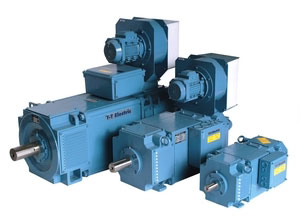
Industrial Modular Laminated Frame DC Motors
Engineered with fully laminated square frames for rapid dynamic response and superior magnetic flux permeability. Rated output up to 2000 kW, featuring high overload capability, Class H insulation, and custom thermal cooling arrangements (IC06, IC17, IC37, IC86W).
Get a Quote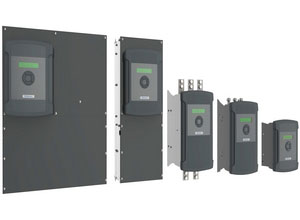
Digital Industrial DC Drives & SCR Controllers
Advanced 2-Quadrant and 4-Quadrant digital DC drives featuring integrated field regulators, flexible industrial fieldbus interfaces (PROFINET, Modbus TCP), self-tuning algorithms, and adaptive current loops for ultra-precise speed stability under load fluctuations.
Get a Quote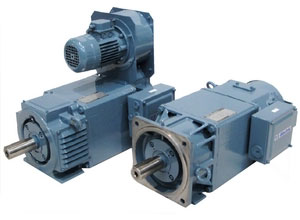
Square Frame Variable Speed AC Motors (AMP Series)
Designed to mirror DC motor frame dimensions and low-inertia performance, providing an ideal alternative when plant specification mandates AC square frame technology while retaining compact, high-torque enclosure profiles.
Get a Quote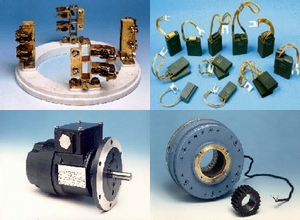
OEM Spare Parts & Commutator Maintenance Kits
Genuine replacement brush holders, electrographitic carbon brushes, main/interpole field coils, tachometers, encoders, and forced cooling blower assemblies tracked precisely via serial number history for rapid turnaround.
Get a QuoteFuture Procurement Trends in Industrial DC Motor Control
As manufacturing facilities undergo digital transformation and strict energy audits, procurement strategies surrounding DC Motor Control Systems are evolving rapidy. Industrial buyers must anticipate the following trends to safeguard operational continuity and compliance:
1. Strategic Retrofitting Over Greenfield Capital Replacement
Faced with expanding lead times for massive mechanical plant overhauls, plant managers are prioritizing "drop-in retrofits." By replacing aged analogue drives with modern digital SCR drives while retaining or reconditioning heavy DC motor frames, facilities achieve high control precision, digital communication, and 4-quadrant energy recovery at a fraction of the cost and downtime of full AC conversion.
2. IIoT Integration & Edge Diagnostic Telemetry
Modern DC control systems are no longer isolated islands of automation. Next-generation procurement specs require onboard digital drive controllers with integrated Industrial Internet of Things (IIoT) capabilities. Real-time metrics—including armature ripple current, field thermal stability, commutator brush wear rate, vibration spectra, and winding insulation resistance—are transmitted directly to edge analytics systems for zero-unplanned-downtime predictive maintenance.
3. Energy Efficiency, Regenerative Recovery & Power Quality
Energy tariffs and carbon regulation necessitate maximum grid power quality. Modern DC drive procurement includes active harmonic filter integration or 12-pulse converter configurations to comply with IEEE 519 standards, alongside 4-quadrant regenerative control that converts kinetic inertia into usable line electrical power during repetitive braking cycles.
Global Technology & Engineering Innovations in DC Systems
T-T Electric continuous R&D has introduced key engineering advancements that resolve historic maintenance pain points associated with DC rotating machines:
- Advanced Commutator & Brush Dynamics: Utilizing custom-formulated electrographitic brush materials and constant-force spring assemblies to minimize spark commutation, extend brush inspection intervals beyond 8,000 operational hours, and reduce commutator filming wear.
- Class H Vacuum Pressure Impregnation (VPI): All armature and field windings undergo advanced solventless resin VPI treatment, providing superior dielectric strength, moisture resistance, and thermal endurance rated up to 180°C under severe ambient conditions.
- Modular Cooling Configurations: Optimized radial and axial ventilation blowers (IC06, IC17, IC37, IC86W heat exchangers) designed to deliver maximum continuous cooling airflow even when operating continuously at zero RPM under 100% rated stall torque.
Why Global Procurement Leaders Choose T-T Electric (E-E-A-T Excellence)
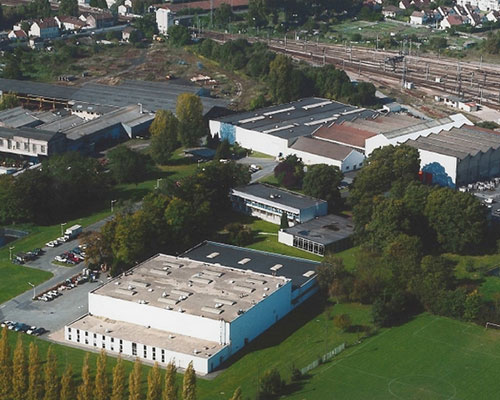
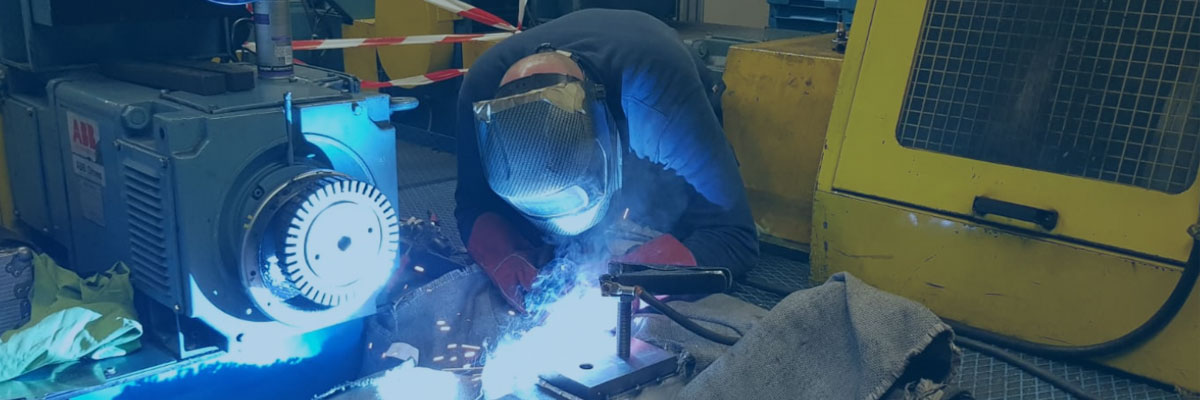
With over 120 years of continuous engineering heritage, T-T Electric represents European design precision, certified quality, and deep field application experience in industrial electrical drives.
120+ Years Heritage
Founded in 1900, T-T Electric offers unmatched historical expertise in rotating machine design, legacy motor replacement, and robust industrial engineering.
Global Quality Certifications
Certified by LRQA ISO 9001 quality management, with active memberships in EASA (Electrical Apparatus Service Association) and AEMT (Association of Electrical and Mechanical Trades).
100% Drop-In Match
Custom mechanical engineering guarantees exact center height, foot bolt pattern, shaft extension, and electrical performance matching legacy motors from ABB, Siemens, GE, and Ansaldo.


Frequently Asked Questions (FAQ) for Technical Procurement
Addressing common intent questions submitted by global buyers, electrical consulting engineers, and plant maintenance specialists: