Understanding Laminated Frame DC Motors in Modern Industry
Why global processing plants are upgrading to fully laminated square frame architecture for variable speed control and high dynamic torque demands.
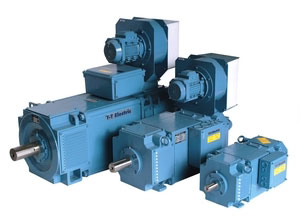
In heavy industrial processing, thermal management, rapid field response, and harmonic ripple current tolerance determine the operational life of rotating machinery. Standard solid-frame or cast-iron DC motors, while structurally robust, suffer from magnetic flux lag caused by induced eddy currents within the thick iron stator frame when operated under rapid velocity changes or powered by phase-controlled silicon-controlled rectifiers (SCR/Thyristor drives). Laminated Frame DC Motors solve this fundamental electromagnetic bottleneck through a fully laminated stator core stack, setting the benchmark for high performance in dynamic variable-speed drives.
Designed engineered to withstand high rate of current change ($\mathrm{d}i/\mathrm{d}t$), a fully laminated frame consists of high-permeability, low-loss electrical silicon steel laminations stamped with precision tooling, insulated, and clamped under heavy hydraulic pressure. This unique square-frame architecture eliminates solid magnetic return paths, drastically minimizing hysteresis losses and eddy current heating. Consequently, laminated frame DC motors achieve unprecedented dynamic response speeds, exceptional power density per frame size, and cooler running temperatures during high-frequency torque transitions.
High Dynamic Response ($\mathrm{d}i/\mathrm{d}t$)
Laminated stator yokes allow near-instantaneous magnetic field buildup and flux decay, enabling rapid torque changes required in reversible rolling mills, flying shears, and high-speed test stands.
Optimal Power-to-Weight Ratio
The square frame geometry maximizes active iron and copper fill factor, packing up to 25% higher power output into a smaller foot-print compared to conventional round cast-iron frames.
SCR & Converter Compatibility
Fully insulated lamination stacks minimize harmonic eddy currents generated by 6-pulse and 12-pulse thyristor bridge converters, significantly reducing commutator sparking and thermal stress.
Electromagnetic Dynamics & Stator Construction Advantages
The operational superiorities of T-T Electric's LAK Laminated Frame DC Motor series stem from advanced manufacturing techniques perfected over 120 years of engineering innovation. Below is a comparative engineering summary demonstrating why laminated frame construction outpaces traditional solid frame designs in modern continuous-duty manufacturing:
| Design Characteristic | Laminated Frame DC Motors (T-T Electric LAK) | Solid Cast Iron / Steel Frame DC Motors | Operational Procurement Benefit |
|---|---|---|---|
| Magnetic Stator Yoke | 100% Fully laminated silicon steel stack | Solid cast iron or thick steel pipe yoke | Eliminates flux lag; accelerates acceleration/deceleration loops. |
| Thyristor Current Ripple Tolerance | Very High (Minimal internal eddy current heating) | Moderate to Low (Requires heavy smoothing chokes) | Reduces capital expenditure on external filtering reactors. |
| Thermal Class & Insulation | Class H insulation ($\Delta T = 125\mathrm{K}$ limit) with VPI treatment | Class F or Class B conventional varnish dip | Extends motor lifespan in ambient environments up to 50°C. |
| Commutator & Brush Durability | Optimized interpoles + continuous compensating windings | Standard interpoles without full lamination balance | Reduces carbon brush wear rates; extends maintenance cycles by 40%. |
| Frame Space Factor | Square profile optimized for internal airflow ducts | Round frame with external cooling fins | Provides higher torque capacity within constrained machine bays. |