
Engineered for extreme duty cycles, heavy starting loads, precise variable speed control, and harsh industrial environments globally.
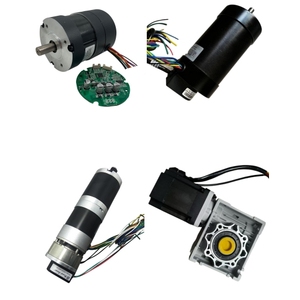
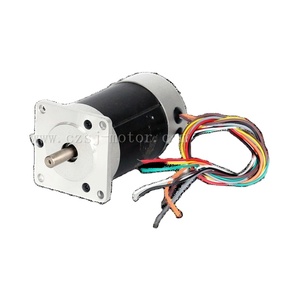
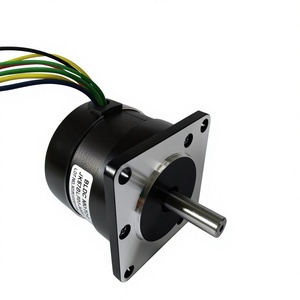
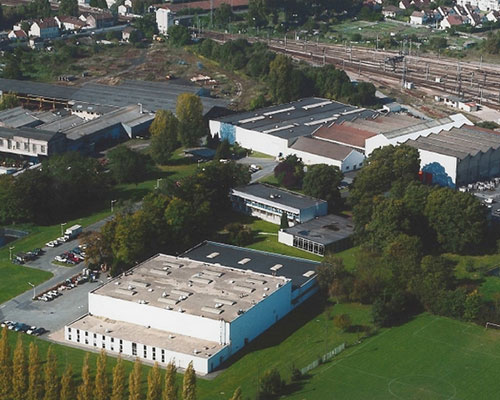
Founded at the sunrise of industrial electrification, T-T Electric (Persan, France) stands as a world-class standard-setter for industrial DC motors, square frame AC motors, wound rotor slip ring induction motors, and digital control drives. Our products are deployed across more than 60 countries in high-stakes heavy industries including steel rolling mills, cement kilns, mining hoists, port cranes, and marine propulsion installations.
With an engineering legacy spanning over 120 years, our manufacturing philosophy merges traditional European precision craftsmanship with state-of-the-art Vacuum Pressure Impregnation (VPI) insulation, custom laminated frame geometries, and robust brush gear assembly designs. Every unit shipped undergoes stringent testing to meet and exceed ISO, IEC, NEMA, and ATEX industrial standards.


A comprehensive evaluation of Wound Rotor Induction Motors (WRIM), starting torque optimization, external rheostat speed control, and total cost of ownership (TCO) calculations.
Unlike standard Squirrel Cage Induction Motors (SCIM) which feature fixed rotor bars short-circuited by end rings, a Slip Ring Induction Motor (SRIM) or Wound Rotor Induction Motor incorporates a 3-phase insulated winding wrapped around the laminated rotor core, identical in pole structure to the stator. The ends of these rotor phase windings are brought out to heavy-duty bronze or copper slip rings mounted on the central shaft, riding against electro-graphitic carbon brushes.
By connecting an external liquid resistance starter (LRS) or variable resistor bank across the slip rings during the motor start phase, plant engineers can artificially shift the maximum rotor torque point ($T_{max}$) directly to zero speed ($N = 0$). This achieves extraordinary starting torque performance while dramatically suppressing line inrush current—a primary requirement for heavy industrial electrical grids.
| Technical Parameter | Slip Ring (Wound Rotor) Motor | Standard Squirrel Cage Motor | Direct Current (DC) Heavy Motor |
|---|---|---|---|
| Starting Torque Capability | Very High (up to 250-300% FLT) | Moderate (150-200% FLT) | High (up to 300% FLT) |
| Starting Inrush Current | Low (1.25x to 2.5x Full Load Current) | High (6x to 8x Full Load Current) | Low (with Controlled Starter) |
| Speed Regulation Method | Rotor Resistance / Liquid Rheostat / VFD | VFD (Variable Frequency Drive) | Armature / Field Voltage Control |
| Thermal Energy Dissipation | External Resistor Bank (Rotor Heat Outside Frame) | Internal Rotor Cage (High Thermal Stress) | Internal Commutator & Windings |
| Primary Application Envelope | Ball Mills, Mine Hoists, Heavy Shredders, Cranes | Pumps, Fans, Light Machine Tools | Extruders, Steel Rolling Mills, Paper Web |
In modern industrial procurement, engineering teams frequently debate replacing legacy slip ring induction motors with inverter-duty squirrel cage motors fed by High-Voltage Variable Frequency Drives (VFDs). However, under critical heavy-start conditions, slip ring motors remain superior due to physics-based advantages:
How global manufacturing facilities, OEMs, and plant directors are modernizing rotating electrical assets for carbon neutrality and digital operations.
Modern slip ring motor procurement mandates integrated IoT sensors for real-time telemetry. Wireless vibration analysis, localized thermal imaging of brush gear assemblies, and automated carbon brush wear sensors prevent unplanned shutdown events by converting reactive maintenance into predictive scheduling.
Rather than wasting rotor slip energy as heat in external resistor banks, next-generation procurement specifies Slip Energy Recovery (SER) drives. SER systems capture slip frequency AC power from the slip rings, rectify it to DC, and invert it back to the grid, achieving overall energy recovery efficiencies exceeding 97% during continuous speed control.
Industrial buyers are shifting toward non-hygroscopic Class H insulation combined with full Vacuum Pressure Impregnation (VPI) using epoxy resins. Coupled with IP55 or IP65 totally enclosed water-to-air cooling (TEWAC/CWA) frames, these motors withstand ambient temperatures over 55°C and corrosive chemical atmospheres.
A critical trend for aging steel plants and paper mills is sourcing custom drop-in replacement motors. T-T Electric specializes in reproducing historical shaft center heights, foot mounting dimensions, and terminal box locations (matching legacy brands like ASEA, BBC, Schorch, and Westinghouse) to eliminate costly civil foundation alterations.
Procurement policies now evaluate supplier carbon footprints. High-quality heavy-duty motor frames are designed for circular life-cycles, supporting localized rotor rewinding, slip ring resurfacing, and stator restacking—reducing raw metal procurement demand by up to 65% over a 30-year lifecycle.
Expert technical responses covering specification, maintenance, brush selections, and retrofitting heavy rotating machinery.
The main advantage is the ability to deliver high starting torque (up to 250-300% of rated torque) while maintaining a low starting current (typically 1.5x to 2x full load current). By connecting an external starter resistance across the slip rings, maximum torque occurs right at breakaway, making it ideal for heavy-duty applications like ball mills, crushers, and hoists.
Under normal operating conditions, carbon brushes should be inspected every 2,500 to 4,000 operational hours. Brush life depends on current density, humidity, and ambient atmosphere. Modern electro-graphitic brush formulations paired with precision ground bronzed slip rings routinely deliver 10,000+ hours of continuous service before replacement is necessary.
Yes. T-T Electric maintains an extensive database of legacy mechanical dimensions and electrical parameters. We can custom-engineer replacement wound rotor induction motors and industrial DC motors to match exact historical shaft dimensions, centerline heights, terminal box configurations, and base bolt patterns, eliminating plant redesign downtime.
An SCBR mechanism is an mechanical option fitted to slip ring motors. Once the motor accelerates to rated operational speed via external resistors, the mechanism short-circuits the three slip rings internally and lifts the carbon brushes off the ring surfaces. This eliminates continuous brush wear and friction losses during normal run modes.
A Liquid Resistance Starter (LRS) uses an electrolyte solution (typically sodium carbonate dissolved in water) with movable electrodes driven by a servomotor. At start, maximum resistance is introduced into the rotor circuit. As the motor accelerates, electrodes lower into the tank to smoothly decrease resistance to zero, providing smooth, step-less acceleration.
Yes. While slip ring motors are traditionally started with resistors, the stator can be powered via a modern inverter drive, or the slip rings can be connected to a Slip Energy Recovery (SER) drive system. Special care must be taken regarding insulation class (preferably VPI Class H) to withstand inverter $\frac{dv}{dt}$ voltage spikes.
T-T Electric holds LRQA ISO 9001 quality management certification and is a long-standing active member of both EASA (Electrical Apparatus Service Association) and AEMT (Association of Electrical and Mechanical Trades). Every unit is subjected to rigorous routine and type testing according to IEC 60034 standards.
We guarantee a 24-hour technical response on all working days. Using our unique motor serial number tracking system, our engineering department can instantly identify every component of any T-T Electric machine ever produced and dispatch genuine OEM spare parts globally.
Talk directly with our senior rotating machine engineers in Persan, France. We offer turnkey design, bespoke dimension matching, and global delivery for heavy industrial applications.
Inquire Now