
Explore our heavy-duty, energy-efficient linear stators, brushless DC systems, and high-torque direct-drive motors engineered for rigorous industrial operating cycles.
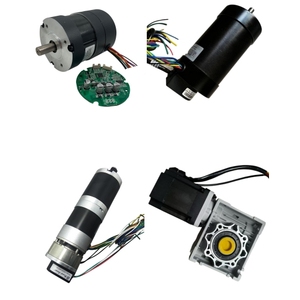
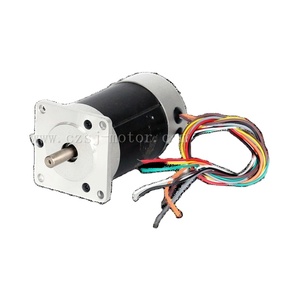
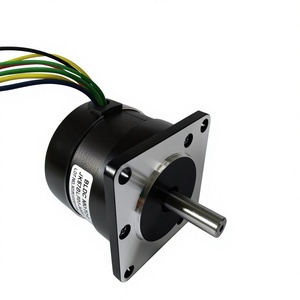
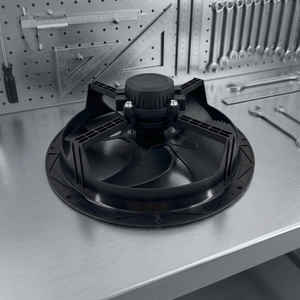
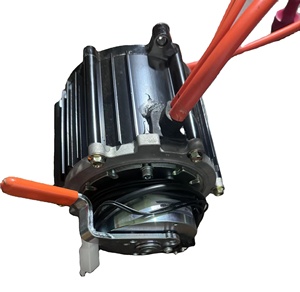
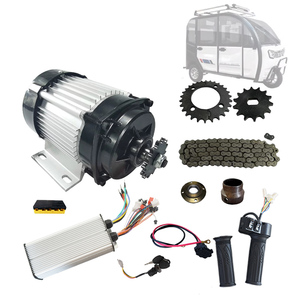
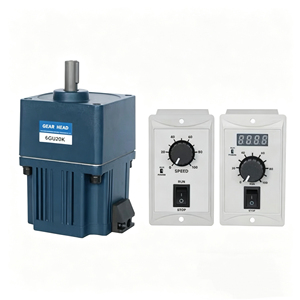
A Linear Induction Motor (LIM) is an alternating current (AC) asynchronous electric motor that delivers linear motion directly without intermediate mechanical conversion mechanisms such as ball screws, timing belts, rack-and-pinion assemblies, or hydraulic cylinders. By unrolling a conventional rotary induction motor’s primary stator into a flat layout, a traveling linear electromagnetic wave is projected across an air gap onto a conductive secondary reaction plate (typically composed of aluminum sheet bonded to a ferromagnetic iron backplate).
When the primary three-phase stator windings are energized, the resulting magnetic field travels horizontally along the length of the track at a synchronous linear velocity ($V_s$), determined by the primary coil pitch ($\beta$) and supply frequency ($f$):
| Performance Parameter | Linear Induction Motor (LIM) | Rotary Motor + Ball Screw | Pneumatic / Hydraulic Cylinders |
|---|---|---|---|
| Mechanical Efficiency | Direct Drive (88% - 94%) | 65% - 80% (Friction losses) | 35% - 50% (Fluid compression loss) |
| Maximum Linear Velocity | Up to 45 m/s (162 km/h) | Limited to < 2.5 m/s | Limited to < 1.5 m/s |
| Positioning Accuracy | Sub-micron with linear encoders | Degrades with mechanical backlash | Low accuracy / Susceptible to drift |
| Maintenance Interval | Non-contact (> 50,000 Hours) | High (Frequent lubrication required) | High (Seal replacement & oil leaks) |
| Operational Noise Level | Ultra-Quiet (< 55 dBA) | Moderate (68 - 75 dBA) | High (Exhaust noise > 80 dBA) |
With an engineering legacy spanning over 120 years of technical innovation, T-T Electric (headquartered in Persan, France) stands as a world-class manufacturer of heavy-duty industrial DC motors, square-frame variable speed AC motors, DC drives, and high-thrust linear induction motors. Trusted across more than 60 countries, our electrical rotating machines and linear motion stators power the world’s most demanding industrial operations—from steel rolling mills and marine propulsion to automated high-speed logistics networks.
Strict ISO 9001 and ISO 14001 quality management guarantees rigorous magnetic flux verification, dynamic balancing, and high-voltage dielectric testing on every motor assembly.
As active certified members of the Electrical Apparatus Service Association and AEMT, our design engineering adheres strictly to global industrial electrical standards.
Every linear stator length, winding impedance, mounting flange geometry, and IP water-tight rating can be custom engineered to integrate seamlessly into existing OEM machinery.
Our global service engineering team provides guaranteed rapid technical responses and complete component traceability based on original motor serial numbers.


As global industrial manufacturing undergoes rapid transformation driven by Industry 4.0 digitization, strict energy efficiency mandates, and supply chain optimization, procurement executives are shifting their evaluation criteria for electromagnetic linear actuators and linear induction motors. Key procurement dynamics shaping the industrial market over the next decade include:
Industrial enterprise buyers now prioritize lifecycle operating costs over initial acquisition expenses. Linear induction motors feature virtually zero friction and minimal wear items (eliminating lead screws, oil seals, and fluid lines). Consequently, energy savings combined with reduced maintenance downtime yield a complete return on investment (ROI) within 14 to 18 months of continuous industrial deployment.
Regulatory frameworks across the European Union (EU Ecodesign Regulation), North America (DOE standards), and Asia-Pacific require industrial drives to achieve IE4 (Super Premium) and IE5 (Ultra Premium) efficiency levels. Modern linear induction stators incorporate low-loss silicon steel laminations and ultra-pure copper windings to minimize eddy-current core losses and harmonic heating under variable frequency control.
Procurement specifications increasingly mandate built-in IoT diagnostics. High-reliability linear induction motors are specified with embedded Hall sensors, PT100/PT1000 RTD thermal probes, and vibration monitoring nodes. These sensors stream operational telemetry directly to fieldbus protocols (PROFINET, EtherCAT, Modbus TCP) to enable predictive maintenance and prevent unscheduled plant shutdowns.
System integrators favor suppliers capable of delivering completely pre-engineered linear motion modules—including custom mounting brackets, secondary reaction tracks, energy chain carriers, and matching variable frequency drives (VFDs)—reducing on-site commissioning time by up to 60%.
Electromagnetic research and material science advancements continue to push the performance envelope of Linear Induction Motors. Key technological innovations currently redefining the industrial direct-drive landscape include:
Double-sided linear induction motors position primary stators on both sides of a central reaction plate. This completely neutralizes normal attractive forces, canceling out bearing loads and doubling volumetric linear thrust density for ultra-high-speed transit and launching systems.
Unlike rotary motors, LIMs suffer from longitudinal end effects as secondary conductors enter and exit the active primary magnetic zone. Modern finite element method (FEM) software allows engineers to optimize graded pole pitch distributions and auxiliary entry/exit windings, boosting high-speed efficiency by up to 15%.
Traditional reaction tracks use solid aluminum backed by steel plate. Next-generation installations employ advanced copper-capped composite alloy structures with specialized surface passivation layers, reducing thermal expansion coefficients and drastically increasing electrical conductivity.
High-performance digital signal processors (DSPs) now calculate precise magnetic flux vector position in real-time based on high-frequency phase current injection. This allows precise speed and linear position control without requiring delicate physical optical encoders along extended track lengths.
Find expert engineering answers to common procurement, installation, and operating questions regarding linear induction motors and high-torque direct-drive systems.
Selecting the optimal LIM requires calculating continuous linear thrust ($F_c$), peak acceleration force ($F_p$), moving mass payload ($m$), friction resistance ($F_f$), duty cycle (S1 to S9 standard), and maximum required linear speed ($V$). Our application engineering team utilizes specialized electromagnetic CAD simulation models to calculate exact air gap tolerances (typically 1.5mm to 3.0mm) and matching inverter power ratings for your target motion profile.
A Linear Induction Motor (LIM) relies on induced eddy currents within a low-cost, non-magnetic conductive secondary track (such as aluminum/steel plate), making track installation highly economical over long travel lengths. A Linear Synchronous Motor (LSM) requires high-energy permanent magnets or powered field coils along the entire track length. While LSMs offer slightly higher peak energy efficiency, LIMs are significantly more cost-effective and durable for extended material handling tracks, harsh environments, and heavy manufacturing lines.
Yes. T-T Electric primary linear stators are fully compatible with standard commercial industrial VFDs featuring standard 3-phase PWM output and V/f or Vector Control modes. For optimal dynamic response and position accuracy, we recommend drives supporting Sensorless Field-Oriented Control (FOC) or closed-loop feedback via linear encoders.
The air gap is a crucial performance variable. Smaller air gaps (e.g., 1.5 mm) maximize power factor, magnetizing reactance, and overall thrust efficiency. Larger air gaps provide greater mechanical tolerance against structural deflection or thermal expansion in long-travel industrial tracks. Our stators are optimized for mechanical air gaps between 1.5 mm and 4.0 mm without compromising thermal stability or operational safety.
Because linear induction motors operate across a non-contact magnetic air gap, the electromagnetic stator itself requires zero mechanical maintenance, greasing, or seal replacement. Maintenance is restricted entirely to routine inspection of external linear guide bearings, cleaning loose ferromagnetic debris from the reaction track surface, and checking terminal connection torque during annual preventive maintenance audits.
Standard primary stators are rated at IP54 or IP55. For food-grade washdown, marine deck, or outdoor installations, T-T Electric delivers fully resin-encapsulated IP67 and IP68 submersible units. Thermal insulation complies with Class F ($155^\circ\text{C}$) as standard, with Class H ($180^\circ\text{C}$) options engineered for high ambient temperature or high duty-cycle applications.
Standard catalog motor units and spare components are dispatched within 24 to 48 hours from our factory stocks. Custom-engineered linear induction stators, specific winding voltages, or tailored mounting frames typically require a design engineering and manufacturing window of 4 to 6 weeks, backed by complete 3D STEP CAD models delivered during initial project quotation.
Partner directly with T-T Electric’s senior motor design engineers. Receive comprehensive thrust-speed calculations, dimensional CAD drawings, and factory-direct pricing within 24 hours.