
Engineered for extreme torque-to-inertia performance, low noise operation, and rigorous IP65/IP54 environmental sealing. Explore our OEM customizable dynamic motor lineup.
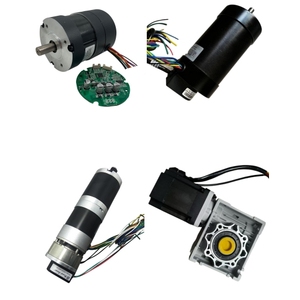
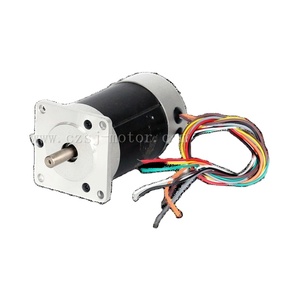
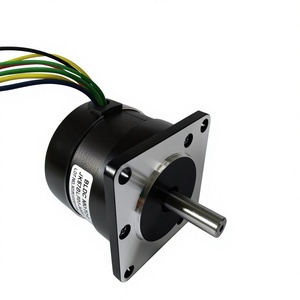
In modern automated manufacturing, the distinction between standard motion controls and high dynamic servo motors lies in the ratio of peak torque output to rotor moment of inertia ($T/J$).
High dynamic servo motors are specifically engineered with slender, long-stator core geometry. By minimizing rotor diameter while elongating iron stack length, the polar moment of inertia ($J_m$) is reduced by up to 60% compared to conventional AC induction motors.
This structural paradigm allows the motor to achieve angular acceleration rates exceeding 100,000 rad/s². In high-speed pick-and-place robotics, packaging indexing, and flying shears, this translates directly to reduced cycle times and elevated throughput.
Peak dynamic response demands high current pulses ($I_{peak}$). Our high dynamic servo motors utilize high-grade Neodymium-Iron-Boron (NdFeB) permanent magnets with temperature coercivity ratings up to SH/UH classes (operating up to 180°C without demagnetization).
Combined with slotted concentrated winding structures and direct thermal conductive resin encapsulation, thermal resistance ($R_{th}$) between stator windings and outer frame housing is dramatically decreased, allowing sustainable peak torque overloads of 300% to 450%.
| Performance Parameter | High Dynamic Servo Motors | Standard AC Servo Motors | Open-Loop Stepper Motors | Standard AC Induction Motors |
|---|---|---|---|---|
| Torque-to-Inertia Ratio ($T/J$) | Ultra-High (> 80,000 rad/s²) | Medium (20,000 - 45,000 rad/s²) | Low (5,000 - 12,000 rad/s²) | Very Low (< 3,000 rad/s²) |
| Peak Overload Capacity | 300% - 450% (S3 Duty) | 200% - 300% | 100% (No Overload) | 150% - 200% |
| Speed Control Bandwidth | 2.5 kHz - 3.5 kHz | 1.0 kHz - 1.5 kHz | < 200 Hz | < 100 Hz |
| Feedback Options | 24-Bit Optical / BiSS-C / EnDat 2.2 | 17-Bit / 20-Bit Incremental | Optional Open-Loop / Resolver | Open-Loop / Basic Tachometer |
| Thermal Resistance ($R_{th}$) | 0.45 K/W (Direct Resin Encapsulated) | 0.85 K/W | 1.20 K/W | 1.50 K/W |
| Energy Efficiency Class | IE4 / IE5 Ultra-Premium | IE3 Premium | Low Efficiency (High Heat) | IE2 / IE3 Standard |
With over 120 years of continuous innovation in industrial rotating machines, T-T Electric stands as a global beacon for high-torque DC motors, square frame AC motors, and custom servo drive assemblies.

Founded at the dawn of heavy industrial electrification, our manufacturing infrastructure combines century-old precision craftsmanship with state-of-the-art automated CNC winding, vacuum pressure impregnation (VPI), and dynamic balancing systems compliant with ISO 1940 Grade G1.0.
Every dynamic motor manufactured in our facility undergoes rigorous back-to-back regenerative load testing, insulation resistance testing under extreme humidity, and high-frequency harmonics analysis.



We provide tailormade flange dimensions (NEMA, IEC, DIN), custom shaft keyways, dual-shaft extensions, special winding voltages (12V DC up to 460V 3-Phase AC), and specialized corrosion-resistant coatings for marine or food-grade washdown setups.
Every single component—from stator laminations and bearings to encoder serials—is tracked via our proprietary database. This ensures 100% exact replacement spare parts delivery within 24 to 48 hours worldwide, guaranteeing zero prolonged downtime.
Backed by our global service network and ISO-certified field technicians, technical support and application engineering inquiries receive expert evaluation and action plans within 24 working hours.
The convergence of wide-bandgap power electronics, artificial intelligence at the edge, and ultra-high energy density magnetic topology is reshaping motion control architecture over the next decade.
Traditional silicon insulated-gate bipolar transistors (IGBTs) switch at 8 kHz to 16 kHz. Next-generation dynamic servo drives utilize Silicon Carbide (SiC) and Gallium Nitride (GaN) power stages, elevating switching frequencies beyond 100 kHz.
This massive leap dramatically minimizes current ripple, lowers motor iron loss by up to 35%, and allows dynamic servo motors to operate with near-zero acoustic noise and unparalleled torque smoothness even at speeds below 1 RPM.
To eliminate mechanical backlash inherent in gearboxes, dynamic motion design is shifting toward frameless direct-drive torque motors. Stators constructed with segmented tooth laminations allow slot fill factors exceeding 70% copper density.
This maximizes magnetic flux linkage, generating extreme continuous torque density ($Nm/kg$) while allowing hollow-shaft configurations for cable pass-through in robotic arms and multi-axis CNC gimbals.
Modern dynamic servo motors are no longer isolated electromagnetic components. Integrated MEMS tri-axial vibration sensors and embedded thermal modeling microchips broadcast real-time health data via Industrial Ethernet (EtherCAT, PROFINET IRT, TSN).
By leveraging digital twin algorithms, maintenance teams predict bearing wear, insulation degradation, and shaft misalignment weeks before actual failure, achieving true zero-unplanned-downtime manufacturing.
Eliminating bulky multi-core resolver cabling, modern dynamic servo systems utilize Single-Cable Technology (SCT) combining power and high-speed digital feedback (e.g., Hiperface DSL, BiSS Line) over a single hybrid line.
Furthermore, magnetic energy-harvesting multi-turn absolute encoders operate without internal backup batteries, retaining absolute positioning across power outages indefinitely without maintenance overhead.
Strategic sourcing of dynamic motion equipment requires evaluating total cost of ownership (TCO), modular supply chain resilience, and environmental compliance standards.
Energy consumption accounts for up to 90% of an industrial motor's total lifecycle cost over 10 years. Purchasing directors are prioritizing IE4/IE5 ultra-premium efficiency class dynamic motors. The higher initial investment is typically amortized within 8 to 14 months through energy savings.
Global supply chain volatility has made custom-only motors a risk for continuous production lines. Enterprise buyers are adopting modular servo platforms where standard motor bodies can be retrofitted with interchangeable feedback units, brakes, and cooling fans without custom machining.
European and North American procurement mandates increasingly require Environmental Product Declarations (EPD). Suppliers must verify cobalt-free rare earth magnets, recycled copper windings, and zero-hazardous chemical compliance under REACH, RoHS, and CE guidelines.
Selecting the optimal high dynamic servo motor requires precise inertia ratio matching ($J_{load} / J_{motor}$) and duty cycle evaluation to prevent thermal tripping or control loop instability.
1. Inertia Matching Ratio ($JL / JM$): For ultra-high dynamic positioning, the ratio of load inertia reflected to the motor shaft ($J_L$) versus motor rotor inertia ($J_M$) should ideally be $J_L / J_M \le 3:1$. For standard machine tool feeds, ratios up to $10:1$ are acceptable with advanced active resonance suppression filtering.
2. Root Mean Square Torque ($T_{RMS}$): To prevent thermal overload during dynamic acceleration/deceleration cycles (Duty Cycle S3/S6), the RMS torque must remain below continuous rated torque ($T_{rated}$):
3. Dynamic Peak Torque ($T_{peak}$): Short-term acceleration torque requirements must not exceed the demagnetization limit ($T_{max}$) of the permanent magnet rotor at maximum operating temperature.
Answers to common engineering and commercial questions encounter during OEM specification, motor drive matching, and bulk purchasing.
Partner with an established world-class manufacturer. Our application engineers are ready to assist you with torque calculations, custom winding selection, 3D CAD step files, and competitive OEM volume pricing.