Precision Powertrain & Drive Systems

Top China Vector Control Drives Suppliers & Exporters

Industrial-grade Field-Oriented Control (FOC) solutions, high-torque BLDC motors, permanent magnet synchronous drive integration, and OEM/ODM engineering excellence.

Industrial Product Portfolio

High-Performance Vector Control Motors & Drive Kits

Engineered for extreme duty cycles, precise velocity regulation, and seamless integration into automation, mobility, and industrial HVAC systems.

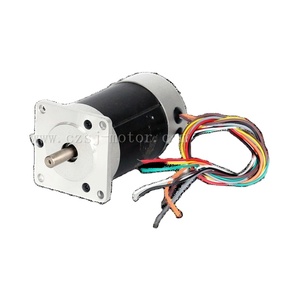
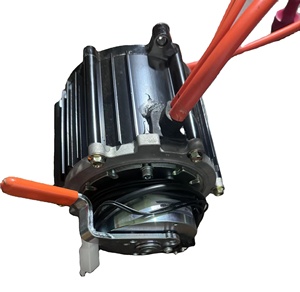
Electric Brushless DC Motor with Encoder Brake Controller

Good Quality Electric Brushless DC Motor 12V 24V 36V 48V 220V 3 Phase BLDC Gear Motor 20W to 2000W With Encoder Brake Controller

Power Output: 20W - 2000W
Voltage Spectrum: 12V - 220V 3-Phase
Feedback & Safety: Integrated Encoder & Electromagnetic Brake
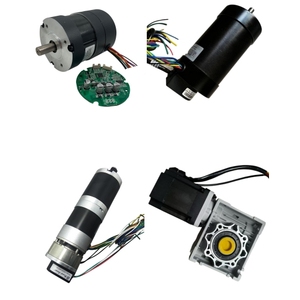
High Efficiency Brushless DC BLDC Motor

High Efficiency Brushless DC BLDC Motor Racer Star Brushless Motor 25W to 3000W Industrial Series

Power Range: 25W, 60W, 120W, 400W, 1000W, 3000W
Efficiency Class: Up to IE3 / IE4 Equivalent
Applications: Robotics, AGVs & High-Speed Automation
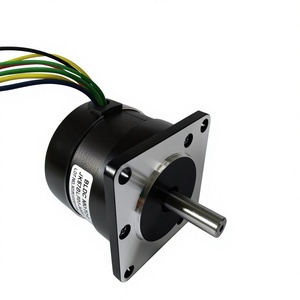
NEMA 23 Brushless DC Motor

36V 92W 4000RPM NEMA 23 Brushless DC Motor Flange Mount 0.22Nm Torque for Smart Home & Home Appliance Use

Frame Standard: NEMA 23 Flange Mount
Rated Speed: 4000 RPM @ 0.22Nm Torque
Features: Low Vibration, Precision Vector Control Compatible
Low Noise IP54 Brushless DC Motor

Low Noise Smart 12V 24V 48V 220V 3000RPM Permanent Magnet Brushless DC Motor IP54 Waterproof IE3 Efficiency Aluminum Alloy Fan

Protection Rating: IP54 Waterproof & Dustproof
Efficiency: IE3 Premium Efficiency Aluminum Housing
Cooling Integration: Optimized Dynamic Alloy Fan
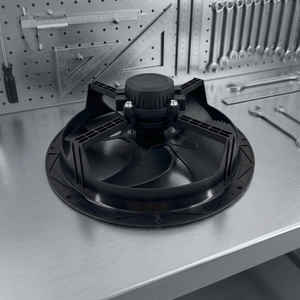
IP65 Deep Freezer Fan Motor

Brushless DC Permanent Magnet IE3 High Efficiency IP65 Waterproof Deep Freezer Fan Motor 10W 300-1800RPM

Ingress Protection: IP65 Sealed Waterproof Body
Speed Band: 300 - 1800 RPM Variable Control
Specialty: Sub-zero Temperature Cold-Chain Applications
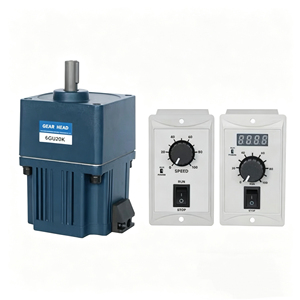
High Torque BLDC Rickshaw Motor

48V 60V 72V 3100 RPM BLDC High Torque 1KW Heavy Duty Rickshaw & Traction Motor

Power Output: 1000W Heavy-Duty Traction
Voltage Flexibility: 48V / 60V / 72V DC Systems
Peak Speed: 3100 RPM with High Stall Torque
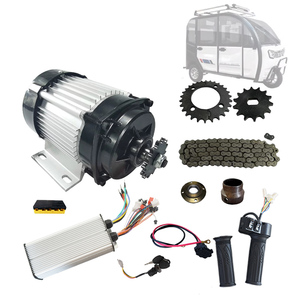
Electric Car Kart Conversion Motor Kit

DC BRUSHLESS Square Wave / Sine Wave Motor Factory Electric Car Human Tricycle Kart Conversion Electric Kit 48V 1000W

System Type: Complete Powertrain Conversion Kit
Drive Architecture: FOC Vector / Sine Wave Compatible
Application: Light EVs, Tricycles, Utility Karts
Compact Low Noise Enclosed BLDC Motor

Compact Size Low Noise Fully Enclosed Waterproof IP54 Aluminum Alloy 12V 24V 48V 220V 2000-3000RPM 60W Brushless Motor

Power & Speed: 60W Continuous | 2000-3000 RPM
Housing: Extruded Aluminum Alloy Enclosure
Noise Level: Low Acoustic Footprint (<45dB)
120+
Years Combined Legacy & Heritage
IE3 / IE4
Ultra-High Efficiency Standards
< 24h
Turnaround for Engineering Enquiries
100%
Full Load & Dynamic Testing Verified
Technical Deep Dive & Industry Whitepaper

Vector Control Drives in Modern Electric Powertrains

In high-performance industrial automation, electric vehicles, and commercial HVAC infrastructure, the selection of drive topology dictates operational efficiency, thermal overhead, dynamic response speed, and electromagnetic compliance. Variable Frequency Drives (VFDs) and Brushless DC (BLDC) controllers have migrated from rudimentary Scalar (V/f) control techniques toward advanced Field-Oriented Control (FOC), commonly known as Vector Control.

Vector Control decouples the stator current of a three-phase motor into two orthogonal components: the magnetic flux-producing current ($i_d$) and the torque-producing current ($i_q$). By independently modulating these vectors in a rotating reference frame ($d-q$ axis), vector control drives deliver full torque capability down to zero speed, eliminate torque ripple, and minimize harmonic acoustic noise across variable load profiles.

Comparative Analysis: Scalar Control vs. Vector Control vs. Direct Torque Control

To assist industrial procurement managers and OEM design engineers in selecting the optimal drive architecture, the following engineering matrix highlights key technical performance benchmarks across standard control modes:

Drive Control Mode Speed Accuracy Torque Response Time Low-Speed Torque Performance Energy Efficiency & THD Optimal Industry Applications
Scalar Control (V/f) ±1.0% to ±3.0% Slow (>100 ms) Poor (High slip, cogging at <5 Hz) Standard (Moderate harmonic losses) Simple pumps, standard exhaust fans, low-cost HVAC
Sensorless Vector (FOC) ±0.1% to ±0.5% Fast (10 - 20 ms) Excellent (150% torque at 0.5 Hz) High (Optimized $i_d/i_q$ current ratio) Conveyors, air compressors, commercial refrigeration, AGVs
Closed-Loop Vector (Encoder) ±0.01% Ultra-Fast (<5 ms) Maximum (200% holding torque at 0 RPM) Peak IE4/IE5 Equivalent Efficiency Servo robotics, CNC tooling, electric vehicle traction, winders
Direct Torque Control (DTC) ±0.05% Instantaneous (<2 ms) Maximum (Full dynamic torque at zero speed) High (Requires robust thermal management) Heavy-duty steel mills, mine hoists, marine propulsion

Engineering Heritage & Enterprise Advantages

China's industrial vector drive manufacturing ecosystem has evolved beyond cost-competitive production to become a leader in power electronics innovation, high-density magnetic motor design, and integrated OEM manufacturing. By merging European engineering precision—echoing a 120-year legacy of electric motor expertise—with China's scalable supply chains, premier exporters offer industrial buyers distinct operational advantages.

Global Quality Certifications

Manufactured under strict ISO 9001 quality management systems with LRQA, EASA, and AEMT technical standards compliance, ensuring long MTBF and reliable field operation.

High-Density Electromagnetic Design

Utilizing high-grade N40H/N42SH permanent magnets, 0.35mm silicon steel laminations, and copper fill factors up to 75% for minimum temperature rise under continuous load.

Extreme Environment Sealing

Engineered with IP54, IP65, and IP67 ingress protection options. Dual-lip shaft seals, vacuum pressure impregnated (VPI) windings, and corrosion-resistant alloy housings.

OEM & Custom Integration

Custom winding configurations, wide voltage tolerance (12V–220V/380V), tailored flange mountings (NEMA/IEC standard), and encoder/brake module integrations.

Future Outlook

Key Procurement Trends in Vector Drives & BLDC Motors

As global industries transition toward carbon neutrality, intelligent manufacturing, and electrification, buying strategies for vector drives are undergoing structural shifts.

Silicon Carbide (SiC) MOSFET Adoption

Next-generation vector drives are transitioning from conventional IGBT power stages to Wide Bandgap (WBG) Silicon Carbide (SiC) switches. SiC technology enables switching frequencies exceeding 50 kHz, reducing drive size by up to 40%, cutting thermal dissipation losses by 60%, and drastically lowering acoustic motor whine.

Edge AI & Predictive Diagnostics

Modern vector controllers now embed tinyML algorithms directly onto the DSP board. By continuously tracking high-frequency stator current ripple, vibration signature, and phase-to-phase insulation degradation, these drives provide real-time predictive maintenance metrics before catastrophic bearing or winding failure occurs.

IEC 61800-9-2 Ecodesign Compliance

With international energy efficiency regulations tightening (EU ErP directives and US DOE standards), industrial procurement mandates minimum IE3 or IE4 efficiency classifications for the complete Power Drive System (PDS = Motor + VFD). Chinese suppliers are certifying complete system performance to guarantee compliance.

Universal Modular DC/AC Architectures

OEM buyers increasingly prefer scalable platform designs. Motors that support multi-voltage inputs (12V, 24V, 48V, 220V) with standardized NEMA/IEC mechanical mounting footprints simplify global inventory management and reduce tooling costs for equipment manufacturers.

Frequently Asked Questions

Industrial Procurement & Engineering FAQ

Direct, expert answers to key technical questions encountered by purchasing managers, system integrators, and design engineers.

Q1: What is the primary operational advantage of Field-Oriented Control (FOC) over Scalar (V/f) drive control? +
FOC decouples flux and torque current components, allowing independent control over motor torque without changing the flux linkage. This provides instantaneous torque response (under 10ms), smooth low-speed operation near zero RPM without motor cogging, significantly reduced dynamic power consumption, and minimal electromagnetic acoustic vibration compared to simple scalar V/f modulation.
Q2: How do IP54 and IP65 sealing levels protect BLDC motors in harsh industrial environments? +
An IP54 rating ensures dust protection (limited ingress without harmful deposits) and resistance to water spray from any direction. IP65 provides complete dust-tight protection and resistance to low-pressure water jets. For freezer, washdown, or outdoor fan applications, IP65 units utilize fluororubber shaft seals, O-ring end-bell gaskets, epoxy-encapsulated stator windings, and waterproof cable glands to prevent moisture-induced insulation breakdown.
Q3: Can these vector control motors be customized with integrated encoders and electromagnetic brakes? +
Yes. Custom modular integration is a primary core capability. Motors can be factory-fitted with incremental optical encoders (1024 to 4096 PPR), absolute magnetic encoders (SSI/BiSS/CANopen), and fail-safe electromagnetic holding brakes (24VDC/220VAC). This ensures high-accuracy closed-loop positioning and emergency stopping security in robotics, hoists, and automated machinery.
Q4: Why is thermal management critical in fully enclosed aluminum alloy BLDC motors? +
Fully enclosed non-ventilated (TENV) or enclosed fan-cooled (TEFC) motors rely heavily on housing thermal conductivity. Aluminum alloy offers roughly triple the thermal conductivity of cast iron (~200 W/m·K vs ~55 W/m·K), rapidly dissipating rotor and stator copper losses ($I^2R$). Combined with Class H (180°C) high-temperature magnet wire and high-grade synthetic grease, long operational lifespan is maintained even at high duty cycles.
Q5: How do top Chinese suppliers ensure low EMI/EMC interference in vector drive systems? +
Industrial-grade vector control drives incorporate built-in C2 or C3 class EMC filters (conforming to EN 61800-3), heavy aluminum shielding, optimized PCB ground planes, and optional $dv/dt$ output reactors. These components attenuate high-frequency pulse-width modulation (PWM) switching noise, preventing disturbance to nearby sensors, PLCs, and telecommunication hardware.
Q6: What documentation and certifications are provided for international customs and compliance? +
Full export documentation suites are standard, including CE Mark Declarations of Conformity, RoHS & REACH environmental compliance certificates, ISO 9001/14001 factory audit reports, UL/CSA electrical safety test logs, and comprehensive factory acceptance test (FAT) inspection sheets detailing dielectric withstand voltage, winding resistance, and dynamic vibration balance.

Ready to Upgrade Your Motor & Vector Drive Powertrain?

Consult with senior drive engineers to receive tailored technical datasheets, CAD 3D step files, and competitive direct-from-factory volume quotes within 24 hours.

Contact Us