Executive Technical Whitepaper
Sourcing China Marine Grade Electric Motors: Technical Standards, Corrosion Mitigation, and Vendor Evaluation Framework
Information Gain Insight: Sourcing marine electric motors requires evaluating thermal stress, salt spray erosion, and mechanical shock resistance. This whitepaper analyzes the engineering criteria needed to procure high-reliability marine motors from leading manufacturers in China, aligning with international standards such as IEC 60092, IEEE 45, and major classification society guidelines (DNV, ABS, LR).
1. Technical Demands of Marine-Grade Electric Motors
Operating electric rotating equipment in marine environments presents distinct engineering challenges compared to industrial onshore applications. Marine electric motors must perform continuously amidst relentless exposure to sodium chloride, ambient humidity exceeding 95%, intense thermal cycling, non-linear harmonic distortion, and structural vibration from wave impacts and hull resonance.
When procurement teams evaluate China marine grade electric motors factories & suppliers, technical specifications must transcend standard industrial IEC ratings. Marine duty motors are deployed across critical vessel subsystems, including primary propulsion, bow and stern thrusters, deck machinery (anchor capstans, cargo winches), engine room auxiliary pumps, and ballast water treatment systems.
| Operating Metric |
Standard Industrial Motor |
Marine Grade Severe-Duty Motor |
Technical Impact on Marine Operations |
| Enclosure Protection |
IP54 / IP55 Standard Drip-Proof |
IP56, IP65, IP67 up to IP68 Submersible |
Prevents ingress of high-pressure saltwater spray and sea immersion. |
| Paint & Surface Treatment |
C2 - C3 Epoxy Coating (80-120 µm) |
C5-M Heavy Marine Epoxy Primer + Polyurethane (≥ 300 µm) |
Resists salt mist corrosion exceeding 1,500 hours under ASTM B117 standards. |
| Insulation System |
Class F (155°C) with Class B Temp Rise |
Class H (180°C) VPI Impregnated with Class F Temp Rise |
Provides thermal headroom against ambient engine room temperatures (up to 50°C). |
| Shaft & Fastener Hardware |
Carbon Steel C45 with Zinc Plating |
Stainless Steel AISI 316L / Duplex 2205 / Monel Shafts |
Eliminates pitting corrosion and galling in high-salinity exposure zones. |
| Bearings & Lubrication |
Standard C3 Deep Groove Ball Bearings |
Regreasable Open Bearings with Synthetic Polyurea Grease |
Prevents false brinelling caused by vessel vibration during idle states. |
2. Core Technologies Driving China Marine Motor Manufacturing
China's industrial motor sector has evolved from low-cost component manufacturing into high-precision, technological development. Tier-1 Chinese marine motor suppliers now integrate advanced materials and state-of-the-art manufacturing processes:
- Vacuum Pressure Impregnation (VPI): Utilizing solventless resin VPI systems ensures complete elimination of air voids within stator windings. This maximises dielectric strength, enhances thermal dissipation, and guards against moisture infiltration under high thermal stress.
- Permanent Magnet Synchronous Motors (PMSM) & Advanced BLDC Architecture: By incorporating rare-earth Neodymium-Iron-Boron (NdFeB) magnets, Chinese factories manufacture ultra-compact BLDC and PMSM motors achieving IE4 and IE5 efficiency levels. These motors reduce vessel electrical loads and space footprints in cramped machinery spaces.
- Laminated Frame DC Motors: Designed for smooth speed regulation and high overload capacity, laminated square-frame DC motors remain essential for heavy-duty marine winches, dredging drives, and variable-speed propulsion systems requiring maximum low-end torque.
- Variable Frequency Drive (VFD) Optimization: Marine AC motors feature reinforced phase insulation and insulated NDE (Non-Drive End) bearings to suppress damaging shaft currents (EDM) caused by high-frequency pulse-width modulation (PWM) in modern frequency converters.
3. Strategic Procurement & Future Technology Trends (2025–2035)
The global maritime industry is experiencing a transformation driven by International Maritime Organization (IMO) decarbonization targets, EEXI (Energy Efficiency Existing Ship Index), and CII (Carbon Intensity Indicator) mandates. Marine electric motor procurement strategies are shifting to meet these stricter requirements:
Hybrid & Full-Electric Vessel Propulsion
Demand for high-kW liquid-cooled permanent magnet marine motors is accelerating across harbor tugs, offshore supply vessels (OSVs), and inland ferries seeking zero-emission operations.
Smart Condition Monitoring (IoT Built-in)
Next-generation marine motors feature integrated vibration sensors, PT100/PTC thermal sensors, and real-time telemetry modules to enable predictive maintenance and avoid offshore downtime.
Lightweight Alloy & Compact Form Factors
Transitioning from heavy cast-iron housings to high-tensile extruded aluminum frames (IP55 to IP65) without sacrificing structural rigidity, allowing optimal payload utilization on naval vessels.
As shipbuilders worldwide attempt to balance initial capital expenditure (CAPEX) with long-term operational expenditure (OPEX), establishing direct partnerships with accredited Chinese electric motor manufacturers has become a key procurement strategy. Leading China factories provide full customization capabilities—offering tailor-made shaft extensions, non-standard mounting flanges, dual-frequency (50Hz/60Hz) windings, and specialized marine certification packages.
4. Enterprise Manufacturing Excellence & Engineering Lineage
Backing our product lineup is a heritage built over 120 years of engineering excellence in industrial electric motor manufacturing, DC drives, and rotating machine solutions. Trusted globally across demanding marine, metal processing, mining, and power generation sectors, our manufacturing ecosystem combines long-standing craftsmanship with modern quality verification.
Quality Assurance Framework
Every marine motor undergoes rigorous Factory Acceptance Testing (FAT), including winding resistance measurement, no-load and full-load heat run tests, high-voltage dielectric insulation checks, dynamic rotor balancing according to ISO 1940 (Grade G1.0/G2.5), and noise/vibration spectrum analysis.
Traceability & Spare Parts Support
Using a unique motor serial tracking infrastructure, every internal component—from commutators and brushes to bearings, terminal boxes, and encoder units—is cataloged for rapid OEM spare part replacement worldwide.
LRQA Certified Quality Management

EASA Electrical Apparatus Member

AEMT International Mechanical Member
Q1:
What specific features differentiate a true marine-grade electric motor from a standard industrial motor?
Marine-grade motors feature specialized design modifications: anti-corrosive heavy-build epoxy paint systems (C5-M environment standard), stainless steel hardware (AISI 316), anti-condensation drain plugs, Vacuum Pressure Impregnation (VPI) insulation rated Class H, sealed terminal boxes with IP56 or IP66 protection, shaft slingers/gamma seals, and compliance with marine classification societies (such as DNV, ABS, LR, or CCS).
Q2:
Why is Vacuum Pressure Impregnation (VPI) essential for marine electric motors?
VPI forces solventless synthetic resin into every micro-cavity of the copper stator windings under vacuum and pressure. This eliminates air pockets, seals out salty atmospheric moisture, improves heat dissipation by up to 20%, and prevents mechanical friction caused by electromagnetic forces, extending the motor's operating life.
Q3:
How do I select between BLDC (Brushless DC) and conventional AC induction motors for vessel applications?
Brushless DC (BLDC) and Permanent Magnet motors provide higher power density, exceptional low-speed torque, and superior energy efficiency in compact frame sizes—making them ideal for battery-electric propulsion, auxiliary winches, and space-restricted machinery rooms. AC induction motors remain cost-effective for continuous fixed-speed applications such as heavy ventilation fans and main ballast pumps.
Q4:
What ambient temperature rating should be specified for engine room motor applications?
Standard industrial motors are rated for 40°C ambient temperatures. However, marine engine rooms routinely reach 45°C to 50°C. Marine motors must be rated for 45°C or 50°C ambient operating conditions with Class F or Class H insulation systems to prevent premature thermal breakdown of the insulation.
Q5:
Can your China factory customize motor shaft extensions and flange dimensions?
Yes. Our engineering team provides full mechanical OEM customization. We manufacture custom shaft configurations (tapered shaft, double-extension shaft, keyway modifications, AISI 316 stainless steel material) and custom mounting flanges (IEC B3, B5, B14, NEMA 23/34 standards or customized dimensions) to match existing retrofit footprints.
Q6:
What protection class (IP rating) is recommended for deck-mounted machinery vs engine room equipment?
For below-deck engine room machinery in dry locations, IP54 or IP55 is typically sufficient. For equipment exposed to engine wash-downs or high humidity, IP56 or IP65 is recommended. For open-deck machinery (anchor winches, capstans) subjected to green sea waves, IP66 or IP67 is required. For submersed applications, IP68 rated enclosures must be specified.
Q7:
How do you mitigate shaft bearing currents (EDM currents) when using Variable Frequency Drives (VFD)?
To protect bearings from capacitive shaft voltage discharge caused by VFD switching frequencies, we equip our inverter-duty marine motors with insulated Non-Drive End (NDE) bearings, hybrid ceramic bearings, and grounding rings, preventing fluting damage and extending bearing life.
Q8:
What documentation and test reports are provided with custom marine motor shipments?
Every shipment includes complete Factory Acceptance Test (FAT) routine test certificates, insulation resistance test reports, dynamic balance test curves, dimensional approval drawings, wiring diagrams, and compliance certificates for relevant international marine standards upon request.
Q9:
What thermal protection options are available for severe marine duty cycles?
We integrate embedded thermal protection systems directly into stator windings, including PTC thermistors, PT100 Resistance Temperature Detectors (RTDs) for continuous temperature monitoring via ship automation systems, and bimetallic PTO thermal switches. Space heaters are also installed to prevent condensation when idle.
Q10:
What is the standard lead time and warranty coverage for B2B procurement orders?
Standard catalog units ship within 2 to 3 weeks, while custom marine motor builds typically require 4 to 6 weeks depending on engineering requirements and certification needs. All products are backed by a comprehensive 12 to 24-month operational warranty and guaranteed 24-hour technical support response.

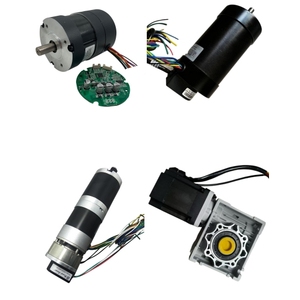 20W - 2000W
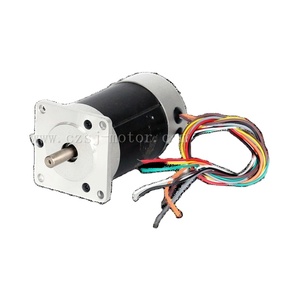 25W - 3000W
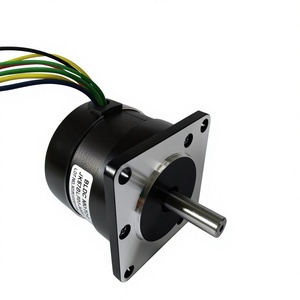 NEMA 23 Flange
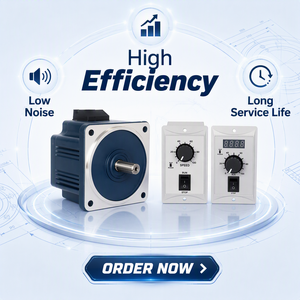 IP54 Waterproof
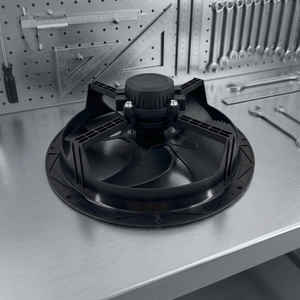 IP65 Deep Freeze
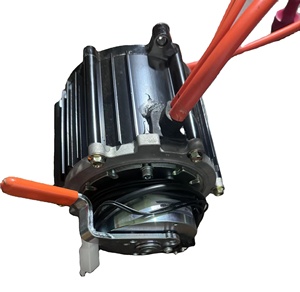 1KW High Torque
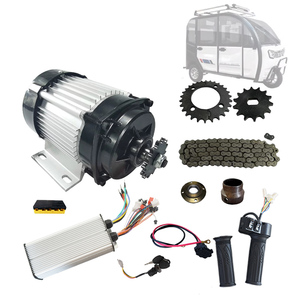 48V 1000W Kit
 Fully Enclosed 60W