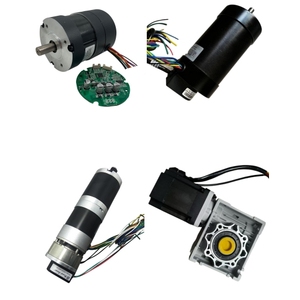
3-Phase BLDC Gear Motor with Encoder Brake (20W-2000W)
Voltage: 12V - 220V DC
Power: 20W - 2000W
Control: Encoder & Brake

Engineered for extreme duty cycles, continuous power delivery, and superior thermal dissipation in heavy-duty commercial and industrial applications.
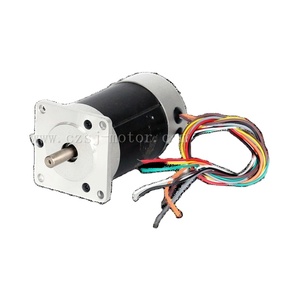
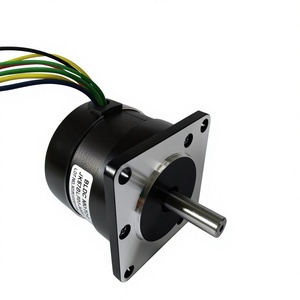
Combining over 120 years of rotating machinery excellence with next-generation stator liquid-jacket thermal engineering.
In modern high-performance electro-mechanical systems, operational efficiency and power density have surpassed traditional thermal dissipation limits. Forced air cooling, while historically ubiquitous across industrial induction and early permanent magnet synchronous motors (PMSM), faces severe thermodynamic constraints when subjected to continuous S1 duty cycles under extreme loads. Water-cooled electric motors—utilizing integrated liquid jackets or internal cooling loops—have transitioned from specialized niche applications into mainstream industrial automation, marine electric propulsion, heavy EV conversion, and mining machinery.
Technical Insight for Procurement Officers: Liquid-jacket cooling increases heat transfer coefficients by up to 10 to 50 times compared to ambient forced air. This allows OEM design engineers to reduce motor frame sizes by up to 40% while maintaining thermal stability within Class H (180°C) insulation thresholds.
Thermal management is the primary governing factor of electric motor lifespan and power output. When copper stator windings generate $I^2R$ resistive losses, thermal buildup accelerates insulation degradation. According to Montsinger’s law, every 10°C increase in operating temperature above thermal limits reduces electrical insulation life by 50%.
Water-cooled motors mitigate this vulnerability by circulating a fluid medium (typically a water-glycol mixture) through an annular sleeve encasing the stator core. This design isolates heat transfer from external environmental contamination, allowing full operation in IP65, IP67, and IP68 submerged or hazardous zones.
| Engineering Metric | Standard Forced Air-Cooled | Water-Jacket Cooled (BLDC/PMSM) | Procurement Impact |
|---|---|---|---|
| Heat Transfer Coefficient (W/m²K) | 25 – 100 | 500 – 2,500 | Up to 25x higher heat removal rate |
| Power Density (kW/kg) | 0.8 – 1.5 kW/kg | 3.0 – 5.5 kW/kg | Dramatic footprint and weight reduction |
| Acoustic Noise Level | 75 – 90 dBA (High fan noise) | < 55 – 65 dBA (Whisper quiet) | Ideal for noise-sensitive operating environments |
| Ingress Protection Rating | IP23 – IP55 | IP65 – IP68 Fully Enclosed | Immune to dust, mud, grit, and water submersion |
| Thermal Time Constant | Slow response to peak surges | Instantaneous fluid heat absorption | Handles heavy dynamic overloads without thermal trips |
As industrial manufacturing shifts toward smart factories, carbon-neutral drive trains, and high-precision motion control, water-cooled electric motor architecture is undergoing significant technological advancement:
Procurement managers selecting liquid-cooled motor suppliers must look beyond basic wattage ratings. Key purchasing criteria in 2025 emphasize supplier engineering agility, OEM/ODM modularity, and compliance with rigorous global trade standards.
Leading global buyers prioritize factories that offer complete modular drive integration—combining high-torque BLDC motors with matching digital vector controllers, absolute encoders, dynamic electro-magnetic brakes, and integrated cooling pumps into plug-and-play kits.


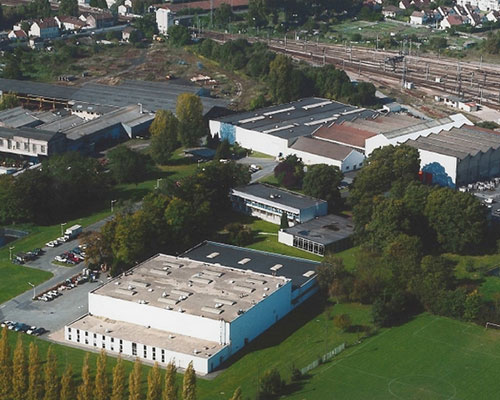
Grounded in over 120 years of rotating machine excellence, our manufacturing facilities adhere to stringent European and international engineering standards. We provide technical customization for OEMs across mining, marine propulsion, automotive test benches, and smart home automation systems.
Every motor undergoes 100% automated dielectric isolation testing, stator pressure testing up to 6 bar, and dynamic vibration balancing to ISO 1940 G2.5 standards.
Active members of elite global electrical machinery associations, guaranteeing world-class repairability, standardization, and spare part interchangeability.
Tailor-made shaft extensions, specific voltage windings (12V-72V DC, 220V-460V AC), custom mounting flanges (NEMA/IEC), and integrated closed-loop controllers.
Crucial technical and logistical insights for B2B buyers, system integrators, and engineering procurement teams.
Most industrial water-cooled motors utilize a 50/50 mixture of deionized water and industrial ethylene glycol (or propylene glycol). Ethylene glycol provides anti-freeze protection down to -35°C while adding anti-corrosion additives that prevent pitting and scaling inside aluminum or stainless steel cooling jackets. For food processing or marine applications, specialized bio-glycol fluids can be specified.
Although initial acquisition costs for a liquid-cooled motor and chiller loop are 15-25% higher than air-cooled alternatives, the TCO is significantly lower over a 5-year operating window. Operating efficiency gains (IE3/IE4 standard), zero air-filter maintenance downtime, protected IP65/IP67 enclosures, and extended bearing life due to lower thermal expansion deliver a typical ROI payback within 14 to 18 months.
Yes. All our water-cooled permanent magnet brushless DC (BLDC) and square-frame AC motors are rated for Class S1 continuous thermal duty. As long as the external heat exchanger maintains the coolant inflow temperature below 45°C at specified flow rates (typically 4 to 12 L/min depending on frame size), the motor can run 24/7 at 100% rated continuous torque without thermal throttling.
Our motors are factory-fitted with dual PT100 or NTC thermal sensors embedded directly inside the winding heads. In the event of a pump failure or coolant line blockage, the internal sensor alerts the motor driver or PLC to initiate a controlled ramp-down or trip alarm at 115°C, preventing thermal demagnetization of rare-earth magnets or winding insulation breakdown.
Our brushless motor series comes standard with IP54 sealing, with options for complete IP65 washdown protection and IP67/IP68 submersible customization. IP65 models feature double-lip radial shaft seals, O-ring sealed endbells, and potted terminal boxes suitable for deep freezer fans, marine deck winches, and outdoor EV applications.
Absolutely. Over 60% of our production volume involves OEM customization. We manufacture custom shaft diameters, keyways, spline shafts, dual-shaft extensions, NEMA/IEC standard flanges, or custom mounting footprints. Prototype samples for qualified OEM procurement projects are typically delivered within 3 to 4 weeks.
Yes. Our 3-phase BLDC and PMSM motors are fully compatible with major commercial drives (including Curtis, Sevcon, Schneider, Siemens, and ABB). They feature standardized Hall sensor signals, 1024-line incremental encoders, or resolver feedback interfaces to ensure smooth integration with FOC (Field Oriented Control) sine-wave or square-wave drive algorithms.
Standard catalog motor configurations are stocked for immediate dispatch. Custom OEM production runs typically require 20 to 30 business days depending on volume, casting requirements, and specialized winding specifications. We offer complete FOB, CIF, or DDP logistics solutions with international sea and air freight packaging.
Contact our application engineering team today to receive detailed 2D/3D CAD models, full thermal performance curves, and custom OEM volume pricing.