
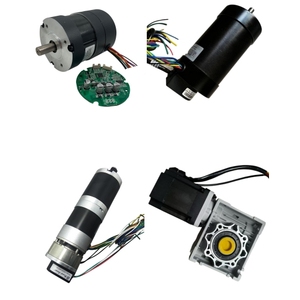
Precision 12V-220V brushless DC gear motor (20W-2000W). Built with integrated magnetic encoder, electromechanical holding brake, and high-torque digital controller for robotic and conveyor systems.
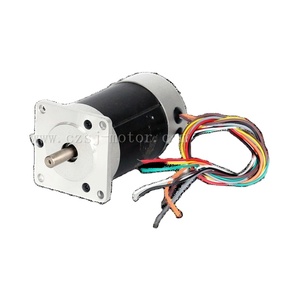
High-power density permanent magnet brushless motor matrix. Engineered for continuous duty cycles, offering multi-voltage compatibility and ultra-low thermal resistance under peak load conditions.
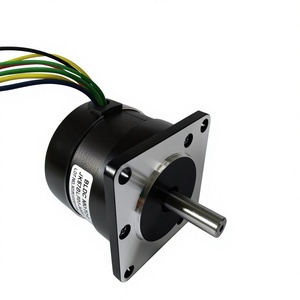
Flange-mounted 4000 RPM precision BLDC motor generating 0.22Nm nominal torque. Optimized for smart home automation, medical equipment, and high-accuracy positioning actuators.
Smart 3000 RPM permanent magnet motor featuring IP54 ingress protection, extruded aluminum alloy casing, dynamic balancing, and forced-air cooling fan for continuous process pumping.
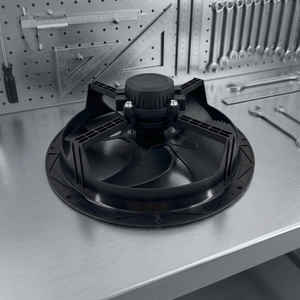
10W 300-1800 RPM variable speed EC/BLDC motor. IP65 dust/waterproof structure designed specifically for sub-zero commercial refrigeration, cold-chain logistics, and harsh HVAC evaporators.
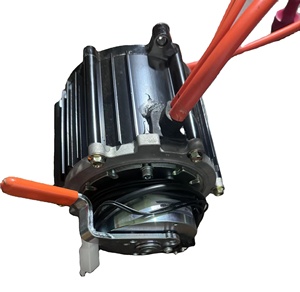
Heavy-duty 3100 RPM brushless traction motor engineered for electric rickshaws, AGVs, and light utility vehicles. Features reinforced internal bearings and high-phase current overload tolerance.
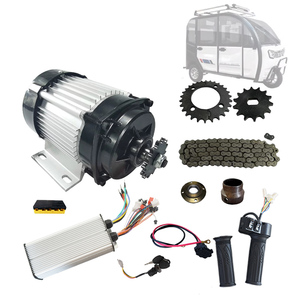
Complete electric drivetrain package including industrial-grade square-wave BLDC motor, smart controller, wiring harness, and throttle. Designed for industrial utility transport conversion.
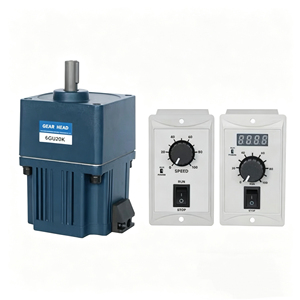
Fully enclosed 2000-3000 RPM high-efficiency brushless motor housed in an ultra-compact die-cast aluminum frame. Ideal for space-constrained industrial processing equipment.
| Manufacturer | Primary Country | Efficiency Class Tiers | Core Industrial Specialization | Customization Agility |
|---|---|---|---|---|
| T-T Electric | France / EU | IE4 Super Premium Square Frame AC/DC | Heavy industry, steel processing, rubber mills, drop-in replacement motors | Ultra-High (Custom Dimensions) |
| Siemens AG | Germany | IE5 Ultra Premium | Discrete manufacturing, digital twin VFD integrated automation systems | Medium (Standardized Frames) |
| ABB Motors & Generators | Switzerland | IE5 Synchronous Reluctance | Process industry, marine propulsion, chemical explosion-proof units | Medium (High OEM Volume) |
| WEG Electric Equipment | Brazil | IE4 W22 Super Premium | Mining, water & wastewater, heavy duty cast iron frame induction motors | High (Global Operations) |
| Nidec Corporation | Japan | IE4 Permanent Magnet | Precision BLDC, automotive powertrains, high-speed brushless units | High (High-Tech Servo) |
| Regal Rexnord (Marathon) | United States | IE4 SyMAX / PMAC | HVAC/R compressors, material handling, severe duty NEMA motors | Medium (North America Focus) |
| Lenze SE | Germany | IE4 Smart Motors | Intralogistics, packaging machinery, decentralized motion control | Medium (Modular Gearkits) |
| Toshiba Industrial Products | Japan | IE3 / IE4 Premium | Oil & gas refineries, high-voltage induction machines, mining drives | Standard Catalog Focus |
| SEW-Eurodrive | Germany | IE5 MOVIGEAR® EC | Gearmotors, automated conveyor lines, mechatronic drive packages | High (Mechatronic Integration) |
| Wolong Electric Group | China | IE4 Ultra Efficient | Large-scale industrial production, power generation, cost-effective OEM bulk supply | High (Scale OEM Production) |
In modern industrial manufacturing plants, electric motor-driven systems account for approximately 70% of total electrical energy consumption. As global energy prices surge and stringent decarbonization mandates (such as the EU Ecodesign Regulation 2019/1781) take effect, procurement managers and plant engineers can no longer view AC motors as simple commodity purchases. Selecting the optimal high-efficiency AC motor manufacturer requires a rigorous evaluation of thermodynamic energy losses, insulation thermal classes, and total life-cycle economics.
Electric motor efficiency ($\eta$) is governed by the ratio of mechanical output power to electrical input power. Electrical energy losses in AC induction and Permanent Magnet Synchronous Motors (PMSM) are categorized into five distinct thermodynamic vectors:
As demonstrated by the TCO mathematical model, an industrial motor operating continuously (8,760 hours/year) consumes its initial capital purchase cost in electricity within less than 6 months. Transitioning from an legacy IE2 induction motor to an IE4 or IE5 permanent magnet AC motor yields an average operational payback period of just 14 to 18 months.
The global electric motor industry is undergoing a seismic structural transition toward mechatronic integration, sustainable magnetics, and smart condition monitoring. Industrial buyers must align their supply chains with the following key technology vectors:
Traditional induction motors rely on slip to induce magnetic fields in the rotor, inherently causing energy loss. Next-generation AC drive applications are rapidly adopting Permanent Magnet AC (PMAC) and Synchronous Reluctance Motors (SynRM). SynRM technology operates without permanent magnets, eliminating dependency on rare-earth elements (Neodymium/Dysprosium) while achieving IE5 efficiency standards. PMAC motors deliver unmatched power density in compact frames, ideal for spatial retrofits.
Industrial facilities operating legacy DC motors often face enormous capital expenses when converting to AC drives due to structural space limitations. High-efficiency manufacturers like T-T Electric have engineered specialized Square Frame AC Motors (such as the AMP series). These motors deliver high power density and broad speed variation ranges within exact mechanical footprint dimensions of standard DC motors, allowing direct "drop-in" upgrades without modifying machine foundations, gearboxes, or shaft couplings.
Modern high-efficiency AC motors are increasingly supplied with factory-integrated micro-electro-mechanical sensors (MEMS) for real-time vibration analysis, thermal telemetry, and flux density monitoring. Connected via IO-Link or wireless protocols to cloud diagnostics, these motors alert maintenance teams to bearing degradation or phase imbalances weeks before catastrophic mechanical breakdown occurs.
Pulse-Width Modulation (PWM) signals from modern IGBT and Silicon Carbide (SiC) Variable Frequency Drives subject motor stator windings to extreme voltage spikes ($dV/dt$) and partial discharge phenomena. Strategic buyers must specify Class H insulation materials (rated for 180°C) with vacuum pressure impregnation (VPI) and phase insulation barriers to guarantee long-term insulation breakdown immunity under high-frequency inverter switching.
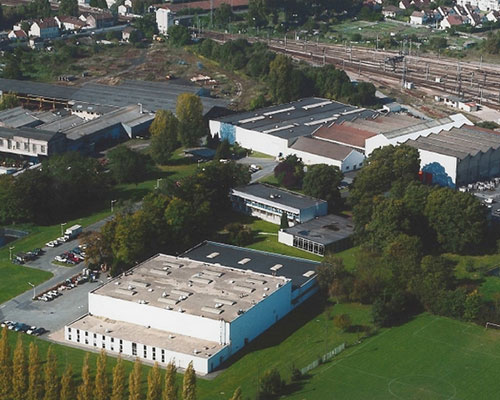
With a continuous engineering legacy dating back to 1900, T-T Electric stands as a world-class European manufacturer of custom industrial DC motors, square frame AC motors, and high-performance drive solutions. While standard commodity manufacturers force industrial plants to adapt their machinery to standard motor frames, T-T Electric excels in flexible engineering, custom drop-in direct replacements, and extreme environment customizations.
Every motor manufactured by T-T Electric undergoes rigorous testing protocols compliant with global international standards. With worldwide service networks, a 24-hour technical response guarantee, and extensive stock of genuine OEM spare parts tracked by unique motor serial numbers, T-T Electric ensures absolute operational continuity for critical industrial infrastructure.


IE4 (Super Premium Efficiency) motors reduce energy losses by approximately 15% to 20% compared to IE3 (Premium Efficiency) units. For a 110 kW motor operating continuously at 80% load, upgrading from IE3 to IE4 typically yields an annual electrical savings of over 12,000 kWh, directly reducing operational carbon footprint and lowering annual utility charges.
BLDC motors use permanent magnets on the rotor and electronically commutated stators, achieving higher efficiency (often 92%-96%), smaller frame sizes, and maximum torque at zero speed. AC induction motors are mechanically simpler and cheaper for constant-speed grid operation, but BLDC/PMAC motors are far superior for variable speed, high-dynamic response, and space-constrained applications.
VFDs feed motors with rapid pulse-width modulated (PWM) voltage waves. Standard motors experience severe insulation stress due to high voltage rise times ($dV/dt$), leading to partial discharge and premature dielectric failure. VFD-rated AC motors feature spike-resistant magnet wire, Class H insulation, VPI resin coating, and insulated drive-end bearings to prevent harmful shaft grounding currents.
Yes. Manufacturers such as T-T Electric design square-frame AC motors specifically matched to traditional DC motor center heights, shaft extensions, and mounting footprints. Coupled with a modern vector-controlled VFD, a square-frame AC motor delivers equivalent full torque at low speeds without requiring costly mechanical retrofits to plant machinery bases.
For indoor clean dry plant environments, IP54 (dust-protected, splash-proof) is sufficient. For washdown areas, outdoor exposed installations, deep refrigeration, or chemical plants, IP65 (dust-tight, water jet protected) or IP66/IP67 rated enclosures with stainless steel shafts and dual-lip vitreous oil seals are essential to prevent moisture contamination in bearing cavities.
Leading industrial motor manufacturers maintain dynamic database systems indexed by unique serial numbers. When maintenance engineers provide a motor serial number, the factory immediately retrieves exact manufacturing blueprints, coil winding specs, bearing part numbers, and brush/commutator specifications—ensuring zero-error spare part dispatch and minimizing emergency plant downtime.
Consult with senior engineering specialists for custom dimensional drawings, drop-in replacement evaluations, or bulk OEM procurement pricing.