
Explore our industrial-grade BLDC motors engineered with high-density permanent magnets, low-noise bearings, high IP ratings, and integrated drive systems. Designed for robotics, AGVs, smart appliances, industrial automation, and electric vehicle kits.
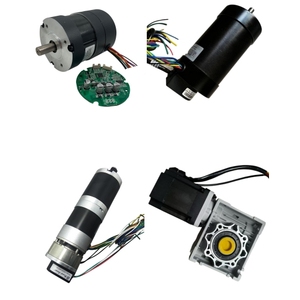 20W - 2000W
Precision planetary gear assembly integrated with digital optical encoder, electromagnetic brake, and multi-voltage controller.
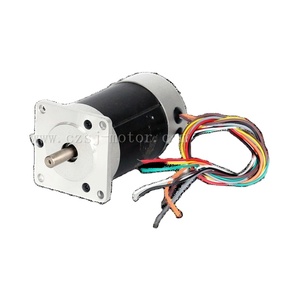 25W - 3000W
Ultra-high torque density motor series for heavy-duty industrial automation, machinery drives, and high-speed rotary tools.
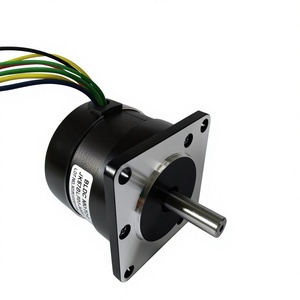 NEMA 23 Standard
Standardized industrial mounting interface tailored for smart home devices, automated curtains, and medical equipment positioning.
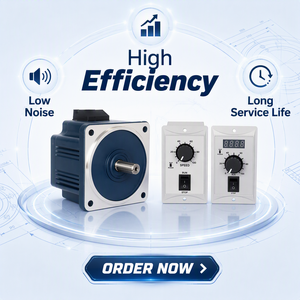 IP54 / IE3
Equipped with cast aluminum alloy cooling fan and IP54 housing. Delivers smooth 3000RPM speed control across wide temperature ranges.
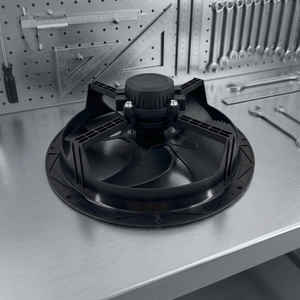 IP65 Sealed
Sub-zero operation capability (300-1800RPM, 10W). Fully resin-encapsulated stator designed for commercial refrigeration units.
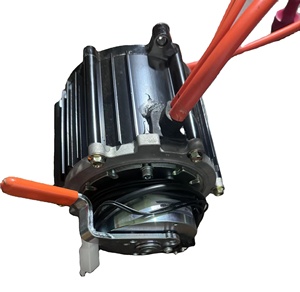 1000W Heavy Duty
Engineered for e-mobility, light utility vehicles, and heavy load carrying. Superior heat dissipation under peak current load.
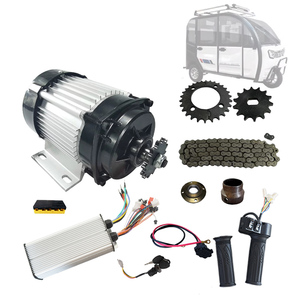 48V 1000W Kit
Complete drive assembly kit including high-torque motor, wiring harness, speed throttle, and matched square-wave controller.
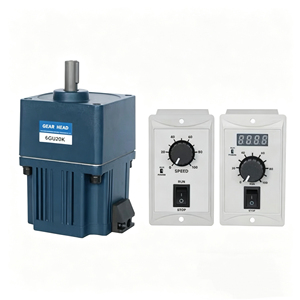 60W Compact
Space-saving aluminum body housing designed for continuous 2000-3000RPM duty in precision laboratory instruments and pumps.
In the rapidly evolving landscape of industrial motion control, the global transition from traditional brushed DC and AC induction motors toward high-efficiency Brushless DC (BLDC) motors represents a fundamental technological shift. Driven by worldwide net-zero emissions mandates, strict energy efficiency regulations (IE3 to IE5 standards), and the exponential rise of automation, robotics, and e-mobility, selecting the right brushless motor manufacturer is no longer merely a purchasing decision—it is a critical strategic partnership.
Unlike mechanical commutator motors, BLDC motors utilize electronic commutation through semiconductor switches (MOSFETs or IGBTs), eliminating mechanical brush friction, electrical sparking, and carbon dust contamination. The result is a motor platform that delivers efficiency ratings exceeding 90%, extended operational lifespan (>20,000 hours), dynamic torque responses, and minimal maintenance overhead.
However, the global supplier landscape for Brushless DC motors is vast and highly fragmented. Procurement engineers and global sourcing directors often face major challenges in distinguishing high-volume commercial-grade assemblers from true industrial-grade OEM manufacturers. This whitepaper provides a rigorous framework for evaluating the world's Top 10 Brushless DC Motors Manufacturers & Factories, decoding technical specifications, analyzing emerging purchasing trends, and optimizing Total Cost of Ownership (TCO).
The BLDC motor industry is undergoing unprecedented innovation driven by smart power electronics, novel magnetics, and integrated sensor technologies.
Modern industrial BLDC motor controllers are shifting from crude trapezoidal 6-step commutation to advanced sinusoidal FOC. By measuring back-EMF or utilizing mathematical observers (Kalman filters), sensorless FOC achieves whisper-quiet noise emissions (<45dB), smooth zero-speed torque output, and eliminates vulnerable physical Hall sensor wiring in high-temperature environments.
The miniaturization of motor drives has reached new milestones with Wide Bandgap (WBG) semiconductors like Silicon Carbide (SiC) and Gallium Nitride (GaN). Integrating power stage inverters directly into the BLDC motor end-cap minimizes high-frequency electromagnetic interference (EMI), reduces cable impedance losses, and creates ultra-compact "smart motor" nodes for Industry 4.0 networks.
To mitigate volatile supply chain risks associated with Neodymium (NdFeB) price fluctuations, tier-1 motor factories are redesigning rotor core laminations. Utilizing Halbach array permanent magnet configurations and grain boundary diffusion (GBD) technology allows manufacturers to deliver high coercive force (Hcj) magnets while reducing heavy rare earths like Dysprosium (Dy) and Terbium (Tb).
| Performance Dimension | Traditional Brushed DC Motors | Standard BLDC Motors | Next-Gen Smart BLDC (2025+) |
|---|---|---|---|
| Commutator Mechanism | Mechanical Carbon Brushes | Electronic 6-Step Hall Switch | Sensorless Vector / FOC Microchip |
| System Efficiency | 65% - 75% | 85% - 90% | 92% - 96% (IE5 Ultra-Premium) |
| Acoustic Noise Level | High (65 - 75 dB) | Moderate (50 - 60 dB) | Ultra-Low (< 42 dB) |
| Maintenance Interval | Frequent (1,500 - 3,000 hrs) | Low (Bearing limited) | Zero Maintenance (> 20,000 hrs) |
| Ingress Protection Capability | IP20 - IP44 (Vented) | IP54 - IP65 | IP67 / IP69K Sealed Washdown |
How strategic procurement executives are updating their RFP parameters to secure reliable supply chains, custom mechanical configurations, and lower life-cycle operational costs.
Leading enterprise buyers are moving past superficial unit purchase price evaluation. Because electric motor energy consumption represents over 90% of a motor's total lifecycle cost in continuous industrial applications, investing in an IE3 or IE4 efficiency BLDC motor pays for itself within months through reduced electricity consumption, reduced cooling load, and minimized unexpected downtime.
Modern OEM product development cycles demand agile customization. Procuring stock off-the-shelf motors often leads to mechanical compromises. Top-tier factories now offer modular motor construction—allowing custom shaft geometry (keyway, D-cut, splined), specialized winding voltage constants (Kv), custom flange mounts (NEMA, IEC), integrated optical encoders, and electro-mechanical holding brakes tailored to exact application demands.
Global supply chain disruptions have heightened the importance of quality verification. Reliable suppliers provide full component traceability, rigorous slot insulation dielectric strength testing, dynamic rotor balancing to ISO 1940 standards, and compliance with global certifications including LRQA ISO 9001, EASA, AEMT, CE, and RoHS directives.
Sourcing standalone motors is rapidly giving way to purchasing bundled drive-motor packages. Buyers prioritize manufacturers who can deliver integrated controller systems supporting real-time industrial Ethernet bus protocols such as CANopen, EtherCAT, Modbus RTU, and Profinet for seamless integration into centralized PLC environments.
Combining decades of rotating machine mastery with state-of-the-art automated production, precise technical testing, and global technical service networks.

Founded with a steadfast commitment to motor performance, our manufacturing enterprise stands as an industry pillar for robust, high-reliability electrical machines. Our modern manufacturing facility integrates automated stator slot insulation, high-density copper wire winding, vacuum pressure impregnation (VPI), and computer-controlled dynamic balancing machines.
Whether producing compact 10W precision freezer fan motors or 1000W+ high-torque traction drive systems, every unit undergoes 100% rigorous load testing, thermal rise measurement, breakdown torque analysis, and high-voltage dielectric isolation checks prior to global dispatch.


Our senior application engineering team guarantees expert technical feedback within 24 hours on working days, assisting with motor selection, controller parameter tuning, and troubleshooting.
Using our proprietary motor serial tracking system, every component—from bearings and rotors to encoder assemblies—is fully documented for instant OEM spare part replacement worldwide.
Custom motor enclosures engineered for sub-zero deep freezer environments (-40°C), IP65/IP67 waterproof washdown zones, and corrosive industrial chemical atmospheres.
Essential technical and commercial insights to help engineering teams streamline specification and factory auditing.
The main distinction lies in their back-EMF waveform and stator winding architecture. A BLDC motor features trapezoidal back-EMF and is typically driven by 6-step trapezoidal current pulses. A PMSM features sinusoidal back-EMF and requires sinusoidal Field-Oriented Control (FOC). While BLDC motors offer higher torque density and simpler control algorithms, PMSMs deliver smoother rotation with lower torque ripple at near-zero speeds.
Voltage selection depends on power requirements, safety constraints, and available power supply. Low voltage (12V–24V) is ideal for battery-operated medical devices, portable tools, and small automated home appliances. 48V is the global standard for AGVs, robotics, e-mobility (rickshaws, karts), and industrial automation, balancing high power delivery with extra-low safety voltage compliance. 220V 3-phase BLDC motors are preferred for heavy industrial machinery, high-power HVAC, and continuous process pumps where high line voltages minimize cabling conductor cross-sections.
For standard indoor machinery, IP54 (dust-protected and splash-resistant) is sufficient. For deep freezer evaporator fans, outdoor equipment, or agricultural machinery exposed to high humidity and condensation, a minimum of IP65 (dust-tight and water jet protected) or IP67 is required. Freezer fan BLDC motors often utilize fully resin-encapsulated stators and special low-temperature synthetic grease bearings rated for -40°C to +85°C.
Yes. Industrial motor manufacturers routinely supply modular BLDC drive packages. Gearbox options include planetary gearheads (for high precision and compact size), spur gearboxes (for cost efficiency), or worm gears (for right-angle mounting and self-locking capabilities). Optical or magnetic incremental/absolute encoders (1024 to 4096 PPR) can be retrofitted for precise positioning, alongside 24V DC holding brakes for vertical load fail-safe operation.
A comprehensive factory audit should inspect five critical areas: 1) Automatic winding and slot insulation equipment to verify slot fill consistency; 2) Vacuum Pressure Impregnation (VPI) facilities for varnish curing; 3) Rotor dynamic balancing equipment (ISO 1940 compliant); 4) End-of-line (EOL) automated testing stations for back-EMF, cogging torque, insulation breakdown, and acoustic noise; 5) ISO 9001 / LRQA quality system management documentation.
Cogging torque is the attractive force between the permanent magnets on the rotor and the steel teeth of the stator lamination when the motor is unpowered. High cogging torque causes speed ripple and vibration at low operating speeds. Manufacturers minimize cogging torque by skewing stator slots or rotor magnets, optimizing pole/slot ratios, and employing advanced magnetic FEA (Finite Element Analysis) core profiling.
Looking for tailored electric motor engineering solutions, volume factory pricing, or direct OEM/ODM co-development support? Contact our senior technical team today.