
Precision-engineered BLDC, PMDC, and AC variable-speed motors compliant with international safety and efficiency directives.
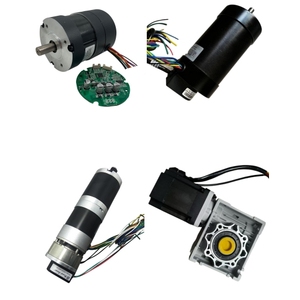 20W - 2000W
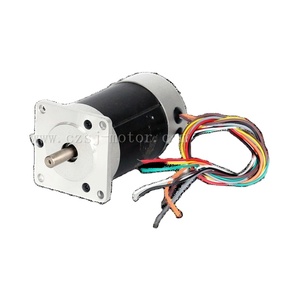 25W - 3000W
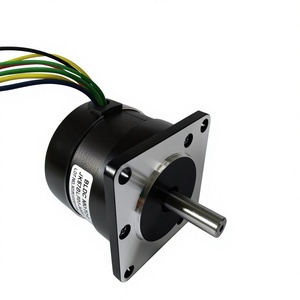 NEMA 23 Standard
 IE3 Premium Efficiency
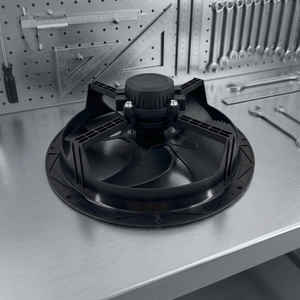 IP65 Waterproof
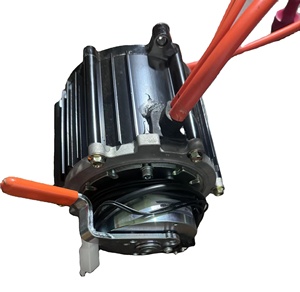 1KW High Torque
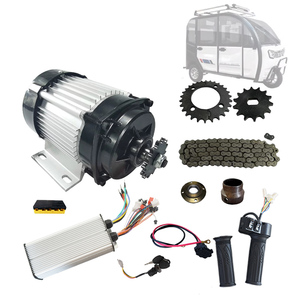 1000W Complete Kit
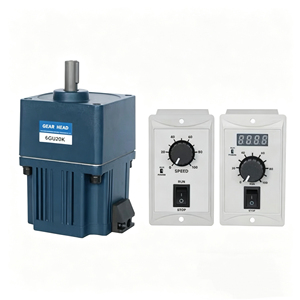 Compact IP54 60W
In modern industrial operations, selection of electrical rotating machines operating within hazardous environments is not merely a matter of rotational force, but an imperative of critical safety engineering. Drawing upon over 120 years of continuous engineering heritage—originating from premier European motor manufacturing traditions (such as T-T Electric's century-long legacy in France)—our global OEM/ODM manufacturing facilities combine artisanal electromechanical mastery with modern automated production lines.
As leading OEM/ODM explosion-proof motors exporters, our production ecosystem is governed by rigorous quality assurance frameworks. certified by independent international bodies including LRQA (Lloyd's Register Quality Assurance), alongside long-standing institutional memberships in the Electrical Apparatus Service Association (EASA) and the Association of Electrical and Mechanical Trades (AEMT). These credentials ensure that every custom-built explosion-proof motor withstands the thermal, mechanical, and explosive atmospheric pressures encountered in chemical refineries, offshore oil platforms, underground mining operations, and pharmaceutical processing plants.
Our manufacturing workflow enforces zero-defect quality control across all mechanical casting, copper winding, rotor balancing, and flameproof enclosure machining processes.
An explosion-proof electric motor must prevent an internal electrical spark or thermal flare from igniting surrounding flammable gases, vapors, or combustible dust clouds. As custom OEM/ODM manufacturers, we design motors according to global standard frameworks including IEC/EN 60079-0, IEC 60079-1 (Flameproof Ex d), IEC 60079-7 (Increased Safety Ex e), and IEC 60079-15 (Non-Sparking Ex nA/Ex ec).
The enclosure is engineered to withstand the internal explosive pressure caused by an ingress gas ignition without suffering structural deformation. Furthermore, all mechanical joint surfaces—including flange faces, shaft entry labyrinths, and terminal box lids—are precision-machined with micro-meter flame path tolerances (gap distance < 0.05mm). As hot combustion gases escape through these narrow joints, they are thermally quenched below the auto-ignition threshold of surrounding external atmospheres.
Industrial procurement teams must align OEM motor specs with designated Hazardous Area Zones (Zone 1, Zone 2, Zone 21, Zone 22) and specific Gas Subgroups (IIA, IIB, IIC). Below is a structural reference matrix utilized during our OEM design engineering consultations:
| Protection Type | IEC/ATEX Code | Permitted Zone | Gas / Dust Subgroup | Key Mechanical Design Feature |
|---|---|---|---|---|
| Flameproof Enclosure | Ex db / Ex d | Zone 1 & Zone 2 | Group IIA, IIB, IIC (Hydrogen/Acetylene) | Heavy-wall cast iron/steel enclosure; micro-ground flame paths. |
| Increased Safety | Ex eb / Ex e | Zone 1 & Zone 2 | Group IIA, IIB, IIC | Enhanced thermal insulation, certified creepage/clearance gaps, anti-sparking fans. |
| Non-Sparking / Ec | Ex ec / Ex nA | Zone 2 Only | Group IIA, IIB, IIC | Sealed components, restricted breathing enclosures, low surface temp design. |
| Dust Ignition Protection | Ex tb / Ex tc | Zone 21 & Zone 22 | Group IIIA, IIIB, IIIc (Conductive Dust) | Hermetic IP65/IP66 ingress protection gaskets, dust-tight shaft seals. |
As industrial procurement directors, EPC contractors, and OEM machinery buyers evaluate global motor exporters, four pivotal macro-engineering trends are transforming supply chain specifications for 2025 and beyond:
Regulatory mandates (such as EU Ecodesign Directive 2019/1781) are accelerating the phase-out of inefficient induction motors. Sourcing teams are replacing legacy AC motors with high-density Brushless DC (BLDC) and Permanent Magnet Synchronous Motors (PMSM) offering IE4+ super-premium efficiency in hazardous zones.
Modern Ex motors are increasingly specified with intrinsic safety (Ex i) smart vibration sensors, wireless bearing thermal couples, and winding insulation leakage monitors, allowing predictive maintenance via cloud-based SCADA systems without risking explosion triggers.
Standard off-the-shelf catalog motors often fail to meet spatial limitations of modern compact automated guided vehicles (AGVs) or specialized metering skids. Factory buyers prioritize exporters capable of rapid OEM custom mechanical shaft extensions, specialized flange geometries, and dual-voltage windings.
Global projects in Arctic liquefaction plants (-50°C) or Middle Eastern desert solar-gas sites (+60°C) require custom alloy metallurgy and C5M heavy-industrial epoxy painting systems capable of resisting salt-fog corrosion and thermal shock cycles over a 20-year operational life.
To eliminate cross-border trade friction, enterprise procurement teams mandate dual-certified ATEX and IECEx equipment, enabling single-model standardization across European, Asian, and American industrial installations.
Forward-thinking exporters provide life-cycle cost modeling. Because electrical energy accounts for over 90% of a heavy-duty motor’s lifetime cost, investing in optimized OEM electromagnetic design yields ROI within 12 to 18 months of continuous S1 duty operation.
To ensure zero failure rates during industrial commissioning, our factory operates a transparent, 5-stage contract manufacturing framework tailored for global OEMs:
Stage 1: Application Engineering Analysis & Intent Mining
Our engineering team evaluates operational load curves, duty cycles (S1 to S9), environmental gas groups, ambient temperature extremes, and mechanical mounting constraints (NEMA, IEC, custom flanges).
Stage 2: Electromagnetic & FEA Thermal Simulation
Utilizing advanced Finite Element Analysis (FEA), we model magnetic flux density, stator coil slot fill ratios, rotor thermal expansion, and enclosure stress resistance under internal explosive shocks.
Stage 3: Rapid Prototyping & Type-Testing
Prototype units undergo rigorous laboratory type-tests: hydrostatic pressure overpressure testing (up to 40 bar), flame transmission testing, IPX6/IPX7 water ingress validation, and full-load thermal rise measurement.
Stage 4: Automated Serial Production & Vacuum Pressure Impregnation (VPI)
Mass production utilizes Class H insulating resins processed via computer-controlled Vacuum Pressure Impregnation (VPI), delivering void-free coil encapsulation resistant to moisture, chemicals, and mechanical vibration.
Stage 5: Final Inspection, Serialized Tracking & Export Logistics
Every manufactured motor receives a unique serialized tracking number linked to its original raw material mill test certificates, dynamic balance logs, and routine test reports before export packing in ISPM-15 compliant wooden cases.
Answers to crucial commercial, technical, and compliance inquiries encountered during explosion-proof motor procurement.
Contact our engineering consultation team today for custom motor design, technical datasheets, ATEX/IECEx certificates, or factory-direct B2B quotation pricing.