
Explore our core range of high-efficiency brushless DC and 3-phase electric motors engineered for heavy-duty operational stability, wide voltage compliance, and precise torque control.
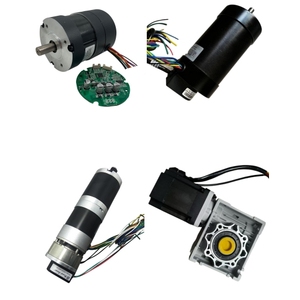
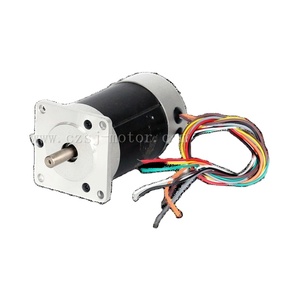
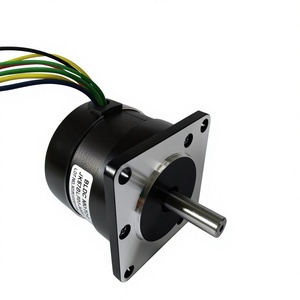
As a global leader in industrial electric motor engineering, our organization combines over a century of traditional manufacturing mastery with cutting-edge electro-magnetic design. Grounded in European engineering standards, we specialize in high-torque industrial DC motors, square frame AC variable-speed motors, and custom 3-phase BLDC solutions.
Every custom OEM motor engineered in our facilities undergoes rigorous mechanical stress testing, thermal dissipation modeling, and strict quality verification. Our manufacturing plant operates under certified LRQA quality management systems, assuring complete compliance with international electro-technical norms.



Understanding electromagnetic design, thermal dynamics, structural housing options, and inverter drive integration for heavy industrial applications.
Three-phase electric motors operate on the fundamental principle of a rotating magnetic field generated by balanced 120-degree phase displaced AC or electronically commutated DC currents. In high-performance OEM custom manufacturing, stator laminations utilize high-permeability cold-rolled silicon steel (M270 to M800 grades) to minimize hysteresis loss and eddy current dissipations.
Optimized slot-fill factors, combined with precision needle or concentric winding techniques, ensure maximum magnetic flux density within the air gap. For low-voltage BLDC and heavy AC induction motors alike, slot geometry is tuned to attenuate space harmonics, thereby eliminating torque ripple and acoustics in high-precision servo or vehicle traction environments.
Thermal endurance dictates the operational lifespan of industrial motors. Our custom OEM three-phase motors utilize Class H (180°C) or Class H+ insulation systems engineered with mica-glass phase separators, slot liners, and high-temperature polyimide-coated magnet wire.
To eliminate air voids and moisture ingress, stators undergo double Vacuum Pressure Impregnation (VPI) using solventless epoxy or unsaturated polyester resin. This process guarantees superior dielectric strength, enhanced heat dissipation from copper conductors to the frame, and outstanding resistance to chemical contaminants, salt spray, and extreme humidity.
Operating electric motors under fast-switching PWM (Pulse Width Modulation) inverters exposes insulation to steep voltage rise times (dV/dt spikes) and micro-discharges. OEM custom motors built for VFD operation incorporate inverter-duty magnet wire rated to withstand peak transient voltages over 1600V.
Furthermore, to prevent common-mode shaft currents from creating micro-pitting in ball bearings (fluting failure), our custom solutions integrate conductive micro-fiber shaft grounding rings, insulated non-drive end (NDE) bearing housings, or ceramic hybrid bearings for long-term mechanical reliability.
Depending on the deployment site—ranging from enclosed cleanroom medical equipment to aggressive marine deck winches and mining slurry pumps—choosing the right mechanical enclosure is imperative for preventing premature failure.
| Engineering Metric | Standard Specifications | Custom OEM Options | Primary Application Impact |
|---|---|---|---|
| Voltage Range | 12V, 24V, 48V DC / 220V, 380V, 460V 3-Phase AC | Dual-voltage taps, custom 110V to 690V, 400Hz traction winding | Ensures compliance with global grid standards or EV battery packs. |
| Frame Size & Geometry | NEMA 23, 34, 42 / IEC 56 to 315M | Custom foot-flange combos, square frames, low-profile compact housings | Fits constrained space envelopes in OEM machinery without redesign. |
| Feedback Systems | Sensors-free / Basic Hall Effect Sensors | Incremental Encoders (1024-4096 PPR), Absolute Resolvers, SSI/BiSS | Delivers precise closed-loop speed control and motion positioning accuracy. |
| Cooling Systems | IC411 Self-Ventilated Aluminum Fan | Forced-ventilation Blower (IC416), Water/Liquid Jacket Cooling | Maintains full continuous torque at ultra-low speeds without thermal trip. |
| Protection Class | IP54 Dust/Splash Proof | IP65, IP66, IP67 Submersible, ATEX Explosion-Proof Zone 1/21 | Prevents ingress of moisture, chemicals, oil, or explosive dust mixtures. |
How next-generation materials, power electronics, and digital intelligence are revolutionizing industrial motor efficiency and operational lifespan.
Global environmental regulations (EU Ecodesign, US DOE standards) mandate lower energy losses. Advanced 3-phase motors are adopting Synchronous Reluctance (SynRM) and interior permanent magnet (IPM) architectures to eliminate rotor copper losses completely, achieving IE5 efficiency standards while reducing lifecycle electrical costs by up to 15%.
The integration of Wide Bandgap Silicon Carbide (SiC) and Gallium Nitride (GaN) semiconductors directly into the motor terminal box is replacing traditional bulky cabinet VFDs. High switching frequencies reduce harmonic heat loss, shrink filter dimensions, and enable ultra-compact smart motor drive packages for robotics and automated guided vehicles (AGVs).
Modern industrial motors are transforming into intelligent edge-nodes. Integrated 3-axis MEMS vibration sensors, embedded PT100 thermistors, and magnetic flux sensors communicate real-time health metrics via Modbus, IO-Link, or wireless BLE, enabling predictive analytics to prevent catastrophic bearing or winding failures before downtime occurs.
Procurement teams within global machinery OEMs and industrial enterprises are pivoting away from transaction-based unit purchasing toward strategic lifecycle value acquisition. Key supply chain shifts include:
The initial purchase price of an industrial electric motor represents less than 3% of its total operational cost over a 10-year lifecycle; electrical energy consumes over 95%. B2B buyers now mandate verified IE3, IE4, or BLDC energy-saving calculations in procurement tenders to ensure long-term ROI.
To mitigate geopolitical supply disruptions, procurement leaders demand suppliers with standardized modular motor platforms. Modular stator/rotor stock allows rapid customization of shaft extensions, mounting flanges, and voltage windings with lead times reduced from months to weeks.
Scope 3 emissions accounting requires motor suppliers to provide transparent Environmental Product Declarations (EPDs), raw material traceability (conflict-free copper and magnet materials), and eco-friendly recyclable packaging solutions.
Direct technical answers addressing electrical matching, mechanical modifications, custom prototype turnarounds, and industrial certifications.
While both utilize a three-phase stator winding setup, 3-phase AC induction motors rely on induced current in a squirrel-cage rotor, making them robust for direct grid-tied continuous industrial work. 3-phase BLDC motors utilize permanent magnets on the rotor and require electronic commutation (inverters), offering significantly higher power density, instantaneous dynamic acceleration, and superior low-speed torque control.
Yes. Custom OEM engineering is our core specialty. We can manufacture custom shaft extensions including keyways, flat D-cut shafts, splined shafts, hollow bores, and threaded ends in stainless steel or alloy grades. Custom NEMA or IEC metric mounting flanges (C-face, D-flange) can also be tailored to fit your specific gearbox or hydraulic pump coupling directly.
We utilize Class H insulation (180°C rating) with double Vacuum Pressure Impregnation (VPI) treatment. Enclosures can be specified up to IP65, IP66, or IP67 ratings featuring viton lip seals, sealed terminal blocks, internal anti-condensation drain plugs, and C5-M marine-grade anti-corrosion exterior coatings for harsh washdown or offshore duty.
We support flexible prototyping for qualified engineering projects. Rapid prototype samples are typically delivered within 3 to 4 weeks depending on casting and winding custom requirements. Standard OEM batch production runs range from small high-mix lots (10-50 units) to high-volume automated runs (1000+ units/month).
Our electric motor manufacturing facility operates under LRQA quality certifications, with products compliant with CE, UL, CSA, RoHS, and REACH requirements. Motor efficiency performance aligns strictly with IEC 60034-30-1 standards (IE2, IE3, IE4) and US NEMA Premium efficiency guidelines.
We regularly embed PTC thermistors, PT100/PT1000 resistance temperature detectors (RTDs), or KTY sensors directly into stator coil heads during the winding process. These provide continuous telemetry to drive controllers to prevent thermal overload and optimize motor operating efficiency.
Connect directly with our senior application engineers to discuss custom voltage windings, mechanical mounting specs, thermal requirements, and bulk procurement quotations. Guaranteed technical response within 24 hours.