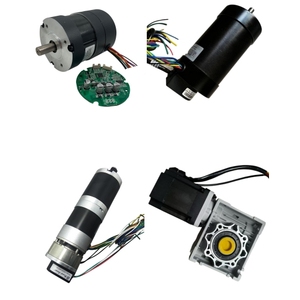
 Encoder Integrated
3-Phase High Torque Gear Motor with Brake & Controller
Voltage: 12V / 24V / 36V / 48V / 220V
Power Range: 20W to 2000W
Control: Quadrature Encoder & Brake

Engineered for Zero Step Loss, Superior Thermal Efficiency, and Seamless Industrial System Integration
Encoder Integrated
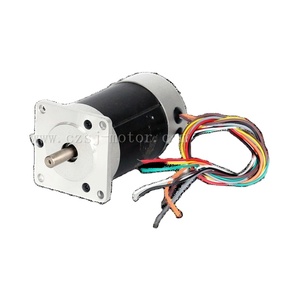 High Efficiency
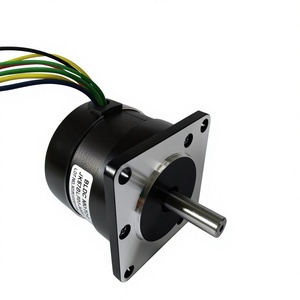 NEMA 23 Frame
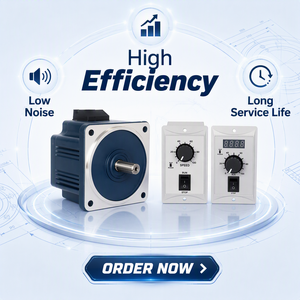 IP54 Waterproof
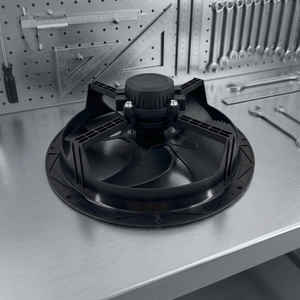 IP65 Sealed
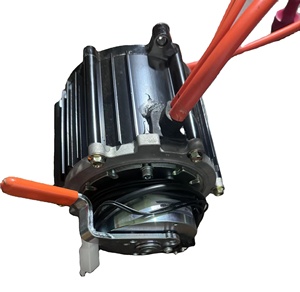 High Torque 1KW
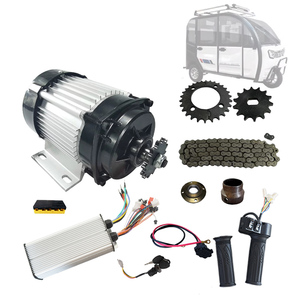 Complete Drive Kit
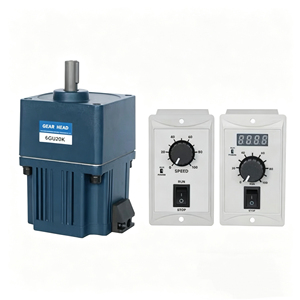 Compact Aluminium
In modern automated manufacturing, motion control reliability directly dictates throughput efficiency and product yield. Traditional open-loop stepper systems—while cost-effective—suffer from inherent engineering limitations including position loss under sudden load variations, high resonance at low speeds, and substantial thermal dissipation. Custom OEM Closed Loop Stepper Motors bridge the gap between low-cost open-loop motors and high-cost brushless AC servo systems by integrating high-resolution rotary optical or magnetic encoders with advanced Field-Oriented Control (FOC) vector drive algorithms.
As a premier OEM manufacturer and global supplier with over 120 years of combined electromechanical heritage, our facility specializes in precision-wound 2-phase and 3-phase hybrid closed-loop stepper motors. By closing the position loop 20,000 times per second, our systems guarantee zero step loss, reduce motor operating temperatures by up to 40%, and eliminate the acoustic resonance common in conventional positioning systems.
Key Engineering Advances Shaping the Next Decade of Industrial Motion Control
Modern closed-loop stepper controllers are evolving from scalar microstepping to Space Vector Pulse Width Modulation (SVPWM) and Field-Oriented Control (FOC). Instead of driving full phase current continuously, smart drivers sample position feedback and dynamically inject torque-generating current proportional to the actual mechanical load, cutting energy consumption dramatically.
Optical incremental encoders are increasingly yielding to magnetic multi-turn absolute encoders with resolutions up to 24-bit. This eliminates homing routines upon power reboot, boosts immunity to dust and oil contamination, and drastically shrinks rear-housing depth for compact robotic arm joints.
The market is shifting rapidly from step/direction pulse control to distributed real-time Ethernet buses like EtherCAT, CANopen, and PROFINET. Integrated stepper drives now support CiA 402 drive profiles, enabling multi-axis synchronized trajectory generation directly at the motor node with sub-millisecond cycle times.
To minimize control cabinet footprint and eliminate complex shielded cable runs, OEM procurement teams heavily favor integrated drive-motor-encoder packages. Modern NEMA 17, 23, and 34 closed-loop units combine motor windings, FOC DSP controller, and absolute encoder into a single IP65-sealed assembly.
Through real-time current loop tuning and digital notch filters, modern closed-loop controllers calculate shaft inertia torque ripple online. Mid-range instability and low-speed hunting are active suppressed, enabling butter-smooth speed regulation down to 0.1 RPM for semiconductor wafer positioning.
High-grade SH/UH Neodymium-Iron-Boron (NdFeB) permanent magnets with thermal resistance up to 180°C prevent demagnetization under continuous high-load operating cycles. High-fill factor stator slot design maximizes torque density per frame size.
Strategic Purchasing Criteria for Procurement Managers and Industrial Automation Engineers
Global OEM buyers are transitioning away from raw unit-cost purchasing toward comprehensive Total Cost of Ownership (TCO) evaluation. While open-loop motors carry a 15–20% lower upfront price tag, their hidden operational costs—caused by lost steps, rejected workpiece batches, excessive heat degradation on machine bearings, and energy wasted during idle cycles—far outweigh initial savings.
A closed-loop stepper motor running under dynamic FOC control consumes up to 35% less electrical power over a standard 5-year production cycle. Combined with eliminated downtime and zero recalibration cycles, closed-loop technology yields an average ROI payback period of under 6 months in 24/7 automated assembly lines.
| Technical Parameter | Traditional Open-Loop Stepper | Standard AC Servo Motor | OEM Closed-Loop Stepper (FOC) |
|---|---|---|---|
| Step Loss Risk | High (Under transient overload) | None (Position verification) | Zero (Full closed-loop FOC) |
| Low-Speed Torque | High | Low to Moderate | Extremely High (Peak Holding) |
| System Cost & Complexity | Low / Simple | High / Complex Tuning | Moderate / Plug & Play |
| Thermal Generation | High (Constant max current) | Low (Proportional current) | Low (Dynamic Load Control) |
| Settling Time | Long (Ring back oscillations) | Very Short | Near Zero (Fast Position Lock) |
| Encoder Resolution | None | 17-bit to 24-bit | 1,000 to 20,000 CPR Optical/Mag |
When auditing potential OEM custom closed loop stepper motor factories, technical procurement teams must verify four critical manufacturing pillars:
Tailored Motion Engineering Solutions for Specialized Industrial Applications
Custom shaft diameters, flat D-cuts, keyways, helical pinion gears, dual rear shafts, lead screws (Trapezoidal/Ball Screws), and special mounting flange hole patterns matching NEMA 11, 14, 17, 23, 24, and 34 standards.
Tailored phase resistance and inductance profiles to optimize torque-speed curves for low voltage (12V/24V battery systems) or high voltage (48V/80V DC industrial power supplies), maximizing high-speed torque retention.
Custom fluororubber shaft oil seals, watertight cable gland entries, specialized conformal coating on internal stators, and corrosion-resistant stainless steel housings for washdown food processing and outdoor AGVs.
With an engineering legacy spanning over 120 years in rotating electric machine design, our manufacturing plant combines deep theoretical expertise with state-of-the-art production robotics. Serving industrial clients in over 60 countries, we maintain strict adherence to international quality protocols, ensuring seamless mechanical reliability across demanding industrial environments.
 LRQA ISO Certified Quality Management
 EASA Electromechanical Member
 AEMT Engineering Trade Member
Custom mechanical samples delivered in as fast as 7–14 working days.
Direct technical response from motor design engineers within 24 working hours.
Full dynamic load testing, insulation resistance, and noise spectral analysis.
In-Depth Technical Answers for Procurement Officers, Systems Engineers, and OEM Designers
In traditional open-loop stepper systems, the controller sends microstepping pulse streams blindly regardless of shaft position. If external load torque exceeds motor holding torque, the shaft lags behind electrical angle by more than 2 tooth pitches, causing full stall and loss of position reference. A closed-loop stepper motor incorporates an encoder (typically 1000 to 5000 lines, giving 4000 to 20000 counts per revolution). The closed-loop controller compares real-time encoder position with target position. If position lag is detected, the Field-Oriented Control (FOC) algorithm instantly boosts phase current and corrects phase angle vector, preventing stalls completely and correcting position within microseconds.
Standard off-the-shelf catalog closed-loop motors ship within 3–5 business days. For customized OEM requests—such as special shaft machining (D-flat, splines, thread tapping), custom winding resistance, specialized connector harnesses, or IP67 sealing—prototype production typically takes 7 to 14 business days. Mass production batch orders (500 to 10,000 units) are scheduled on a 3 to 4-week cycle, backed by safety stocking programs for long-term framework contracts.
Yes, in applications requiring high holding torque at low-to-medium speeds (below 2000 RPM), closed-loop steppers provide equal or superior performance at roughly 30% to 50% lower total system cost. Unlike AC servos which tend to hunt or vibrate when holding static position under variable load, closed-loop steppers maintain rigid zero-speed holding torque without jitter. However, for continuous high-speed applications above 3000–4000 RPM, AC servo motors remain preferred.
Our manufacturing facilities operate under strict ISO 9001 quality control frameworks certified by LRQA. Every motor undergoes 100% automated End-of-Line (EOL) testing evaluating insulation dielectric strength (1500V), winding phase resistance symmetry, back-EMF voltage profiles, encoder quadrature signal phase shift, and vibration spectral noise. Products comply with CE, RoHS, REACH, and UL insulation standards, and our facility is an active member of EASA and AEMT.
We offer both optical and magnetic feedback solutions depending on environmental operating conditions. Optical encoders provide higher resolution (up to 20,000 CPR) and superior angular accuracy, ideal for semiconductor processing and high-precision CNC equipment. Magnetic encoders utilize magnetoresistive (AMR/GMR) or Hall-effect sensing, offering immunity to dust, moisture, shock, and high vibration, ideal for outdoor robotics, construction vehicles, and heavy industrial machinery.
To support engineering design validation, we offer low MOQ requirements for initial OEM prototype evaluations (starting at just 2 to 5 units). For standard production customized runs, our typical MOQ is 50 to 100 units. Flexible schedule stocking and blanket PO release programs are available for qualified long-term partners.
Need specialized shaft dimensions, custom winding characteristics, integrated brake/gearheads, or custom fieldbus controllers? Our application engineering team is ready to evaluate your CAD models and technical requirements. Guaranteed response within 24 working hours.
Send an Inquiry