
Explore our precision-engineered range of brushless DC, gear-assisted, and permanent magnet brake motors. Built for high dynamic response, fail-safe braking safety, and rigorous IP65/IE3 industrial standards.
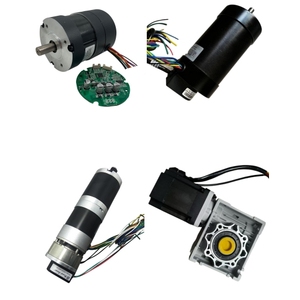
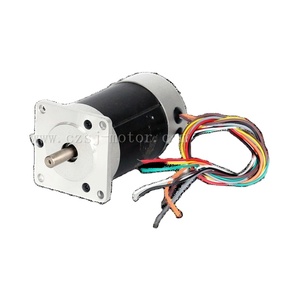
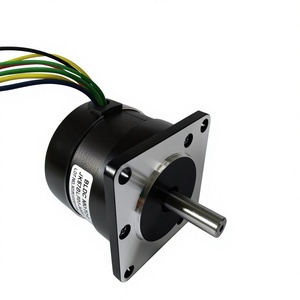
In modern automated manufacturing, material handling, cranes, wind turbines, and precision robotics, electric motors can no longer function purely as rotary mechanical energy converters. They must provide immediate, high-integrity stopping power, precise dynamic holding, and fail-safe deceleration under critical power interruption scenarios. This requirement has propelled Custom OEM Brake Motor Systems to the forefront of industrial electro-mechanical engineering.
Standard off-the-shelf electric motors paired with third-party external brakes frequently suffer from mechanical misalignment, elevated thermal dissipation stress, localized frame resonances, and accelerated backlash wear. As a specialized Custom OEM Brake Motor Systems Supplier, our engineering framework integrates electromagnetic spring-applied brakes, permanent magnet holding brakes, and optical or magnetic encoder feedback loops directly into unified motor housing architectures.
| Performance Specification | Standard Commercial Induction Motor + Add-on Brake | Integrated Custom OEM Electromagnetic Brake Motor | OEM Operational Benefit |
|---|---|---|---|
| Brake Response Time (ms) | 80 ms – 150 ms (Dispersed electromechanical path) | 12 ms – 35 ms (Direct coil linkage) | 75% faster emergency stopping distance |
| Thermal Dissipation & Insulation | Class F (155°C) localized heat trapping | Class H (180°C) with Forced Cooling | Eliminates coil burnout during S4/S5 high-duty cycles |
| Enclosure & Ingress Protection | IP44 – IP54 (Exposed external brake linkages) | IP65 / IP66 Fully Sealed Hermetic | Resists hostile washdowns, metal dust & chemical spray |
| Positioning Accuracy & Backlash | > 1.5 degrees backlash gap | < 0.1 degree zero-backlash spline interface | Eliminates mechanical jitter in automated indexing |
| Total Cost of Ownership (5-Yr TCO) | High maintenance overhead due to alignment drift | Optimized TCO (>45,000 hrs mean time between failure) | 35% reduction in lifecycle downtime & spare part costs |
Utilizing high-flux density neodymium magnets or precision spring-applied DC solenoids, our brake assemblies deliver instantaneous engagement upon voltage collapse, guaranteeing fail-safe operation across critical lifting and positioning cycles.
From custom NEMA/IEC frame flanges, keyway shafts, and splines to specialized winding turns matching 12V DC battery supplies or 480V 3-phase industrial grids, every motor is optimized to exact OEM client CAD specs.
Engineered with vacuum pressure impregnated (VPI) Class H copper windings, specialized friction linings, and finned aluminum alloy frames designed to withstand continuous starting, stopping, and dynamic braking without thermal degradation.
How state-of-the-art materials science, smart sensor networks, and advanced brushless motor design are redefining reliability and efficiency standards for high-demand procurement teams.
Modern OEM brake motors integrate solid-state micro-sensors directly within the friction pad and winding core. These sensors stream real-time air-gap clearance, temperature gradients, vibration spectra, and cycle counts back to PLC controllers via IO-Link or Modbus RTU, enabling true predictive maintenance before catastrophic line stoppage occurs.
By co-engineering Brushless DC (BLDC) and Permanent Magnet Synchronous Motor (PMSM) systems with variable speed drives (VSD), up to 85% of kinetic energy is recovered during active deceleration before the electro-mechanical brake friction lining engages at low speeds to hold zero-velocity state, dramatically cutting friction wear by up to 300%.
Engineering advancements in synthetic ceramic-metallic friction compounds allow for consistent dynamic friction coefficients (μ = 0.42 to 0.50) across extreme operational ambient temperature spans from -40°C freezer operations to +120°C ambient metal manufacturing environments, eliminating dynamic braking torque fading.
As global industrial supply chains pivot toward decarbonization, energy efficiency compliance, and total lifecycle sustainability, B2B procurement managers and original equipment manufacturers (OEMs) are re-evaluating their electro-mechanical vendor partnerships. Procurement logic is shifting from pure initial purchase price consideration toward long-term total cost of ownership (TCO), customized modular adaptability, and supplier compliance with international quality standards.
The rapid rise of Autonomous Mobile Robots (AMRs), Automated Guided Vehicles (AGVs), and battery-operated e-mobility utility carts has triggered massive demand for 24V, 36V, 48V, and 72V Brushless DC brake motor assemblies. Procurement teams require compact, high-power-density designs that conserve battery capacity while providing heavy static load holding security.
Regulatory bodies across Europe, North America, and Asia-Pacific have instituted stringent minimum energy performance standards (MEPS). OEM buyers now mandate IE3 Premium Efficiency or IE4 Super Premium Efficiency ratings across all continuous duty brake motors to reduce system power draw, carbon footprints, and factory operating overhead.
Single-source dependency and long lead times for custom motors present high risks. Modern procurement managers favor suppliers offering flexible modular platform engineering—allowing shaft modifications, custom gear ratios, flange swaps, and voltage rewinds within 2 to 4 weeks prototype turnarounds.

Combining traditional European engineering precision with cutting-edge automated manufacturing, our lineage spans over a century of continuous innovation in heavy-duty rotating electrical machines, DC drives, square-frame AC motors, and custom electro-magnetic brake motor systems.
Every motor produced undergoes rigorous dynamic load testing, insulation surge testing, sound spectrum analysis, and strict quality verification. Using our unique internal serial number tracking database, we can trace every shaft, bearing, winding batch, and brake coil back to its origin, ensuring instantaneous OEM spare part matching decades after deployment.



Clear, whitepaper-level answers to key questions asked by engineering leads, OEM designers, and industrial purchasing officers.
A fail-safe spring-applied brake relies on mechanical compression springs to clamp the friction disc when electrical power is removed or lost, making it the industry standard for emergency safety stopping and vertical hoist holding. A permanent magnet brake uses permanent magnetic attraction to engage the armature disc, offering zero-backlash, higher torque density in compact frames, and higher speed engagement, but requires active reverse-polarity power coils to release the holding force.
Static holding torque must calculated with a minimum safety factor of 1.5x to 2.5x against the total load torque (especially on inclined axes or vertical hoists). Dynamic stopping torque accounts for system inertia (J_total) and required stopping time (t_stop). Our OEM application engineering team uses specialized computer modeling to simulate emergency stop (E-stop) cycles, ensuring friction lining wear remains within allowable service tolerances across S4/S5 intermittent duty ratings.
Yes. We engineer fully sealed IP65 and IP66 rated brake motor assemblies utilizing high-grade fluorocarbon (Viton) radial oil seals, sealed stainless-steel friction surfaces, epoxy-encapsulated brake solenoids, double-sealed bearing housings, and corrosion-resistant anodized aluminum or cast-iron enclosures. These units are specifically designed for food processing, marine winches, and outdoor washdown environments.
Brake coil actuation generates fast-transient inductive inductive voltage spikes (flyback voltage). Our OEM designs incorporate internal flywheel diodes or varistors directly across the coil terminals alongside shielded differential line driver encoders (RS422 / HTL / TTL) and physical isolation barriers, preventing electromagnetic interference (EMI) from corrupting digital speed or position feedback signals.
We offer comprehensive 100% bespoke mechanical co-engineering. Options include custom NEMA, IEC, or proprietary mounting flange dimensions, dual shaft extensions, spline shafts, hollow bore shafts, specialized keyways, custom terminal box orientation (top, left, right), and integrated fast-connect aviation plug connectors.
Using our modular component system, initial CAD rendering and technical validation occur within 48 to 72 hours. Prototype sample production typically ranges from 2 to 4 weeks depending on shaft casting requirements. Serial OEM production batch orders are scheduled with flexible rolling buffer stock options to support Just-In-Time (JIT) manufacturing schedules.
Partner with an established industrial manufacturer with over 120 years of proven rotating machine expertise. Speak directly with our electro-mechanical engineering team for custom brake motor sizing, CAD drawings, sample requests, and competitive OEM volume quotations.