


1. Technical Foundations of Industrial Armature Winding Assemblies
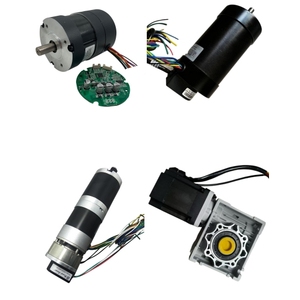
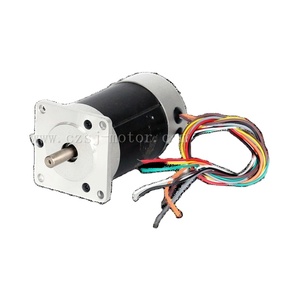
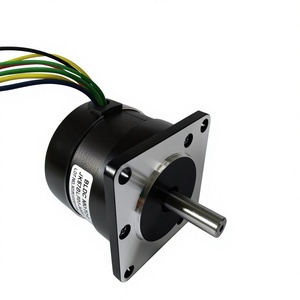
The armature winding assembly serves as the electromechanical heart of rotating machinery—whether in brushed DC motors, brushless DC (BLDC) systems, AC synchronous machines, or universal drive units. As global industrial automation demands higher power density, operational efficiency, and thermal stability, the engineering design of the armature winding core has evolved into a highly specialized discipline combining magnetic circuit design, material science, and automated precision manufacturing.
An armature core consists of stacked high-permeability, low-loss silicon steel laminations (typically 0.2mm to 0.5mm thickness) designed to minimize eddy current losses ($P_e \propto f^2 B_m^2 t^2$). Inside the lamination slots, insulated copper magnet wire is laid according to specific winding schemes:
- Lap Winding (Parallel Winding): Characterized by the number of parallel paths ($A$) equaling the number of poles ($P$), making it ideal for low-voltage, high-current industrial applications such as heavy traction drives and automotive starters.
- Wave Winding (Series Winding): Configured so that $A = 2$ regardless of pole count, providing higher electromotive force (EMF) output at reduced current levels, which is preferred for high-voltage industrial motors and generators.
- Concentrated & Segmented Stator Winding: Predominantly utilized in high-efficiency BLDC motors, where direct slot-filling technologies maximize the slot fill factor up to 70%+, drastically reducing copper resistance ($I^2R$) losses.
By utilizing high-grade enamelled copper wire rated for Class H (180°C) or Class N (200°C) thermal endurance, modern armature assemblies achieve maximum thermal headroom under continuous duty cycles (S1 duty rating).
Electromechanical Winding Topology Matrix
| Winding Topology | Parallel Paths (A) | Typical Slot Fill Factor | Voltage / Current Characteristic | Primary Industrial Applications |
|---|---|---|---|---|
| Simplex Lap Winding | A = P (Poles) | 45% - 55% | Low Voltage / High Current | Steel Mill Drives, Heavy Traction, Starter Motors |
| Simplex Wave Winding | A = 2 | 48% - 58% | High Voltage / Low Current | Industrial DC Generators, Crane Hoists, Mining Motors |
| Concentrated Segmented Winding | Phase Dependent | 65% - 72% | High Efficiency / High Power Density | EV Traction Motors, Precision Robotics, Servo Drives |
| Hairpin Winding (Flat Wire) | Customized Path | 70% - 78% | Ultra-High Thermal Conductivity | Modern Automotive Propulsion, High-Output Generators |
2. Global Sourcing Trends in China Wholesale Armature Winding (2025–2030)
The global market for electrical motor armatures and stators is undergoing a structural transition driven by decarbonization mandates, the rapid adoption of electric mobility, and smart factory automation. B2B procurement professionals and OEM design engineers sourcing from China must align with several critical technological and supply chain shifts:
Automated Hairpin Winding Transition
Transitioning from traditional round wire to rectangular flat copper wire (hairpin technology) increases slot fill ratios, dramatically reducing copper volume while boosting heat dissipation.
Eco-Friendly VPI & Solventless Resins
Environmental compliance (REACH/RoHS) is driving adoption of solventless epoxy resins applied via Vacuum Pressure Impregnation (VPI) for void-free dielectric strength.
Rare-Earth Permanent Magnet Hybridization
Combining optimized rotor laminations with high-coercivity N35SH-N52H Neodymium magnets guarantees field strength even under thermal overload conditions.
100% Automated Surge & Hi-Pot Verification
Leading Chinese exporters now integrate online end-of-line (EOL) electrical testing to inspect turn-to-turn insulation integrity on every single manufactured armature core.
Procurement Insight: When negotiating bulk manufacturing orders, verifying the supplier's raw material sourcing for electrical steel laminations is paramount. High-grade cold-rolled non-oriented silicon steel (CRNGO, e.g., 50WW470 or 35WW300) reduces core losses by up to 22% compared to standard commercial steel sheets, directly influencing the overall energy efficiency class (IE3 / IE4) of the final motor unit.
3. Manufacturing Process & Quality Control Ecosystem
Producing durable, industrial-grade armature winding assemblies demands an uncompromising multi-stage manufacturing sequence. Below is an overview of the quality control procedures employed in premier Chinese export facilities:
Step 1: High-Speed Lamination Stamping & Core Stacking
Silicon steel coils are punched using progressive carbide dies operating at high speeds. The resulting laminations are stacked using automatic interlocking (Cleating or Laser Welding) to form a rigid, magnetic core free of burrs (burr height < 0.02mm).
Step 2: Slot Insulation & Precision CNC Winding
Nomex, DMD, or Kapton insulation film is inserted into the core slots before winding. Automated multi-axis CNC flyers or needle winders lay enamel-coated copper wire into the slots with precise tension control, preventing wire stretch and insulation breakdown.
Step 3: Commutator Fusing & Mechanical Wedging (For Brushed DC)
In brushed DC armatures, coil leads are hooked onto commutator risers and joined via hot-staking or TIG welding. Slot wedges (glass-epoxy or phenolic) are driven into the slot openings to securely lock windings against centrifugal forces during high-RPM operation.
Step 4: Vacuum Pressure Impregnation (VPI) & Curing
The complete armature assembly is placed in a vacuum vessel where air and moisture are evacuated. High-grade insulating varnish is injected under pressure, penetrating deep into every coil pore. Subsequent thermal baking cures the resin into a solid, moisture-resistant block.
Step 5: Dynamic Balancing & Electrical Testing
Using dynamic balancing machines, material is removed (or balancing weights added) to achieve ISO 1940 Grade G2.5 balance precision. Finally, 100% of units undergo:
- AC/DC High-Voltage Dielectric Withstand Test (Hi-Pot)
- Surge Comparison Test (Turn-to-Turn Insulation Check)
- DC Winding Resistance Measurement & Bar-to-Bar Resistance Check
4. Enterprise Advantages & Custom OEM Capabilities
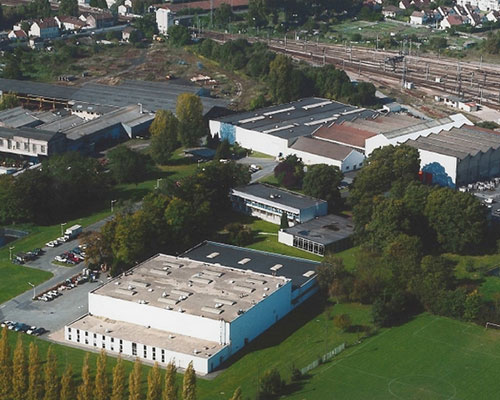
As a premier manufacturing partner and exporter based in China, our facilities bridge advanced technical innovation with high-volume industrial production. Building upon a foundation of engineering excellence, we offer global partners:
- Tailored Electromagnetic Design: Fully customizable slot-pole combinations, wire gauges, turn counts, and shaft dimensions designed to meet your precise torque, RPM, and supply voltage specifications.
- Rapid Prototyping to Mass Production: In-house tooling capabilities allow sample delivery in as fast as 15 business days, supported by automated mass-production lines outputting over 500,000 units monthly.
- Comprehensive International Compliance: All products are manufactured in ISO 9001:2015 certified facilities and meet CE, RoHS, REACH, and UL safety criteria.
- Traceability & Serial System: Utilizing unique serial matrix tracking, every motor armature's raw materials, winding parameters, and test logs can be traced across its full operational lifecycle.