
Comprehensive Technical Guide on High-Efficiency BLDC Drives, FOC Vector Architectures, and B2B Industrial Procurement Trends
Explore our precision-engineered brushless DC motors, permanent magnet synchronous drives, and integrated intelligent motor control units certified for international industrial deployment.
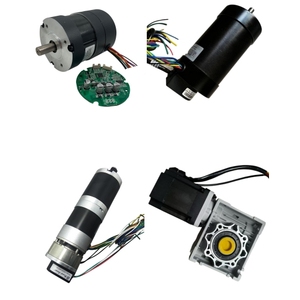
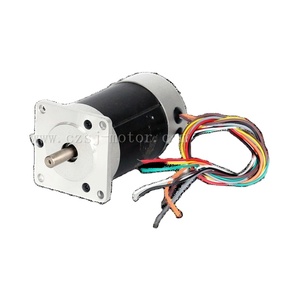
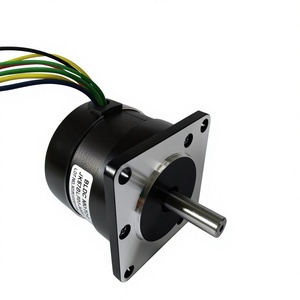
The global industrial motion control landscape is undergoing an unprecedented technological transition. As energy efficiency mandates tighten across North America, Europe, and Asia-Pacific, traditional scalar-controlled AC induction systems and brushed DC assemblies are rapidly giving way to Smart Motor Controllers (SMC) paired with Brushless DC (BLDC) and Permanent Magnet Synchronous Motors (PMSM).
China has emerged as the global epicenter for smart motor controller manufacturing, leveraging integrated electronics supply chains, advanced rare-earth magnet processing, and cutting-edge digital signal processing (DSP) research. Today's industrial buyers no longer evaluate controllers solely on basic voltage and current ratings; procurement decisions are driven by algorithmic precision, field-oriented vector performance, industrial bus connectivity (CANopen, Modbus, EtherCAT), and thermal resilience under extreme operating envelopes.
A smart motor controller is far more than a simple electronic speed regulator. It is an intelligent cyber-physical node capable of dynamic torque estimation, predictive diagnostic logging, and closed-loop position control. Leading Chinese OEM manufacturers incorporate three foundational pillars into contemporary smart controller hardware:
By decoupling stator magnetic flux and torque-producing current vectors via Park and Clarke mathematical transformations, FOC algorithms achieve instantaneous torque response, zero-speed high-torque hold, and ultra-quiet motor acoustic operation.
Transitioning from legacy Silicon IGBTs to Gallium Nitride (GaN) and Silicon Carbide (SiC) switches allows pulse-width modulation (PWM) frequencies up to 100 kHz, drastically reducing controller footprint while boosting system thermal performance.
Integrated CANbus, Modbus-RTU, and RS-485 interfaces enable seamless telemetry feedback—including real-time winding temperature estimation, voltage sag alerts, phase current monitoring, and over-torque cutoffs.
To assist OEM design engineers and procurement directors in selecting the optimal drive architecture, the technical comparison matrix below highlights the core performance parameters distinguishing legacy scalar/square-wave drives from advanced Chinese Smart Motor Controllers.
| Performance Dimension | Legacy Trap / Square-Wave Drive | Standard Variable Frequency Drive (VFD) | Next-Gen Chinese Smart Controller (FOC/SMC) |
|---|---|---|---|
| Control Algorithm | Six-Step Trapezoidal Switching | Open-Loop V/Hz Scalar Control | Closed-Loop Vector FOC / Sensorless Observer |
| System Efficiency Curve | 75% – 82% (High losses at low speeds) | 84% – 89% (Moderate partial load losses) | 94% – 98.5% (IE4 / IE5 Class Compatible) |
| Torque Ripple & Acoustics | High torque ripple, high acoustic noise | Moderate vibration at low frequencies | Near-zero torque ripple (<0.1%), Silent (<45dB) |
| Dynamic Speed Range | 1:10 speed regulation ratio | 1:50 speed regulation ratio | 1:1000 ultra-wide speed dynamic range |
| Thermal Dissipation & Enclosure | IP20 – IP40 / Requires massive heatsink | IP54 Aluminum Fin Cooled | IP65 / IP67 Fully Sealed Die-Cast Enclosure |
| Integrated Feedback Options | None or Simple Hall Sensors | Incremental Encoder Input | Absolute Encoder, Resolver, Sensorless Observer |
As detailed above, integrating an advanced FOC smart motor controller yields substantial operational benefits: reduced thermal stress on motor windings, extended bearing duty cycles, and significant energy savings under variable-torque loading conditions.
Chinese smart motor controllers are deployed across a broad array of critical industrial, commercial, and mobility applications. Custom firmware tuning and modular mechanical integration allow manufacturers to meet strict application-specific engineering requirements.
Automated Guided Vehicles (AGVs) and warehouse robotics require dual-axis BLDC controllers capable of sub-millimeter positioning, regenerative braking energy recovery, and high torque output in small physical form factors. Smart 48V–72V BLDC controllers deliver smooth speed ramps, preventing wheel slippage and maximizing battery operating hours per charge cycle.
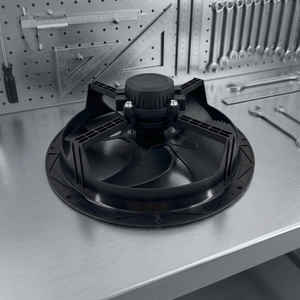
Strict environmental regulations demand continuous energy monitoring in commercial refrigeration compressors and deep-freezer circulation fans. Using IP65 waterproof permanent magnet BLDC fan motors with variable-speed smart drives ensures compliance with IE3/IE4 efficiency guidelines while providing soft-start capabilities that eliminate mechanical line surge.

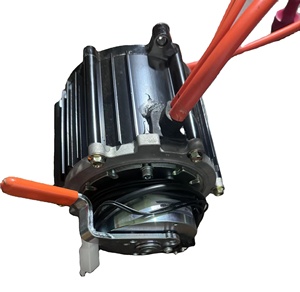
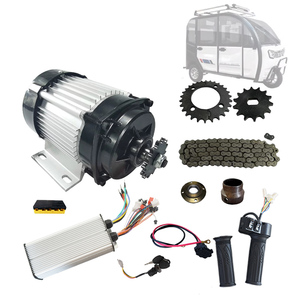
In electric rickshaws, conversion kitting, and utility kart platforms, BLDC motor controllers must handle severe overcurrent situations, thermal spikes, and moist environments. Modern 1KW–3KW 48V/60V/72V controllers incorporate intelligent current limiting, phase short protection, and hill-hold assist algorithms for high reliability in rugged climates.
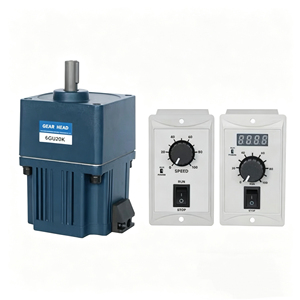
Small-frame applications—such as NEMA 23 flange-mount 36V 92W motors operating at 4000 RPM—require extremely compact controller PCBA layouts integrated directly into the motor end-bell. These units offer precise speed control, minimal electromagnetic interference (EMI), and low acoustic footprints suitable for medical pumps and automated home systems.
As industrial automation scales toward autonomous smart factories, the requirements placed on motor controller manufacturers are rapidly evolving. B2B procurement leaders must align with suppliers capable of delivering forward-compatible technology stacks. Key trends defining the next decade include:
Future smart controllers will incorporate tinyML chips directly onto the control board to analyze high-frequency current signatures and vibration data. By detecting early bearing pitting or insulation degradation, the controller signals maintenance teams before catastrophic failure occurs.
The industry is shifting away from separate wall-mounted drive cabinets toward fully integrated motor-controller assemblies. Eliminating long shielded motor cables reduces radiated EMI, cuts system installation labor by up to 40%, and reduces total control cabinet volume.
Standardization around software-configurable communication transceivers will allow a single hardware SKU to support EtherCAT, PROFINET, or Ethernet/IP via simple firmware parameter updates, simplifying global inventory management for OEMs.
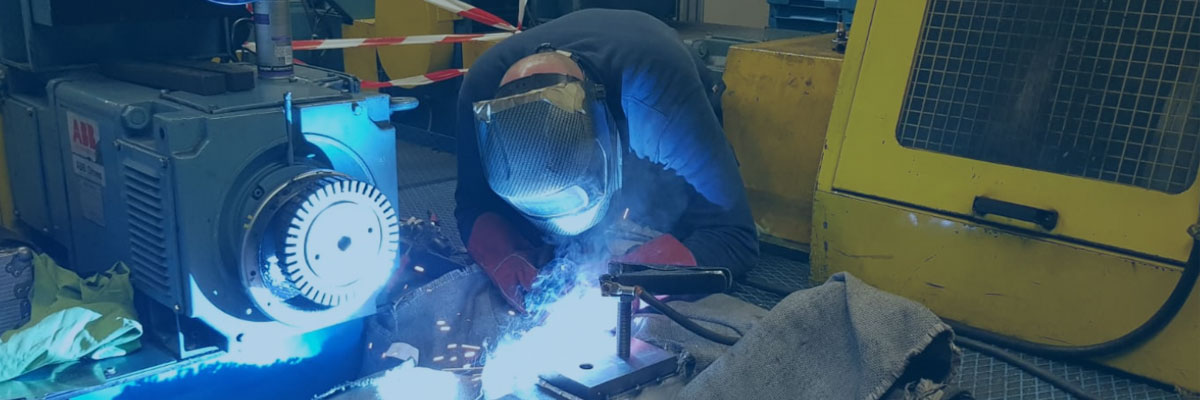
Building high-reliability smart motor controllers requires rigorous engineering management, ISO-certified production lines, and complete component traceability. Our manufacturing infrastructure combines classic industrial reliability with state-of-the-art automated SMT assembly.
With an engineering legacy spanning over 120 years in rotating machine design and power conversion systems, our factory delivers solutions tested to survive harsh industrial environments. Every controller and motor unit undergoes 100% automated end-of-line testing—including high-voltage insulation breakdown, thermal dynamic burn-in, and full load dynamic torque calibration.
Our commitment to quality is backed by recognized international certifications and active memberships in global electromechanical standards associations:


Answers to common technical, customization, and supply chain questions from OEM engineers and procurement teams.
A brushed DC drive relies on mechanical commutators and physical carbon brushes to reverse magnetic field polarity, causing mechanical wear, sparking, and friction losses. A BLDC motor controller uses electronic commutation powered by solid-state MOSFETs or IGBTs guided by position sensors (Hall sensors or encoders) or sensorless back-EMF observers. This yields higher efficiency, virtually maintenance-free operation, longer service life, and silent running performance.
Yes. We specialize in custom OEM/ODM development. Our engineering team can adjust PCBA dimension constraints, modify voltage inputs (ranging from 12V DC up to 220V AC/DC), design custom aluminum heatsink enclosures, and tailor control firmware (FOC parameters, acceleration/deceleration curves, protection thresholds, and custom CANbus frame IDs) to align perfectly with your equipment architecture.
FOC applies continuous sinusoidal currents to motor phase windings, generating a smooth rotating magnetic field. This eliminates the abrupt current phase transitions inherent in square-wave commutation, thereby reducing acoustic hum, virtually eliminating torque ripple, improving energy conversion efficiency by 5–15%, and allowing precise position and speed control even at low RPMs.
Our smart controllers feature comprehensive hardware and software protection suites, including Over-Current Protection (OCP), Over-Voltage & Under-Voltage Lockout (UVLO), Thermal Shutdown via NTC sensors, Stall & Locked-Rotor Protection, Phase-to-Phase Short Circuit Cutoff, and Signal Loss Fail-Safes. These safeguards protect both the motor and the power stage under severe fault conditions.
Standard product samples ship within 5 to 7 business days, while customized OEM mass production orders typically require 3 to 4 weeks depending on component specifications. All products are manufactured in compliance with ISO9001 quality management systems and conform to international CE, RoHS, and UL safety standards. Full test reports and certificates of conformity (CoC) are provided with every shipment.
Partner with China's premier smart motor controller manufacturer. Contact our application engineering team today for technical datasheets, CAD models, or custom OEM project evaluations.