
China Best Torque Motor Assemblies Suppliers & Exporter

Engineered Direct-Drive Solutions, High-Torque Electromagnetic Assemblies & Next-Generation BLDC/PMSM Integration for Global OEM Applications

Featured High-Torque Motor Assemblies & Drive Systems

Precision-engineered, heavy-duty brushless motors and customized assemblies tested for extreme reliability.
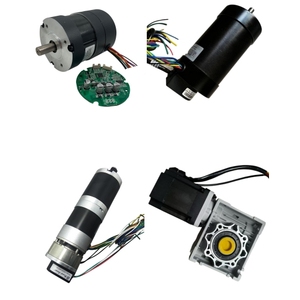
3 Phase BLDC Gear Motor with Encoder Brake Controller

3 Phase BLDC Gear Motor 20W-2000W with Encoder Brake

Available in 12V, 24V, 36V, 48V, and 220V ratings. Features integrated encoder feedback and electromagnetic brake assembly for high-precision motion control.

Get a Quote
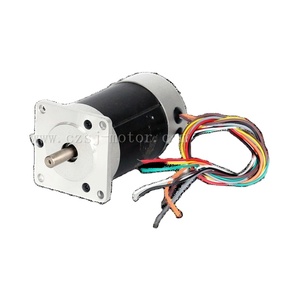
High Efficiency Brushless DC BLDC Motor

High Efficiency BLDC Motor Series (25W to 3000W Output)

Wide scalability from 25W up to 3kW. Engineered for maximum torque density, energy conservation, and minimal heat generation in continuous duty cycles.

Get a Quote
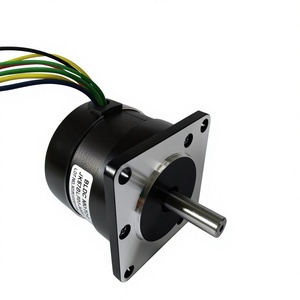
NEMA 23 Brushless DC Motor Flange Mount

36V 92W 4000RPM NEMA 23 Brushless DC Motor Assembly

Precision flange-mounted BLDC motor delivering 0.22Nm continuous torque. Optimized for smart home automation, medical devices, and appliances.

Get a Quote
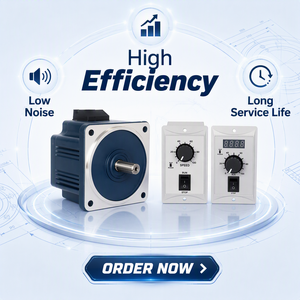
IP54 Permanent Magnet BLDC Motor

Low Noise Smart IP54 IE3 Permanent Magnet BLDC Motor

12V to 220V multi-voltage operating range, 3000RPM speed rating. Enclosed in lightweight aluminum alloy housing with IE3 premium efficiency fan dynamics.

Get a Quote
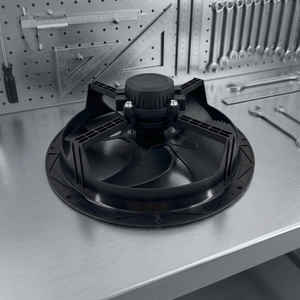
IP65 Waterproof Deep Freezer Fan Motor

IE3 IP65 Waterproof Deep Freezer Fan Motor 10W

Variable speed control from 300RPM to 1800RPM. Designed specifically for commercial refrigeration, cold storage logistics, and harsh humid environments.

Get a Quote
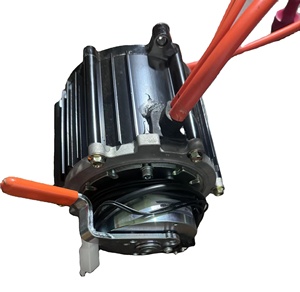
BLDC High Torque Rickshaw Motor 1KW

48V/60V/72V 3100RPM High Torque 1KW Rickshaw BLDC Motor

Heavy-duty drive motor engineered for electric rickshaws, light commercial utility vehicles, and high-load industrial transportation kits.

Get a Quote
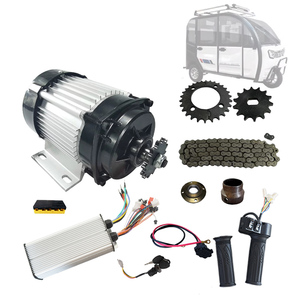
Electric Car Kart Conversion Kit 48V 1000W Motor

Square Wave 48V 1000W EV & Kart Conversion Kit Motor

Factory-direct brushless motor assembly tailored for human tricycle, electric vehicle, and kart powertrain retrofit projects with full wire harness integration.

Get a Quote
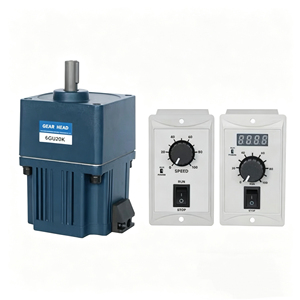
Compact Fully Enclosed IP54 Brushless Motor

Compact IP54 Aluminum 60W Brushless Motor (2000-3000RPM)

Low-noise fully enclosed architecture. Flexible input voltage parameters (12V-220V) for machinery automation, robotics, and industrial auxiliary drives.

Get a Quote
120+
Years Combined Legacy
ISO9001
LRQA Certified Quality
EASA/AEMT
International Member
24 Hours
Global Tech Support

Comprehensive Technical Whitepaper: Engineering Next-Generation Torque Motor Assemblies

In modern industrial automation, robotics, aerospace positioning, and high-performance electric powertrains, traditional geared motor configurations are increasingly replaced by direct-drive Torque Motor Assemblies. A torque motor assembly is fundamentally a specialized permanent magnet synchronous motor (PMSM) or brushless DC motor (BLDC) engineered to provide high continuous torque without requiring mechanical speed reduction mechanisms such as gearboxes or belts.

Eliminating mechanical gearboxes eradicates backlash, mechanical wear, hysteresis errors, and lubrication demands. However, designing high-density torque motor assemblies introduces severe electromagnetic, thermal, and mechanical challenges that require advanced engineering capabilities, precision manufacturing, and strict quality control.

Information Gain Insight: Modern torque motor assemblies manufactured in China leverage high-energy neodymium-iron-boron (NdFeB) permanent magnets (N42SH or N45UH classes capable of operating up to 180°C without demagnetization) combined with Finite Element Analysis (FEA) optimized electromagnetic stator structures to achieve continuous torque densities exceeding 12 Nm/kg.

Electromagnetic Topology and Cogging Torque Mitigation

The core objective when engineering an industrial torque motor assembly is achieving smooth torque delivery at zero or low rotational speeds without cogging torque fluctuations. Cogging torque arises from the magnetic attraction between the rotor permanent magnets and the stator teeth as the rotor revolves.

To mitigate cogging torque in custom torque motor assemblies, Chinese Tier-1 suppliers employ several advanced design techniques:

Fractional-Slot Concentrated Windings

By matching optimal slot-pole combinations (such as 12-slot/10-pole or 18-slot/16-pole topologies), the least common multiple between slots and poles is maximized, naturally reducing cogging amplitude below 1.5% of nominal torque.

Skewed Stator/Rotor Geometry

Implementing axial skewing on stator lamination stacks or step-skewing permanent magnet blocks distributes magnetic transition zones evenly, effectively smoothing slot harmonic ripples.

Laminated Frame Construction

Utilizing ultra-thin high-permeability silicon steel laminations (0.2mm to 0.35mm thickness with C-5 insulation coating) minimizes eddy current losses during dynamic torque fluctuations.

Enterprise Heritage & Technical Competence: Merging 120 Years of Craftsmanship with Modern Precision

Choosing a reliable supplier for industrial torque motor assemblies requires evaluating not only immediate unit costs, but long-term product engineering support, quality certifications, and factory traceability. Drawing upon a legacy of over 120 years of electro-mechanical engineering excellence—historically rooted in European rotating machine innovation (T-T Electric lineage)—our integrated manufacturing setup in China bridge European precision standards with China's agile supply chain capability.

Global Manufacturing Standards & Quality Management

Every torque motor assembly manufactured in our facilities conforms strictly to international industrial standards:

  • LRQA ISO 9001 Quality Management: Comprehensive audit compliance covering raw material magnetic testing, vacuum pressure impregnation (VPI) coating, and dynamic rotor balancing.
  • EASA & AEMT Technical Compliance: Fully accredited active member of the Electrical Apparatus Service Association (EASA) and the Association of Electrical and Mechanical Trades (AEMT), guaranteeing that stator rewinding, insulation standards, and mechanical tolerances adhere to international repair and manufacturing norms.
  • Unique OEM Serial Tracking System: Every individual motor component, winding batch, and bearing assembly is assigned a permanent serial index. In the event of field maintenance requirements, replacement parts can be precisely cross-referenced and dispatched within 24 hours.
24-Hour Global Service Guarantee: We provide round-the-clock engineering diagnostics and technical inquiry responses for global procurement managers, system integrators, and OEM engineers.

Future Procurement Trends in Torque Motor Assemblies (2025–2030)

As global procurement directors evaluate China's supplier ecosystem for motor assemblies, several macro engineering trends are reshaping procurement specifications and vendor evaluations:

1. Shift Toward Direct-Drive Frameless Torque Assemblies

Industrial OEMs in CNC machine tools, semiconductor manufacturing, and rotary indexing tables are rapidly transitioning from housed motors to frameless torque motor kits (separate rotor and stator components). Frameless assemblies allow direct mechanical integration into machine housings, yielding maximum structural rigidity, reduced total weight, and zero mechanical slop. Chinese exporters are offering pre-matched stator-rotor kits backed by thermal modeling software to simplify customer machine design.

2. Integration of Smart Sensors & Closed-Loop Feedback

Modern procurement demands demand integrated intelligence. Torque motor assemblies are no longer sold as standalone passive electromagnetic components. Buyers expect factory-integrated absolute optical or magnetic encoders (BISS-C, Endat 2.2, SSI protocols), embedded PTC/Pt100 thermal sensors, and integrated digital servo drives. This plug-and-play modularity reduces wiring complexity and deployment timelines for end users.

3. Higher Efficiency Standards (IE3, IE4, and Super Premium Ratings)

With global industrial decarbonization mandates (such as the EU Ecodesign Regulation Directive 2019/1781), industrial buyers require torque motors with IE3 or IE4 efficiency ratings across the entire operating speed curve. Energy loss reduction is achieved through high-fill factor needle-winding techniques, lower loss steel grades, and fluid-cooling jackets integrated directly into motor frames.

4. Extreme Environment Sealing (IP65, IP67, IP68 Marine & Washdown Ratings)

Demand for high-torque assemblies operating under severe environmental conditions—ranging from deep-freeze logistics (-30°C) to chemical washdown food production and marine thruster systems—has grown exponentially. Exporters in China are utilizing advanced potted stator encapsulation using thermal epoxy resins, double-lip fluororubber oil seals, and corrosion-resistant anodized aluminum or stainless-steel enclosures.

Technical Specification Benchmark Matrix

The following performance matrix illustrates standard baseline engineering metrics available across our standard industrial BLDC, PMSM, and Direct-Drive Torque Motor Assembly series:

Parameter Metric Light Duty / Appliance Industrial Automation Heavy Industrial / EV
Operating Voltage 12V DC – 48V DC 24V DC – 220V AC/DC 48V DC – 72V DC / 380V AC
Continuous Torque Range 0.1 Nm to 1.5 Nm 1.5 Nm to 35 Nm 35 Nm to 1500+ Nm
Efficiency Class IE2 / Standard IE3 Premium Efficiency IE4 Super Premium Efficiency
Ingress Protection IP40 – IP54 IP54 – IP65 IP65 – IP68 Hermetic
Insulation Class Class B (130°C) / Class F (155°C) Class F (155°C) / Class H (180°C) Class H (180°C) / VPI Treated
Feedback Device Options Hall Sensors / Incremental Encoder Magnetic / Optical Absolute Encoder Resolver / High-Res Absolute Encoder
Cooling Method Natural Air / IC411 Fan Convection / Aluminum Heatsink Liquid Cooling / Forced Air IC416

Technical Sourcing Guide & Frequently Asked Questions (FAQ)

To assist industrial engineers, procurement officers, and machinery designers when sourcing torque motor assemblies from China, our senior technical engineering team has addressed the most critical FAQs below:

Q1: What is the primary difference between a standard BLDC motor and a direct-drive torque motor assembly?
A standard BLDC motor is designed to operate efficiently at high rotational speeds (e.g., 3,000 to 10,000 RPM) and usually relies on external gear reduction to deliver practical mechanical torque. In contrast, a torque motor assembly is electromagnetically optimized with a high pole-count architecture, large outer-rotor/inner-stator airgap diameters, and low electrical time constants. This allows the motor to produce maximum continuous torque directly at low speeds (down to zero RPM or stall conditions) with high dynamic stiffness, completely eliminating mechanical gearing.
Q2: How do you calculate required peak torque versus continuous thermal torque for custom motor sizing?
Continuous torque (T_cont) represents the maximum thermal output the motor can sustain indefinitely without winding temperature exceeding its thermal insulation rating (e.g., Class H 180°C). Peak torque (T_peak) is typically 2.5 to 4 times continuous torque and is sustainable for short acceleration bursts (typically 5 to 10 seconds). When sizing an assembly, calculate the Root Mean Square (RMS) torque requirement over your duty cycle profile: T_RMS = sqrt( [sum(T_i^2 * t_i)] / sum(t_i) ). The selected motor's rated T_cont must be equal to or exceed T_RMS, while peak acceleration spikes must remain comfortably below T_peak to prevent magnet demagnetization.
Q3: What thermal protection and dissipation mechanisms are built into your torque motor assemblies?
Thermal management is paramount in direct-drive setups where gear cooling is absent. Our torque motor assemblies incorporate embedded thermal sensors (PTC thermistors, KTY84, or Pt100/Pt1000 probes) directly inside the stator coil heads. Mechanically, we utilize high-thermal-conductivity epoxy resin potting, extruded aluminum housings with optimized cooling fins, and optional integrated liquid cooling jackets (water/glycol circulation) capable of doubling continuous torque ratings.
Q4: Why is dynamic rotor balancing critical for high-torque assemblies?
Even minor rotational imbalances at high torque levels generate radial dynamic forces that induce acoustic noise, premature bearing wear, and position feedback distortion. All our rotors undergo precision two-plane dynamic balancing according to ISO 1940 Grade G1.0 standards. This guarantees ultra-quiet operation (<55 dB(A)) and extends rolling element bearing operational life beyond 40,000 hours under rated continuous duty.
Q5: How does encoder feedback selection impact overall motion control precision?
The velocity loop resolution of a direct-drive assembly depends entirely on encoder performance. Low-resolution feedback devices (like standard 3-phase Hall effect sensors) are suitable for basic velocity control but introduce velocity ripple at low RPM. For sub-arcsecond positioning and ripple-free slow speed control, we integrate absolute optical or magnetic encoders with resolutions ranging from 17-bit (131,072 counts/rev) to 25-bit (33,554,432 counts/rev), communicating via BiSS-C, EnDat 2.2, or RS485 interfaces.
Q6: Can China suppliers provide customized mechanical shafting and mounting flanges?
Yes. Over 70% of our production consists of customized OEM engineering. We offer hollow shaft configurations (for routing cables, optics, or pneumatic lines), keyway or splined shaft shafts, specialized NEMA / IEC mounting flanges, custom lead wire lengths, and heavy-duty IP67 connector plugs tailored precisely to client specifications.
Q7: How does your factory guarantee lifetime spare parts availability for international buyers?
By employing an advanced serial tracking system inherited from our 120-year motor engineering lineage, every motor manufactured in our facility has its exact bill of materials (lamination drawings, magnet grade, wire gauge, bearing model, encoder firmware version) indexed permanently in our cloud digital vault. When a replacement component is requested, our global logistics network can manufacture and ship original OEM parts within 24 hours.
Q8: What are standard lead times, minimum order quantities (MOQ), and warranty policies?
Standard catalog models have flexible MOQs starting as low as 1 to 5 units for engineering samples. Prototyping lead times for custom frameless or shafted assemblies typically range from 2 to 4 weeks, with full production batch delivery within 3 to 5 weeks. All torque motor assemblies carry a standard 18-month factory warranty, with extended 36-month warranties available for specialized industrial programs.