
Engineered for extreme reliability, variable frequency speed regulation, and maximum energy savings. Explore our core lineup of high-torque, waterproof, and heavy-duty electric motors tailored for industrial automation, smart appliances, and e-mobility.
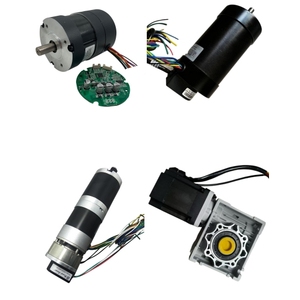 BLDC Series
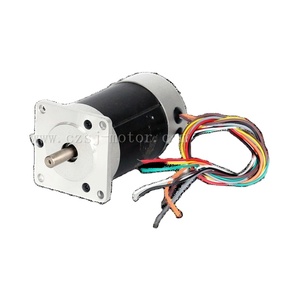 IE3 High Efficiency
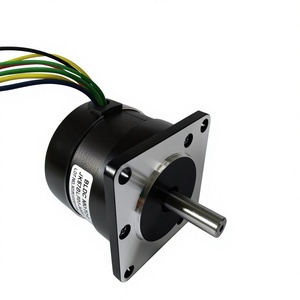 NEMA 23 Standard
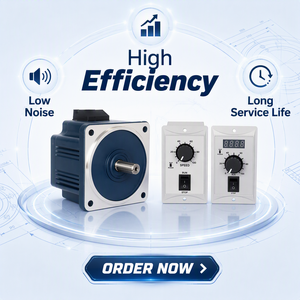 IP54 Waterproof
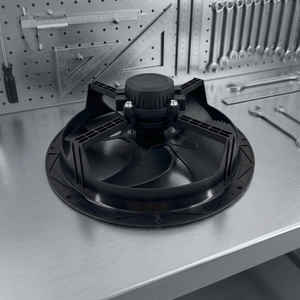 IP65 Refrigeration
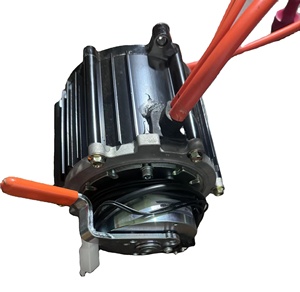 High Torque Traction
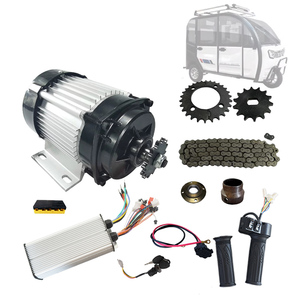 EV Conversion Kit
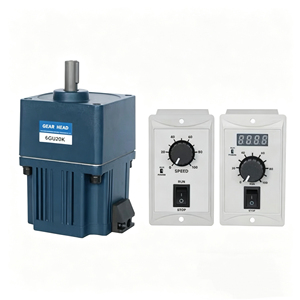 Compact Precision
An authoritative reference for procurement directors, system integrators, and electrical engineers evaluating high-frequency AC drive topologies, thermal dissipation mechanisms, and global export compliance.
Industrial high-speed AC motors operate under rigorous dynamic mechanical and thermal stresses. Unlike standard 50Hz/60Hz fixed-frequency induction units, modern high-speed AC machinery relies on specialized stator slot geometries, low-loss silicon steel laminations (0.2mm to 0.35mm thickness to mitigate eddy current losses), and optimized rotor structures. When coupled with Variable Frequency Drives (VFDs), these motors achieve rotational velocities exceeding 12,000 RPM up to 48,000 RPM depending on pole configuration (typically 2-pole or 4-pole high-frequency windings).
The core advantage of high-speed AC motor architecture lies in its high power density. By elevating operational frequencies (e.g., 200Hz to 800Hz), engineers can design drives that produce equivalent shaft horsepower at a fraction of the physical frame size (NEMA or IEC standards) compared to traditional low-speed machinery. This compactness makes high-speed AC motors essential for high-throughput CNC spindles, centrifugal compressors, industrial HVAC systems, and automated processing lines.
For B2B buyers and international machinery OEMs exporting to European and global markets, CE marking is not merely a legal stamp—it is a rigorous validation of electromechanical safety, electromagnetic compatibility (EMC), and ecological design efficiency. Our high-speed AC motor factory adheres to the following primary directives:
Ensures that electrical equipment operating within 50V–1000V AC provides robust dielectric strength, creepage distance protection, and thermal containment under normal and fault conditions.
Guarantees that motor electromagnetic emissions do not interfere with industrial control electronics, PLCs, or sensors, while maintaining immune operation against grid power surges.
Mandates strict efficiency thresholds (IE3 Premium and IE4 Super Premium efficiency classes) for continuous duty electric motors, reducing carbon footprints and operational TCO.
Validates structural integrity, bearing life calculations (L10h exceeding 40,000 hours), rotor dynamic balancing (G2.5 standard according to ISO 1940), and emergency stop thermal protection.
To assist procurement managers in matching motor classes with specific industrial operational requirements, the table below provides a comprehensive comparison of motor topologies, efficiency ratings, thermal classes, and ideal application spectrums.
| Motor Class / Category | Speed & Frequency Range | Efficiency Standard | Protection Rating | Insulation Class | Primary Application Target |
|---|---|---|---|---|---|
| High-Speed AC Induction | 3,000 – 24,000 RPM (up to 400Hz) | IE3 / IE4 Premium | IP54 / IP55 Fan Cooled | Class H (VPI Treated) | CNC Spindles, Pumps, Industrial Compressors |
| Brushless DC (BLDC) Gear Motor | 200 – 4,000 RPM (Closed Loop) | IE3 Equivalent (>88%) | IP54 to IP65 Waterproof | Class F / Class H | Smart Logistics, AGVs, Medical Automation |
| Permanent Magnet AC (PMAC) | 1,500 – 12,000 RPM | IE4 / IE5 Ultra-Premium | IP65 Enclosed / Forced Air | Class H (180°C) | Textile Machinery, EV Drive Conversion, Extruders |
| Sub-Zero Fan BLDC Motors | 300 – 1,800 RPM (Stepless PWM) | IE3 High Efficiency | IP65 Fully Sealed | Class F (Moisture Proof) | Deep Freezers, Cold Chain HVAC, Cryogenic Air Units |
| Heavy-Duty Traction BLDC | 2,000 – 3,500 RPM (High Torque) | IE3 Equivalent (>90%) | IP55 Weather Resistant | Class H Heavy Load | Electric Rickshaws, Light EVs, Industrial Karts |
Insights into regulatory shifts, smart sensor integration, decarbonization imperatives, and supply chain strategies shaping motor procurement through 2030.
Global energy regulations are imposing unprecedented performance standards. Major purchasing groups across Europe, North America, and Asia-Pacific are phasing out IE2 and baseline IE3 induction motors in favor of IE4 Super Premium and IE5 Ultra-Premium synchronous reluctance and permanent magnet AC designs. Investing in IE4+ machinery yields an average payback period of under 18 months via substantial kilowatt-hour savings.
Modern B2B procurement specs increasingly require "Smart Motor" readiness. Next-generation high-speed AC motors feature integrated vibration sensors, thermal RTD probes, and Bluetooth/Modbus diagnostic modules. This enables real-time cloud analytics, predictive bearing failure warnings, and dynamic load balancing, drastically minimizing costly unplanned factory downtime.
The convergence of Silicon Carbide (SiC) and Gallium Nitride (GaN) VFD technologies allows AC motors to switch at significantly higher frequencies with reduced harmonic distortion. This innovation drastically reduces heat dissipation within motor windings, enables ultra-smooth low-speed torque delivery, and allows motor sizes to shrink while retaining high RPM potential.
Global equipment manufacturers (OEMs) demand flexible mounting interfaces (NEMA, IEC, custom B5/B14 flanges) and dual-voltage windings (e.g., 12V-48V DC or 220V-440V AC). Factory customization of shaft extension lengths, keyways, spline profiles, and terminal box orientations has become a pivotal factor in buyer supplier selection.
As magnet material costs fluctuate, motor engineering is splitting into two paths: ultra-dense rare-earth Neodymium (NdFeB) BLDC motors for weight-critical mobile gear, and magnet-free High-Speed AC Induction / Ferrite-assisted Reluctance motors for heavy stationary equipment. Insulation standards are moving universally toward Class H (180°C) VPI insulation to extend continuous operational lifespan under extreme ambient heat.
Procurement departments at major enterprises are enforcing strict Environmental, Social, and Governance (ESG) compliance. Exporters must demonstrate certified raw material sourcing (conflict-free copper and steel), RoHS compliance, REACH chemical registration, and full factory ISO 14001 environmental management system compliance.
Combining deep technical lineage with state-of-the-art automated manufacturing, rigorous ISO/LRQA quality management, and dedicated global technical support.
Since our foundational origins in industrial drive engineering, our facility has remained at the forefront of electric motor manufacturing. We combine century-old metallurgy and coil-winding craftsmanship with modern computerized dynamic balancing, laser rotor alignment, and automated VPI impregnation chambers.
Our quality control system is audited by Lloyd's Register Quality Assurance (LRQA ISO 9001:2015). As active long-standing members of EASA (Electrical Apparatus Service Association) and AEMT (Association of Electrical and Mechanical Trades), our custom and standardized motors comply strictly with international electrical standards.
Every motor manufactured in our facility undergoes rigorous routine testing—including high-potential dielectric withstand tests, no-load & full-load thermal run tests, vibration spectrum analysis, and encoder signal validation. Every unit is assigned a permanent serial code in our master tracking system for lifetime OEM spare part identification.
With an extensive inventory of standardized square frame AC motors, modular DC drives, and BLDC power units, we provide rapid global dispatch. Our multi-lingual application engineering department offers a guaranteed 24-hour technical response to assist with system sizing, drop-in replacement cross-referencing, and custom drive integration.
Answers to common technical queries regarding CE certification compliance, VFD compatibility, thermal rise limits, customization lead times, and global shipping policies.