
0%

Custom DC Motors are rarely selected by power rating alone. A compact actuator may need strong starting torque, quiet operation, and precise speed control inside a tight enclosure. Another application may prioritize long brush life, heat management, or a shaft designed for a specific load. Those details separate a useful custom solution from a catalog motor that almost fits.

The International Energy Agency’s 2011 report, Energy-Efficiency Policy Opportunities for Electric Motor-Driven Systems, estimates that motor-driven systems use 43% to 46% of global electricity. Its co-author Paul Waide writes, “Electric motor-driven systems (EMDS) are estimated to consume between 43% and 46% of all global electricity.” The estimate is broad and dated, so it should not be treated as a current market-size figure. Still, it shows why motor efficiency and system design deserve close attention. The U.S. Department of Energy’s motor-system guidance also encourages evaluating the full application, not just the motor in isolation.

This 2026 guide compares manufacturers through practical questions: Can they tailor torque, voltage, mounting, and control options? Do they provide test data and engineering support? And can they deliver consistent quality at the required volume? Those answers matter more than polished brochures. A shortlist can still miss a good supplier; specifications do not always reveal how a motor behaves after hours of real operating heat.
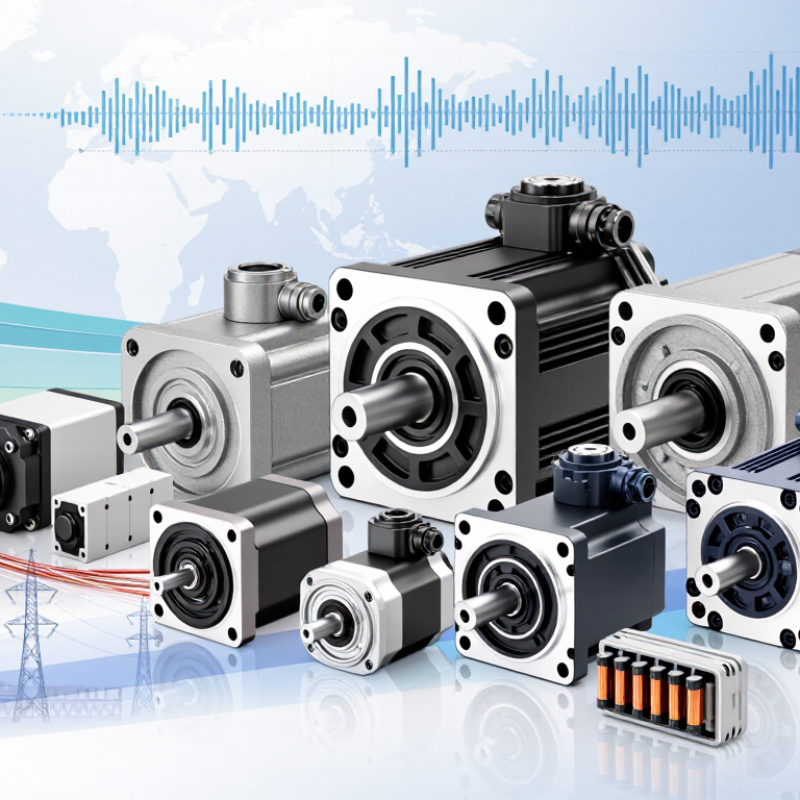
Top Custom DC Motors Manufacturers in 2026

What Custom DC Motors Are and How They Differ from Standard Models

Top Custom DC Motors Manufacturers in 2026

What Custom DC Motors Are and How They Differ from Standard Models

A custom DC motor is designed around a machine’s actual operating needs, rather than a catalog’s fixed options. Engineers can specify voltage, speed, torque, shaft dimensions, mounting, and duty cycle. A compact motor might need to fit inside a narrow housing while starting under load. Small details matter. A standard model is usually faster to source, but its dimensions and performance choices are less flexible.

Custom design can improve fit and control, but it does not automatically mean better efficiency or lower cost. The International Energy Agency’s 2011 report, Energy-Efficiency Policy Opportunities for Electric Motor-Driven Systems, estimated that motor-driven systems use about 45% of global electricity. That figure covers many motor types, not custom DC motors alone. It does underline why matching a motor to its load deserves careful attention. An oversized custom unit can still waste space and money.

Tips: Share measured load, startup torque, speed range, available space, and operating hours with the design team. Ask for test data under your real duty cycle. Fit matters. Don’t assume “custom” means the first design will be right; prototypes may reveal a mismatch.

How Manufacturers Engineer Motors to Meet Application Requirements

Custom DC motor engineering starts with the load, not a catalogue rating. The International Energy Agency’s 2011 report, Energy-Efficiency Policy Opportunities for Electric Motor-Driven Systems, estimates motor-driven systems use about 46% of global electricity. The U.S. Department of Energy’s 2014 motor-systems sourcebook puts motors at roughly 69% of U.S. industrial electricity use. Those figures explain why small design choices matter. A conveyor, medical pump, and battery-powered tool need different torque, speed, and thermal behavior.

Engineers translate an application brief into a torque-speed curve, duty cycle, voltage range, and size limit. They may adjust winding turns, wire gauge, magnet grade, shaft dimensions, and bearing selection. A motor running inside a warm enclosure needs different thermal margins than one exposed to open airflow. Prototype testing then checks startup current, temperature rise, vibration, and performance under the real load. Small details count. A connector that blocks airflow can undo a careful thermal design. Specifications can also be wrong; an assumed load may not match field conditions. That is why experienced teams compare test results with application data and revise the design before production. A fit can still be wrong.

Top Custom DC Motors Manufacturers in 2026 - How Manufacturers Engineer Motors to Meet Application Requirements

An engineering-focused comparison of common application requirements and the design choices used to develop custom brushed or brushless DC motors.

Application Requirement Example Design Input Typical Motor Engineering Response Relevant Verification
Supply voltage 12 V, 24 V, or 48 V DC system; define the permitted operating range and voltage transients. Select the winding, wire size, commutation method, and driver to suit the available voltage and current. For brushless designs, match the controller and motor electrical characteristics. Measure current, speed, and temperature across the specified voltage range, including startup and load changes.
Speed and torque Specify continuous and peak torque, target speed, load profile, and required acceleration. Values depend on the application rather than a universal motor standard. Adjust winding turns and conductor size, magnetic circuit, rotor design, and—where needed—gear ratio. Check that the operating point stays within the motor’s thermal and mechanical limits. Record torque-speed and current-speed performance; test starting torque, acceleration, and operation at the intended load points.
Duty cycle and heat Define run time, rest time, starts per hour, ambient temperature, and whether the load is continuous or intermittent. Size the motor for heat generated by winding losses and mechanical losses. Consider housing material, ventilation, thermal paths, and temperature sensing where appropriate. Run a thermal test using the actual duty cycle, mounting arrangement, and ambient conditions; verify winding and case temperatures against project limits.
Space and mounting Provide maximum diameter and length, shaft dimensions, mounting-hole locations, and any limits on mass or connector position. Customize the frame, shaft, bearings, mounting features, and electrical connections while checking rotor clearance, bearing loads, and manufacturability. Inspect critical dimensions and shaft runout; test fit in the assembly and confirm operation under expected radial and axial loads.
Environment and ingress protection Specify exposure to dust, water, cleaning agents, vibration, shock, and operating temperature. Choose suitable seals, materials, coatings, bearings, and cable or connector interfaces. An IP rating should be selected and tested for the defined enclosure and use conditions. Test to the applicable environmental requirements. IP tests address defined ingress conditions and do not by themselves establish resistance to chemicals, corrosion, or vibration.
Speed control and electrical noise Define the control method, speed range, feedback needs, switching frequency, and allowable electrical interference. Use a compatible driver and, where required, Hall sensors or an encoder. For brushed motors, consider brush and suppression design; for brushless motors, consider commutation and controller behavior. Verify speed regulation and response under load; assess conducted and radiated emissions against the equipment’s applicable requirements.
Service life and maintenance Set the required operating hours or cycles, maintenance interval, and acceptable failure or performance-change limits. Choose bearing type, brush system where applicable, materials, and manufacturing tolerances to match the load, speed, and environment. Brushless designs avoid brush wear but still have bearings and other wear-sensitive components. Use endurance testing that reflects the real load and duty cycle; inspect wear, noise, vibration, and performance at defined intervals.

Note: The inputs above are illustrative engineering examples, not a ranking of manufacturers or guaranteed motor specifications. Final values and test limits should be agreed for the specific application.

Key Criteria for Evaluating Custom DC Motor Manufacturers in 2026

Choosing a custom DC motor manufacturer in 2026 starts with the application, not a catalogue. Define the required voltage, torque, speed range, duty cycle, and available space. Share real operating conditions, such as frequent starts or a warm enclosure. Small details change motor performance. A capable engineering team should explain its assumptions and identify trade-offs before proposing a design. Ask for torque-speed curves and test conditions, not just a headline efficiency figure.

Manufacturing quality deserves equal attention. Ask how the supplier controls winding resistance, shaft runout, and assembly tolerances. Request inspection records and sample test reports. Check whether prototypes can be tested under your expected load and temperature. A motor that runs quietly on a bench may behave differently after hours of repeated starts. Numbers matter. Still, a tidy prototype is not proof of consistent production; confirm how the same checks apply to larger batches.

Evaluate communication and long-term support, too. Can engineers discuss changes clearly, document revisions, and explain lead times for custom parts? Ask what happens when a component becomes unavailable. Strong answers should be specific, but no supplier can remove every risk. One easy mistake is to overvalue a low initial price before comparing service life, testing, and replacement needs. It is worth revisiting your assumptions as testing reveals what the application actually demands.

Leading Custom DC Motor Manufacturers and Their Specialties

Custom DC motor manufacturers often specialize by application rather than offering one design for every job. Some focus on compact brushed motors for handheld equipment, where low cost, simple controls, and reliable starting matter. Others build brushless motors for continuous-duty systems that need quieter operation and reduced maintenance. Small details count. A shaft’s length, mounting-hole spacing, and connector position can affect installation as much as rated torque.

Industrial-focused manufacturers may offer higher torque, thermal protection, and windings matched to a specific voltage or duty cycle. Motion-control specialists often emphasize speed regulation, encoder compatibility, and repeatable positioning. Their engineers may test prototypes under real loads, checking temperature rise and vibration with instruments rather than relying only on catalog figures. Ask for test conditions and tolerances. Numbers need context.

A capable custom supplier should explain trade-offs clearly, including price, lead time, service life, and production volume. Share the load profile, operating environment, and available space before requesting a design. Even then, the first prototype may miss a practical detail, such as cable clearance or startup behavior. That is normal, but it should prompt measured testing and revision. Good engineering is iterative.

Industries and Applications Driving Demand for Custom DC Motors

Demand for custom DC motors is rising wherever equipment needs compact torque, precise speed control, or reliable operation in tight spaces. Industrial automation is one driver: the International Federation of Robotics reported 541,302 industrial robots installed worldwide in 2023. Robotic joints, conveyors, and grippers often require motors tailored to load, duty cycle, and mounting constraints. Small differences matter.

Electrified transport adds another demand signal. The International Energy Agency’s Global EV Outlook 2024 reported nearly 14 million electric car sales in 2023, about 18% of global car sales. That figure does not measure custom DC motor orders directly, but it reflects expanding electric-drive production. Mobility equipment, lift systems, and battery-powered tools also need carefully matched motors, controllers, and thermal limits.

Healthcare and building systems bring different requirements. A medical pump may need smooth, quiet rotation; an automated door needs dependable starting torque. In ventilation equipment, compact brushless DC motors can support variable-speed control. The U.S. Department of Energy notes that fans and pumps are common motor-driven systems where speed control can reduce energy use. Yet customization is not automatically better. It can add testing time, sourcing complexity, and repair challenges. Engineers should verify performance under real loads, not just on a bench. The details can be easy to miss.

Top Custom DC Motors Manufacturers in 2026 — Industries and Applications Driving Demand for Custom DC Motors

Common application-specific engineering priorities for custom DC motors

Scores are qualitative, illustrative ratings on a 1–5 scale—not measured market demand or market-share data. Priorities vary with the specific motor, operating conditions, and application requirements.

FAQS

What information should I provide when requesting a custom DC motor?

Share the required voltage, torque, speed range, duty cycle, and available space. Include real conditions, such as frequent starts or a warm enclosure. Missing details can lead to a poor fit.

How do engineers tailor a motor to an application?

They may adjust winding turns, wire size, magnet grade, shaft dimensions, and bearings. The design should match the actual load, not just a catalogue rating. Small changes matter.

Why should a motor be tested under real operating conditions?

Bench tests may not reflect hours of repeated starts or limited airflow. Testing can check startup current, temperature rise, vibration, and performance under load. Real conditions reveal more.

What quality checks should I ask a manufacturer about?

Ask how it controls winding resistance, shaft runout, and assembly tolerances. Request inspection records and sample test reports. Also ask whether these checks continue in larger production batches.

Which motor details affect heat and performance?

Enclosure temperature, airflow, duty cycle, and load can all affect heat. Even a connector that blocks airflow may undermine the design. Easy to overlook.

Are custom DC motors useful in robotics and automation?

They can suit robotic joints, grippers, and conveyors with specific loads or mounting limits. Engineers should confirm torque and speed needs for each task. A small mismatch can matter.

What other applications may need tailored motors?

Medical pumps may need smooth, quiet rotation. Automated doors often need dependable starting torque, while ventilation systems may benefit from variable-speed control. Each application differs.

Is a custom motor always the best choice?

No. Customization can add testing time, sourcing complexity, and repair challenges. Compare service life, replacement needs, and performance before choosing. The first estimate may be wrong.

Conclusion

Custom DC Motors are designed to meet specific performance, size, and operating requirements that standard models may not address. Manufacturers can tailor factors such as speed, torque, voltage, dimensions, materials, and environmental protection to suit an application. The engineering process typically begins with understanding how and where the motor will be used, then balancing performance goals, reliability, efficiency, and production needs through design, testing, and refinement.

When evaluating manufacturers in 2026, buyers can consider engineering expertise, customization capabilities, quality controls, communication, lead times, and support throughout a motor’s service life. Different manufacturers may specialize in areas such as compact designs, high-precision performance, robust operation, or scalable production. Demand for custom solutions continues across industries including robotics, medical equipment, automotive systems, industrial machinery, and consumer devices, where purpose-built motors can help improve fit, function, and overall system performance.

Vivienne

Vivienne

Vivienne is a professional marketing specialist dedicated to helping businesses understand products, markets, and customer needs more clearly. With a strong command of the company’s product portfolio, she combines industry knowledge, strategic thinking, and clear communication to create practical......