
Choosing Industrial Electric Motors is an energy decision, not merely a purchasing task. The International Energy Agency has reported that electric motor systems consume more than 40% of global electricity. In industrial facilities, their share can approach 70%, depending on the process and equipment mix. These figures make motor selection a major operational issue.
A suitable motor must match the real load profile. Consider starting torque, running speed, duty cycle, ambient temperature, enclosure rating, and available voltage. A pump operating eight hours daily needs different characteristics from a conveyor with frequent starts. The U.S. Department of Energy’s Motor Systems Market Assessment and the European Commission’s Ecodesign work both emphasize system efficiency, not motor efficiency alone. A high-efficiency motor can still waste energy when oversized or poorly controlled.
Look beyond the nameplate. Check IE efficiency class, variable-frequency-drive compatibility, bearing design, maintenance access, and expected service life. Measure the load when possible. Estimates can mislead. A quiet motor is not always an efficient motor. This guide cannot replace site testing, and that limitation matters. Reliable decisions should combine manufacturer data, IEC 60034 standards, measured operating conditions, and total cost of ownership. Purchase price is visible. Downtime is not. The following discussion explains how to compare Industrial Electric Motors with practical evidence, clearer specifications, and fewer assumptions.
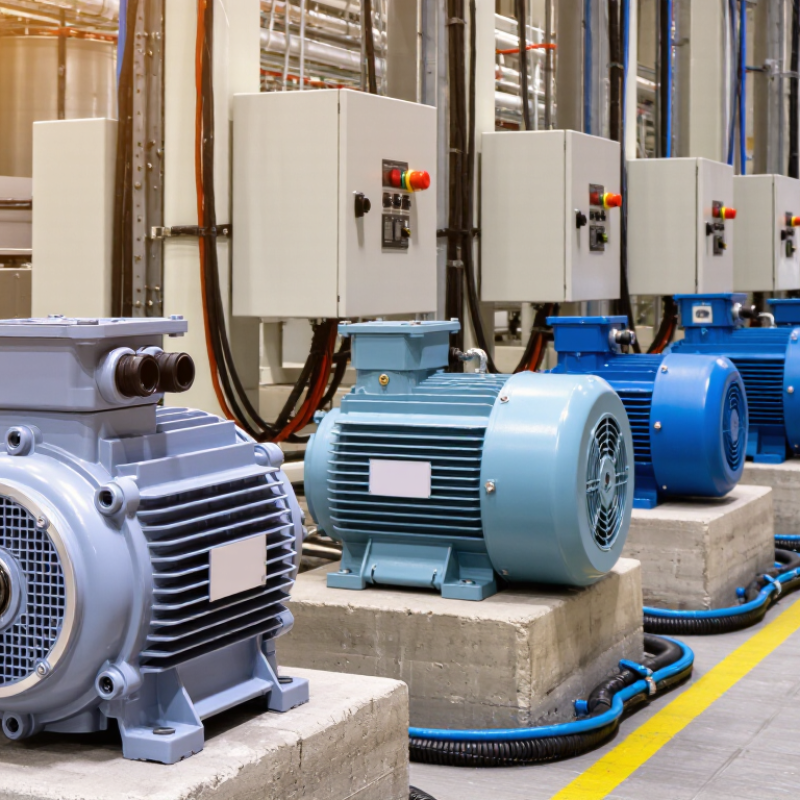
How to Choose Industrial Electric Motors?
Industrial electric motors convert electrical energy into controlled mechanical motion. Their role affects uptime, energy cost, safety, and product quality. The International Energy Agency reported that electric motor systems used about 46% of global electricity in its Energy-Efficiency Market Report 2016. In manufacturing, the U.S. Department of Energy estimates motor-driven equipment consumes about 68% of industrial electricity. These figures make motor selection an operating decision, not merely a purchasing task.
Induction motors suit pumps, fans, compressors, and conveyors because they are robust and relatively simple. Synchronous motors provide precise speed control and can improve power factor. Servo motors support accurate positioning, while direct-current motors remain useful in certain legacy systems. Match the motor to torque, speed, duty cycle, voltage, ambient temperature, and enclosure requirements. A dusty workshop needs different protection from a clean assembly area. Variable-frequency drive compatibility matters too.
Check starting current and load inertia.
A larger motor is not automatically safer. Oversizing may reduce efficiency and create poor low-load performance. The European Commission’s Ecodesign requirements identify significant energy-saving potential through efficient motor systems and proper sizing. Yet a rating plate cannot reveal every field condition. Cable length, ventilation, maintenance quality, and frequent starts can change real performance. I would verify measurements during operation, then compare them with manufacturer data and IEC 60034 requirements. The final choice may still need revision after installation. That is normal engineering, not failure.
| Motor Type | Operating Principle | Typical Power and Speed Characteristics | Key Advantages | Common Limitations | Typical Industrial Applications | Important Selection Factors |
|---|---|---|---|---|---|---|
| Three-Phase Induction Motor | Creates a rotating magnetic field in the stator that induces current in the rotor. The rotor follows the rotating field with a small speed difference called slip. | Commonly available from fractional kilowatt ratings to several megawatts. Standard designs typically operate at approximately 750–3,600 rpm, depending on frequency and pole count. | Robust construction, relatively low purchase cost, simple operation, good reliability, and limited routine maintenance because there are no brushes or commutators. | Starting current can be high. Speed regulation is limited without a variable-frequency drive, and efficiency decreases when the motor is significantly oversized or lightly loaded. | Pumps, fans, compressors, conveyors, machine tools, mixers, and general-purpose production equipment. | Rated power, voltage, frequency, full-load speed, starting torque, enclosure type, duty cycle, ambient temperature, and required efficiency class. |
| Squirrel-Cage Induction Motor | A subtype of the three-phase induction motor using conductive rotor bars joined by end rings. The rotor has no electrical connection to external slip rings. | Available across a very wide power range. Speed is slightly below synchronous speed and changes modestly with load. | Simple, durable, compact, cost-effective, and suitable for continuous operation in demanding industrial environments. | Fixed-speed operation without electronic control. Direct-on-line starting may cause significant current and mechanical stress in larger motors. | Industrial pumps, ventilation systems, compressors, conveyors, crushers, blowers, and material-handling equipment. | Starting method, load inertia, acceleration time, voltage drop, service factor, cooling method, and the need for speed control. |
| Wound-Rotor Induction Motor | Uses a wound rotor connected through slip rings, allowing external resistance to be added to the rotor circuit during starting or speed control. | Generally selected for medium- to high-power applications requiring high starting torque. Operating speed varies with load and rotor resistance. | High starting torque, controlled acceleration, and reduced starting current compared with some direct-on-line starting arrangements. | Higher cost and maintenance requirements due to slip rings, brushes, and external starting equipment. Modern drives may replace this design in many applications. | Heavy conveyors, hoists, crushers, mills, elevators, and equipment with high breakaway torque requirements. | Required starting torque, acceleration profile, duty cycle, maintenance capability, and compatibility with a starter or drive system. |
| Synchronous Motor | The rotor locks magnetically to the rotating stator field and runs at synchronous speed, with no steady-state slip. | Speed is determined by supply frequency and pole count. Often used in medium- and high-power installations where constant speed is important. | Constant operating speed, high efficiency at suitable loading, and the ability to improve plant power factor when properly excited. | More complex starting and excitation arrangements. Usually less economical for small, simple applications and may require specialized controls. | Large compressors, pumps, fans, mills, generators, and processes requiring precise constant speed or power-factor correction. | Starting method, excitation system, power factor requirements, load torque, speed accuracy, operating profile, and maintenance resources. |
| Permanent-Magnet Synchronous Motor | Uses permanent magnets in the rotor to produce a magnetic field that synchronizes with the rotating stator field, usually controlled by an electronic drive. | Common in variable-speed systems and available from small ratings to large industrial sizes. Provides high torque density over a broad operating range. | High efficiency, high power density, strong low-speed torque, and reduced rotor losses compared with many induction motor designs. | Higher initial cost, dependence on electronic control, and sensitivity to excessive temperature or inappropriate operating conditions. | High-efficiency pumps, compressors, robotics, conveyors, servo-driven machinery, and energy-saving variable-speed systems. | Drive compatibility, required speed range, peak torque, cooling, demagnetization risk, control accuracy, and total life-cycle cost. |
| Brushless DC Motor | Uses permanent magnets and electronic commutation instead of brushes and a mechanical commutator. | Typically used in low- to medium-power applications requiring variable speed, fast response, or compact construction. | High efficiency, low maintenance, good speed control, low acoustic noise, and favorable torque-to-size ratio. | Requires an electronic controller and position feedback or sensorless control. Initial system cost can be higher than basic induction motor systems. | Automated equipment, precision conveyors, cooling systems, pumps, actuators, and compact production machinery. | Controller type, feedback method, speed range, duty cycle, thermal conditions, braking requirements, and electromagnetic compatibility. |
| DC Motor | Produces torque through the interaction of magnetic fields created by the stator and armature, with mechanical commutation through brushes. | Provides a wide speed-control range and strong starting torque. Power ratings range from small industrial actuators to large drive systems. | Excellent starting torque, straightforward speed control, and strong dynamic response in suitable applications. | Brushes and commutators wear over time, creating maintenance needs and possible sparking. Many new installations use AC motors with drives instead. | Legacy production lines, cranes, hoists, rolling mills, traction systems, and applications requiring high starting torque and dynamic control. | Brush maintenance, hazardous-area requirements, regeneration, speed range, available DC supply, and replacement-part availability. |
| Servo Motor | Operates within a closed-loop control system using feedback from an encoder or resolver to regulate position, speed, and torque. | Usually selected for precise motion rather than simple continuous rotation. Offers rapid acceleration and accurate positioning. | High precision, fast response, controlled torque, repeatability, and programmable motion profiles. | Higher system cost and greater control complexity. Requires proper tuning, feedback integration, and protection from overload or vibration. | Robotic systems, CNC machinery, packaging machines, electronic assembly, printing, and automated positioning equipment. | Position accuracy, repeatability, peak torque, acceleration, feedback resolution, inertia matching, controller compatibility, and duty cycle. |
| Step Motor | Moves in discrete angular steps when its windings are energized in a defined sequence. Position can often be controlled without a separate feedback device. | Best suited to low- and medium-speed positioning. Torque decreases as operating speed increases. | Simple open-loop positioning, high holding torque at low speed, easy digital control, and predictable incremental motion. | Can lose position under overload, may resonate, and is less efficient than servo systems in some high-speed or continuously loaded applications. | Indexing equipment, feeders, small actuators, laboratory automation, valves, and light-duty positioning systems. | Load torque, required resolution, acceleration, resonance avoidance, thermal limits, open- or closed-loop operation, and driver selection. |
| Switched Reluctance Motor | Generates torque as the rotor moves toward the position of minimum magnetic reluctance when stator phases are electronically switched. | Suitable for variable-speed operation across a broad range. Power ratings extend from small drives to certain high-power industrial systems. | Simple and rugged rotor, high-temperature capability, good fault tolerance, and no permanent magnets or rotor windings. | Torque ripple, acoustic noise, and control complexity can be significant. Requires a dedicated converter and motor-control algorithm. | Pumps, fans, compressors, conveyors, electric vehicles, and specialized variable-speed industrial equipment. | Noise limits, torque ripple tolerance, control hardware, speed range, thermal performance, efficiency map, and system cost. |
| Explosion-Protected Industrial Motor | Uses a certified construction and protection method designed to prevent internal ignition from igniting a specified surrounding hazardous atmosphere. | Available in several motor technologies and power ratings. Performance depends on the applicable hazardous-area classification and protection method. | Enables motor operation in areas where flammable gases, vapors, dust, or fibers may be present when correctly specified and installed. | Higher purchase cost, stricter installation requirements, heavier construction in some designs, and limited interchangeability between protection categories. | Chemical processing, oil and gas facilities, paint areas, grain handling, pharmaceutical production, and other classified locations. | Hazardous-area classification, gas or dust group, temperature class, protection method, certification requirements, enclosure rating, and installation rules. |
| High-Efficiency Industrial Motor | Uses improved magnetic materials, optimized electrical design, reduced-loss bearings, improved ventilation, and tighter manufacturing tolerances to lower operating losses. | Commonly available in standard industrial power ratings. Efficiency varies by power, speed, loading, and efficiency class; it is highest near the intended operating load. | Lower energy consumption, reduced operating temperature, lower emissions over the service life, and potential savings in continuous-duty applications. | May have a higher initial price. Energy savings are reduced if the motor is oversized, poorly maintained, or operated far below its rated load. | Continuous-duty pumps, fans, compressors, conveyors, cooling systems, and large process equipment. | Annual operating hours, load profile, electricity cost, efficiency class, motor sizing, drive losses, maintenance plan, and expected service life. |
It converts electrical energy into controlled mechanical motion. This motion drives pumps, fans, conveyors, compressors, and other equipment.
Induction motors often suit these applications. They are robust, simple, and practical for many continuous-duty systems.
It supports precise speed control and may improve power factor. Confirm its benefits under the actual operating load.
Choose a servo motor when accurate positioning matters. It suits applications requiring controlled movement and repeatable stopping points.
Measure torque, speed, starting frequency, operating hours, and peak loads. Average load data can hide short, damaging overloads.
High starting current can stress electrical systems. High inertia may require greater starting torque and longer acceleration time.
Heat shortens insulation life, while dust can block cooling paths. A dusty workshop needs suitable enclosure protection and regular cleaning.
No. Oversizing can reduce efficiency and cause poor low-load performance. Bigger is not automatically better.
Yes. Verify cooling performance at low speed and confirm compatibility with the variable-frequency drive.
Yes. Measure current, vibration, temperature, and speed during operation. My first estimate may be wrong. That is normal engineering.
Choosing the right Industrial Electric Motors is essential for reliable, efficient, and safe equipment operation. The selection process begins with understanding the motor’s role and the available types, such as induction, synchronous, and specialized designs. Each option offers different performance characteristics, so the motor must be matched carefully to the equipment’s load, duty cycle, starting requirements, and working environment.
Key factors include rated power, operating speed, torque output, and energy efficiency. Buyers should also consider temperature, humidity, dust, vibration, and other site conditions that may affect motor performance. In addition, installation space, mounting method, electrical compatibility, control systems, maintenance access, and safety protections should be evaluated before making a decision. A well-selected motor not only supports stable production but also reduces energy consumption, downtime, and long-term operating costs. By reviewing both technical specifications and practical operating needs, users can choose a motor that delivers dependable performance throughout its service life.