
Technical insights, expert guides, and industry news on DC motors, AC motors, and drive technology.
Choosing the best Variable Speed AC Motors in 2026 requires more than comparing nameplate efficiency. The real test happens under changing loads, frequent starts, dust, heat, and imperfect maintenance. A factory motor may run beside a humming fan, a warm gearbox, and a drive cabinet coated with fine powder. Those details affect lifetime cost.
The International Energy Agency’s Energy Efficiency 2023 analysis reports that electric motor systems consume more than 40% of global electricity. The U.S. Department of Energy’s Motor Systems Market Assessment also identifies motor-driven equipment as a major share of industrial electricity use. These figures explain the market’s direction. Efficiency matters, but controllability matters too. Variable speed operation can reduce throttling losses in pumps, fans, and compressors.
Dr. Martin Doppelbauer, an electric-drive researcher at Karlsruhe Institute of Technology, emphasizes, “The complete drive system must be considered, not only the motor.” That principle should guide this review. We will examine efficiency classes, torque response, inverter compatibility, noise, thermal performance, serviceability, and total cost of ownership. Independent testing and manufacturer data will be separated carefully.
There is no universal winner.
A premium motor can disappoint when poorly sized. A lower-cost model may perform well in a stable application. Standards also change, and published efficiency figures are not always directly comparable. This guide therefore treats 2026 recommendations as practical decisions, not permanent rankings. The strongest choice is the motor that matches the load profile, operating environment, controls, and maintenance skills available on site.
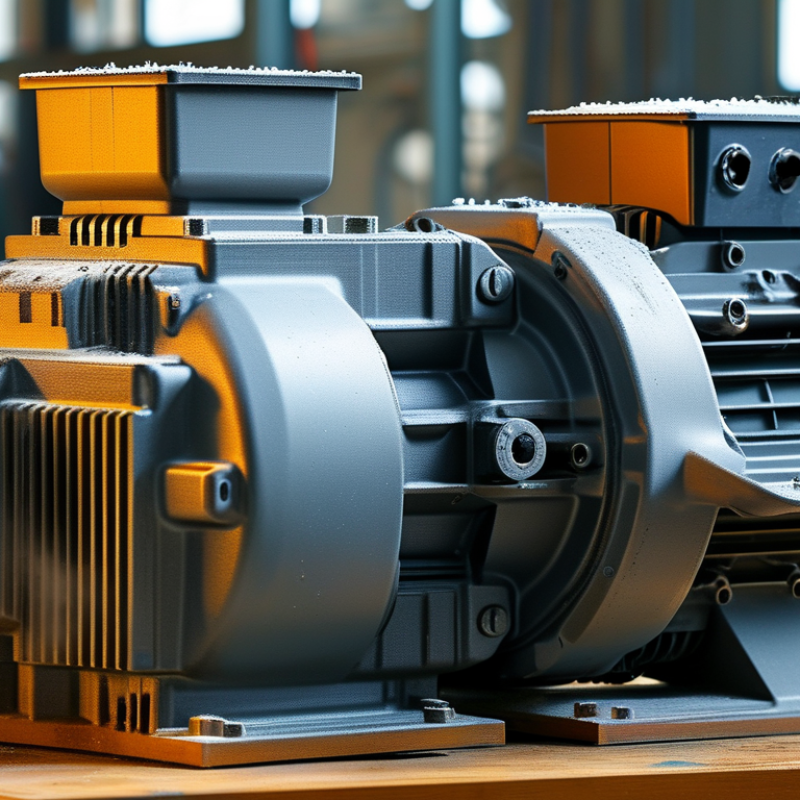
Variable-speed AC motors control motion by changing electrical frequency and voltage. A fixed-speed motor usually runs near one operating speed. A variable-speed system can slow down, accelerate, or hold a precise speed.
An inverter converts incoming AC power into DC power, then creates a controlled AC output. It changes the output frequency several times each second. Lower frequency generally produces slower rotation. Higher frequency produces faster rotation, within the motor’s safe operating range. The inverter also adjusts voltage to maintain useful magnetic strength and torque. That is the mechanism.
Sensors may monitor speed, current, temperature, or shaft position. The controller compares real conditions with the selected setting. It then corrects the electrical output almost instantly. During commissioning, technicians should match motor data with inverter settings. Incorrect values can cause vibration, overheating, weak starting torque, or nuisance shutdowns. Small errors matter.
Variable-speed control can reduce energy use because the motor avoids unnecessary full-speed operation. It also allows smoother starts and less mechanical stress on belts, pumps, and fans. However, efficiency is not guaranteed at every speed. Poor tuning, long cable runs, or excessive cooling demand can reduce performance. A motor may run quietly yet still operate inefficiently. Real systems vary. The explanation is not perfectly simple, and field measurements remain important.
When comparing variable speed AC motors in 2026, rated power is only the starting point. A motor may deliver 7.5 kW, yet perform poorly under frequent starts. Check the usable speed range, continuous torque, and overload capacity together. A wide range matters only when torque remains stable. In a workshop test, record acceleration time with the same load. Keep the test repeatable. A data logger can reveal current spikes that a basic display misses. Those spikes often indicate control tuning, mechanical resistance, or insufficient motor sizing.
Efficiency deserves more than a single percentage on a specification sheet. Compare efficiency at 25%, 50%, 75%, and 100% load. Many systems operate near partial load, not at the rated point. Examine power factor, temperature rise, and cooling performance during a two-hour run. Infrared readings around the housing can expose uneven heating. Lower heat usually supports longer insulation life, but ambient temperature and enclosure design still matter. Do not trust noise claims alone. Measure sound and vibration near the bearing housing, especially during speed changes.
The drive and motor should be assessed as one system. Check feedback accuracy, response time, braking behavior, and overload protection. A suitable enclosure rating matters in dusty or humid rooms. Service access also affects real operating cost. My practical preference is clear diagnostics and replaceable bearings, though this may not suit every installation. One weakness remains: published test conditions vary widely. Ask for duty-cycle data, test standards, and warranty terms before choosing. The quietest motor is not always the best performer.
| Performance Dimension | Three-Phase Squirrel-Cage Induction Motor | Interior Permanent-Magnet Synchronous Motor | Surface Permanent-Magnet Synchronous Motor | Synchronous Reluctance Motor | Electronically Commutated AC Motor |
|---|---|---|---|---|---|
| Typical Variable-Speed Drive | Voltage-source inverter with closed-loop or sensorless vector control | Inverter with field-oriented control and rotor-position feedback or advanced sensorless control | Inverter with field-oriented control and rotor-position feedback | Inverter with vector control and rotor-position estimation or feedback | Integrated or external electronic inverter with brushless commutation |
| Common Power Range | 0.37–500 kW | 0.75–500 kW | 0.1–100 kW | 5.5–500 kW | 0.01–30 kW |
| Typical Rated Voltage | 200–690 V AC | 200–690 V AC | 100–690 V AC | 200–690 V AC | 24–480 V AC or DC-link input, depending on the drive |
| Typical Base-Speed Range | 750–3,600 rpm at 50/60 Hz | 1,000–3,600 rpm | 1,000–3,600 rpm | 750–3,600 rpm | 500–6,000 rpm |
| Practical Constant-Torque Speed Range | Approximately 5:1 to 20:1, depending on feedback and cooling | Approximately 10:1 to 100:1 with suitable control and cooling | Approximately 10:1 to 50:1 with suitable control and cooling | Approximately 10:1 to 50:1 with vector control | Approximately 10:1 to 20:1 for standard integrated-drive designs |
| Extended Constant-Power Capability | Typically 1.5:1 to 3:1 above base speed | Typically 2:1 to 5:1 using flux weakening | Typically 1.5:1 to 3:1 using flux weakening | Typically 2:1 to 4:1 using flux weakening | Usually limited; design-dependent |
| Peak Efficiency Range | Approximately 90–97% | Approximately 94–98% | Approximately 93–98% | Approximately 93–97% | Approximately 85–95% |
| Full-Load Power Factor | Approximately 0.80–0.92 | Approximately 0.90–0.98 | Approximately 0.90–0.98 | Approximately 0.90–0.97 | Typically 0.90–0.99 at the electronic input |
| Low-Speed Torque Performance | Good with vector control; requires adequate cooling below approximately 20 Hz | Excellent; high torque density and strong zero-speed control | Excellent; smooth torque when correctly tuned | Very good with vector control; torque ripple may require optimization | Good for low- and medium-power systems with matched electronics |
| Typical Overload Capacity | 150–200% of rated torque for 60 seconds, drive-dependent | 150–250% of rated torque for short duration, drive- and thermal-limit dependent | 150–250% of rated torque for short duration, drive- and thermal-limit dependent | 150–200% of rated torque for short duration | 120–200% of rated torque for short duration, controller-dependent |
| Regenerative Braking | Available with a regenerative drive or braking resistor | Available; high efficiency can improve energy recovery | Available; requires suitable inverter and braking management | Available with a regenerative drive | Available only when the electronic drive supports energy return |
| Rotor Losses | Induced rotor losses increase with slip and load | Low rotor copper loss; permanent magnets provide excitation | Low rotor copper loss; permanent magnets provide excitation | Very low rotor electrical losses; no magnets or rotor windings | Low rotor electrical losses; permanent magnets are commonly used |
| Thermal Performance at Low Speed | May require forced ventilation because shaft-mounted fans provide less airflow | Often requires thermal monitoring or independent cooling for continuous low-speed torque | Often requires thermal monitoring or independent cooling for continuous low-speed torque | May require independent cooling for high continuous torque at low speed | Usually favorable at low power, but enclosure and electronics temperature remain critical |
| Motor Starting Current Without a Drive | Typically 500–800% of rated current across-the-line | Not normally started directly across the line | Not normally started directly across the line | Not normally started directly across the line | Requires electronic commutation; direct line starting is generally not applicable |
| Maintenance Requirements | Low; rugged construction with no brushes or permanent magnets | Low; bearings and cooling system remain the main service items | Low; bearings and cooling system remain the main service items | Low; no rotor magnets, brushes, or rotor windings | Low mechanically, but electronic components require thermal and electrical protection |
| Resistance to Harsh Duty Cycles | Very good; widely used for pumps, fans, conveyors, and compressors | Very good when demagnetization, thermal, and inverter limits are properly managed | Good, but magnet temperature and mechanical retention must be controlled | Very good when the drive is correctly matched and tuned | Good for properly enclosed low- and medium-power equipment |
| Control Complexity | Low to medium; scalar control is simple, vector control improves performance | High; requires motor-specific parameters and advanced control | High; rotor position and flux-weakening control are important | Medium to high; accurate inductance and control tuning are required | Medium; integrated electronics simplify installation but limit interchangeability |
| Energy-Efficiency Strength | Best for cost-sensitive, general-purpose variable-speed applications | Best for high efficiency, high torque density, and frequent speed changes | Best for compact equipment requiring high efficiency and smooth operation | Best where high efficiency is needed without permanent magnets | Best for compact equipment, appliances, fans, pumps, and precision motion |
| Key Limitation | Lower efficiency and power factor at light load; rotor heating increases at high slip | Higher cost and dependence on permanent magnets and advanced drive control | Magnet retention, demagnetization risk, and limited field-weakening range | Torque ripple, acoustic noise, and more demanding commissioning | Integrated electronics can be sensitive to heat, voltage disturbances, and service conditions |
| Best-Fit Applications | Pumps, fans, compressors, conveyors, machine tools, and general industrial drives | Robotics, elevators, traction, compressors, high-efficiency pumps, and servo-like applications | Fans, pumps, robotics, compact automation, and high-speed equipment | Pumps, fans, compressors, conveyors, and continuous-duty industrial machinery | HVAC blowers, compact pumps, appliances, laboratory equipment, and small automation systems |
| Overall Variable-Speed Suitability | ★★★★☆ Versatile, economical, and highly rugged |
★★★★★ Excellent efficiency, torque density, and speed control |
★★★★☆ Excellent smoothness and compactness in suitable applications |
★★★★☆ Efficient magnet-free alternative for industrial duty |
★★★★☆ Efficient and compact for low- and medium-power equipment |
Comparison note: The values shown are representative engineering ranges for 2026 motor-selection comparisons, not guaranteed ratings for every design. Actual efficiency, speed range, overload capability, cooling requirements, and power factor depend on motor size, winding design, inverter settings, ambient temperature, enclosure, feedback system, and duty cycle.
Interpretation: For the highest efficiency and torque density, permanent-magnet synchronous motors are often preferred. For ruggedness, serviceability, and initial cost, three-phase induction motors remain a strong choice. Synchronous reluctance motors provide a magnet-free high-efficiency option, while electronically commutated motors are well suited to compact, integrated variable-speed equipment.
In 2026, the best variable-speed AC motor depends on load behavior, duty cycle, and control quality. The motor is only one part of the system. A correctly matched drive matters just as much.
Inverter-duty induction motors remain a practical choice for pumps, fans, conveyors, and compressors. They tolerate frequent speed changes and offer predictable maintenance. Their squirrel-cage design has no brushes, which reduces service needs.
However, low-speed cooling can become weak without an external fan. That detail is easy to miss.
Variable-speed permanent-magnet synchronous motors deliver high efficiency and strong torque in compact equipment. They suit elevators, precision conveyors, and industrial machines with repeated acceleration.
Their magnets increase efficiency, but repairs and drive compatibility require more specialized skills.
Synchronous-reluctance motors are gaining attention in 2026. They avoid permanent magnets and can provide efficient operation across changing loads. They also need a suitable drive and careful commissioning.
Wound-rotor motors still serve demanding applications requiring high starting torque, although their extra components increase maintenance.
During selection, compare rated speed range, overload capacity, acoustic output, and thermal performance. Check motor data against IEC 60034 requirements and the drive manufacturer’s settings. In real installations, cable length and bearing currents can create unexpected problems. Engineers sometimes choose efficiency ratings too early. I have found that the quietest motor is not always the best fit. The load profile should lead.
The best variable speed AC motor depends on the machine, duty cycle, and control environment. Induction motors remain practical for pumps, fans, compressors, and conveyors. Permanent magnet motors deliver strong efficiency at changing loads. Synchronous reluctance motors can reduce rotor losses, but they demand careful drive configuration. In a workshop audit, I compare actual load profiles rather than trusting rated efficiency alone. A motor running at half load may waste energy if its control settings remain poorly matched.
Efficiency begins with speed control. A properly sized variable frequency drive can reduce pump energy sharply during low-demand periods. It must also manage acceleration, braking, thermal protection, and motor insulation stress. For precise positioning, an encoder may be necessary. For ventilation, sensorless control may provide enough accuracy and lower system cost. Short cables, correct grounding, and suitable filtering help limit electrical noise. Small details matter.
Applications also determine enclosure and cooling requirements. A dusty grain-handling line needs stronger protection than a clean indoor fan. Frequent starts require different thermal calculations than steady conveyor operation. I have seen projects choose an efficient motor, then lose savings through oversized drives and excessive throttling. That mistake is easy to repeat. Control logic should respond to pressure, flow, torque, or temperature, not merely run at a fixed preset speed. Maintenance teams also need readable fault data and accessible terminals. The technically best motor can still underperform when operators cannot diagnose it quickly.
Choosing a variable speed AC motor starts with the machine, not the motor catalogue. Record the required speed range, continuous torque, peak load, starts per hour, and available voltage. A pump may need steady torque, while a conveyor demands strong low-speed performance. Measure the load at its worst point. Normal operation can hide the real requirement. Good selection matches motor heating, drive control, and mechanical inertia, rather than relying on rated horsepower alone.
For 2026 systems, look for an inverter-duty motor with insulation suited to pulse-width-modulated voltage. Confirm its service factor, thermal class, bearings, enclosure, and cooling method. A totally enclosed motor may protect a dusty workshop, but low-speed operation can reduce shaft-mounted fan airflow. An independent cooling fan may be safer. Check the drive’s feedback options too. Sensorless control can work well, yet precise positioning or heavy starting often benefits from an encoder. Small details matter.
Ask for efficiency data across the actual speed range, not only at full load. Review current limits, braking needs, cable length, and harmonic effects with the drive supplier. In a retrofit, verify shaft dimensions and mounting before ordering; a perfect electrical match may still fail mechanically. I have seen commissioning delays caused by overlooked ventilation and oversized cables. That experience is easy to dismiss. Do not. Leave room for ambient heat, dust, and future load changes, while documenting every assumption for maintenance.
Typical full-load efficiency comparison for common AC motor technologies used with variable-frequency drives.
Synchronous reluctance and permanent-magnet synchronous motors generally provide the highest motor efficiency, while IE3 and IE4 induction motors offer broad availability, rugged construction, and straightforward maintenance. Actual system performance depends on motor size, operating load, speed range, drive efficiency, cooling, and control settings. Values shown are representative engineering figures at rated load and exclude variable-frequency-drive losses.
C motor?
The inverter changes incoming AC power into DC power. It then creates controlled AC output at different frequencies. Lower frequency usually means slower rotation. Higher frequency usually means faster rotation. That is the mechanism.
Frequency changes alone may weaken the motor’s magnetic strength. The inverter adjusts voltage to maintain useful torque. This supports starting, acceleration, and stable operation. Small errors matter.
Technicians should match motor data with inverter settings. Important values include rated power, voltage, current, and frequency. Incorrect settings may cause vibration, overheating, weak starting torque, or shutdowns. Check everything carefully.
It can reduce energy use by avoiding unnecessary full-speed operation. This benefit often appears in fans, pumps, and other changing-load systems. Efficiency is not guaranteed at every speed. Real systems vary.
Record acceleration time using the same load each time. Measure efficiency at 25%, 50%, 75%, and 100% load. During a two-hour run, check temperature rise and power factor. A data logger can reveal hidden current spikes.
Use infrared readings around the motor housing. Uneven heating may reveal cooling problems or excessive electrical stress. Measure vibration near the bearing housing during speed changes. Quiet operation alone proves little.
Assess them as one complete system. Check usable speed range, continuous torque, overload capacity, feedback accuracy, and braking behavior. Also review enclosure protection, service access, duty-cycle data, and warranty terms. Not always.
They can reduce performance or increase electrical stress. Poor tuning may also create losses, even when the motor sounds quiet. Cable length, cooling demand, and installation conditions deserve field measurements. This explanation is useful, but incomplete.
Variable Speed AC Motors adjust their operating speed to match the changing demands of a system, improving energy efficiency, reducing mechanical stress, and supporting smoother performance. This article explains how variable-speed control works through frequency and voltage adjustment, then examines key comparison factors such as rated power, torque range, speed accuracy, overload capacity, noise, thermal management, and control compatibility. It also reviews major motor types suitable for 2026, including induction, permanent-magnet, and electronically commutated designs, while highlighting the strengths and limitations of each option.
The discussion connects motor selection with real-world applications, including HVAC equipment, pumps, fans, conveyors, compressors, and automated machinery. Efficiency depends not only on the motor itself but also on the drive, operating profile, load characteristics, and maintenance practices. To choose the right solution, users should evaluate required speed range, starting torque, duty cycle, environmental conditions, control system integration, installation space, lifecycle cost, and future expansion needs. A properly matched motor can deliver reliable control, lower operating costs, and consistent long-term performance.